One feedlot study, seven different agreement results
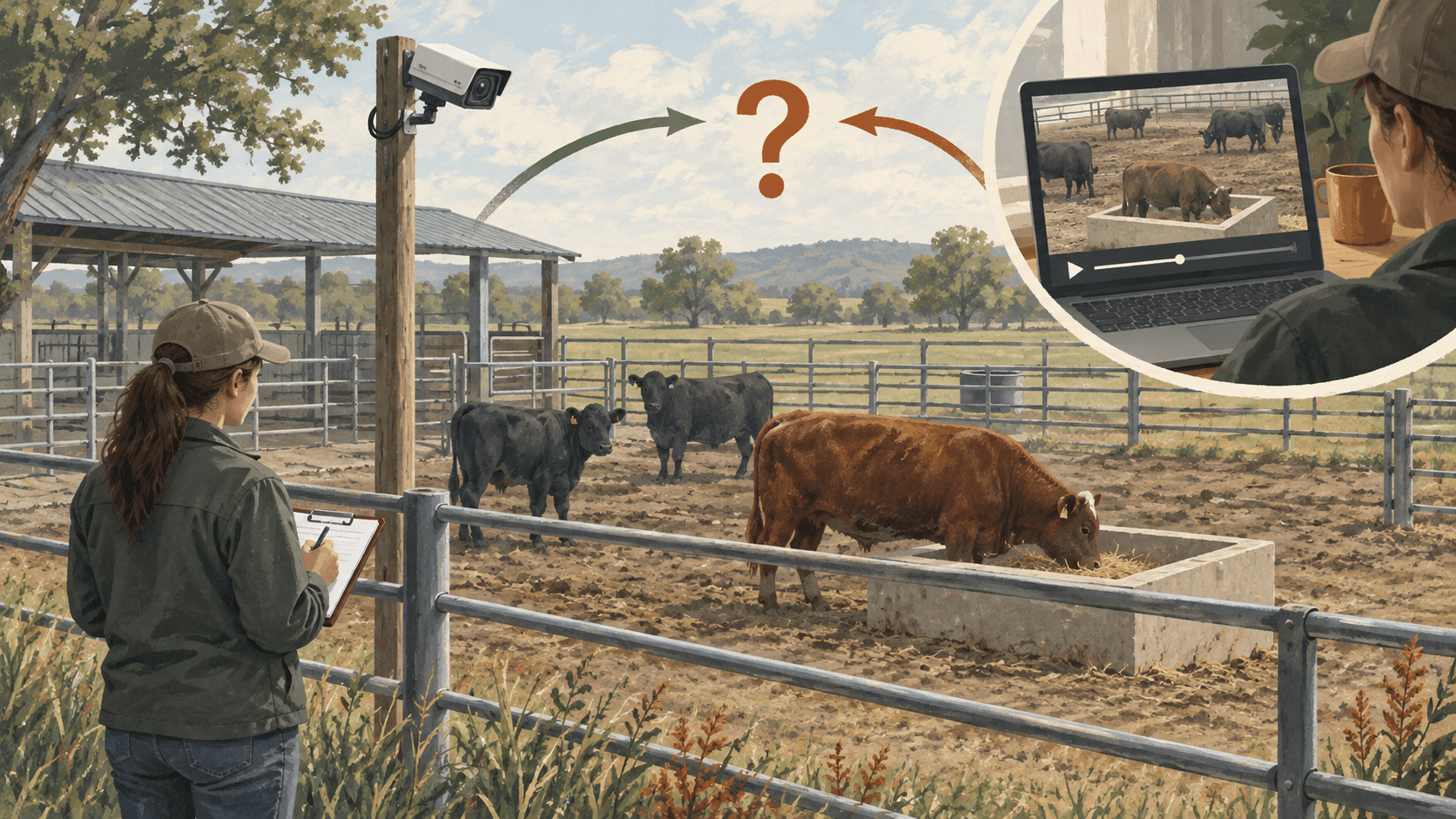
In an April 2026 paper, researchers compared drone video with a trained employee’s simultaneous 10-minute direct observation in a commercial feedlot. They counted how many animals showed each behavior in a pen during each session, then compared the methods using an intraclass correlation coefficient (ICC)—a measure of how consistently two methods produce similar values.
| Behavior counted | Agreement in this study | ICC |
|---|---|---|
| Eating | Excellent | 0.90 |
| Standing | Good | 0.86 |
| Lying | Good | 0.80 |
| Mounting | Good | 0.79 |
| Drinking | Poor | 0.48 |
| Ruminating | Poor | 0.41 |
| Walking | Poor | 0.37 |
The authors linked stronger agreement to longer, more visually distinct behaviors. Shorter or less visible events were harder to match under those study conditions. These are the paper’s results—not performance figures for Livestock Technologies’ fixed cameras or a promise for another feedlot.
Read the full 2026 feedlot study. Its drone view, daytime sampling window, open pen layout, behavior definitions, and 10-minute counts are part of what the result means.
“Video” is not one universal observation method
A 2013 study on a commercial veal-calf farm compared live and recorded observations. Standing-time estimates were similar, but several other behaviors differed. When an observer stood in front of pens, the calves also showed short-term changes in standing and substrate manipulation; abnormal oral behavior did not change in that comparison.
That study used its own calf groups, behaviors, observer position, and scan-sampling protocol. Together, the two papers make a practical point: an observation method can work well for one outcome and miss or shift another. The study team should decide what counts as the behavior and what reference will check it before relying on the video record.
See the 2013 direct-versus-video study indexed by PubMed for its methods and behavior-specific findings.
Test the behavior, not the camera in general
Suppose a research group wants to count cattle eating in a defined pen zone. It can first write a visible rule—what counts as eating, what marks the start of an observation, and how the team treats blocked views—then compare the same time windows from recorded video and a trained direct observer. The unit should match the question: for a pen count, one session produces a pen-level comparison, not a new independent result for every animal or frame.
If the outcome is drinking or walking, use that behavior’s definition and run the comparison again. A result for eating cannot validate every other behavior. Report the sample of pens and periods, the agreement method and uncertainty, and where camera view or observer conditions limited the comparison.
Here, “validation” means checking one observation method against a specified reference for a stated outcome. It is not the same as showing that a camera recorded footage, or that an AI model can classify a clip.
What a fixed field view contributes
At Tuskegee University, Livestock Technologies has installed fixed RGB and thermal views around four research pens, with solar field nodes, wireless backhaul, and on-site processing and storage. A continuous source view can let a research team return to a recorded period, inspect the pen context, and compare its own observation protocol with a direct reference.
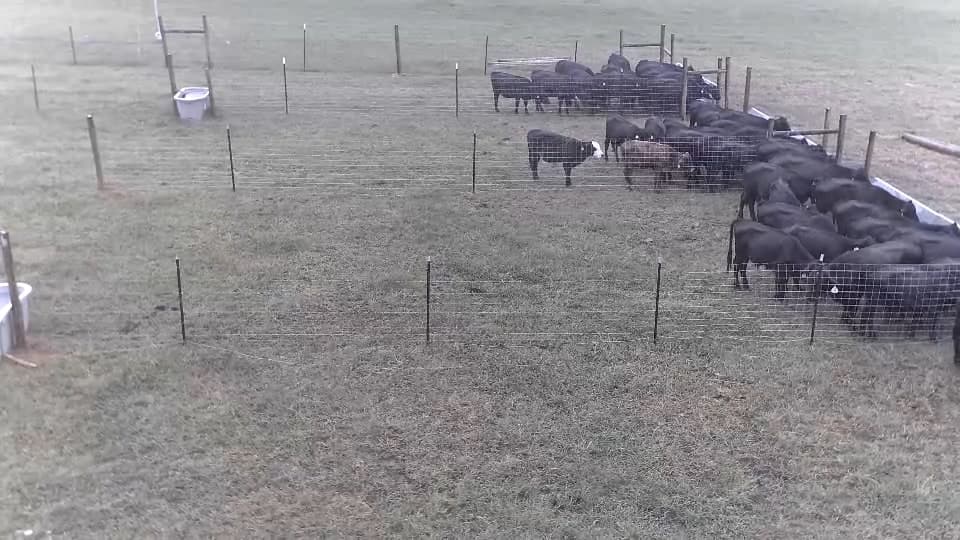
The view is useful when it matches the research question. Before a project, the team can discuss which pen area must remain visible, which reference observation will be collected, and how time windows and study records will be aligned. The independent papers above do not establish the accuracy of this installation or any untested behavior workflow.
For a shareable overview, see the university research capabilities brief and the documented Tuskegee field results.
Never lose an animal.
Bring your observation question to the field.
Tell us which behavior, pen view, and reference method your team is considering. We can show the installed Tuskegee platform and discuss a project scope without treating another study’s results as your validation.
Discuss a university research project →