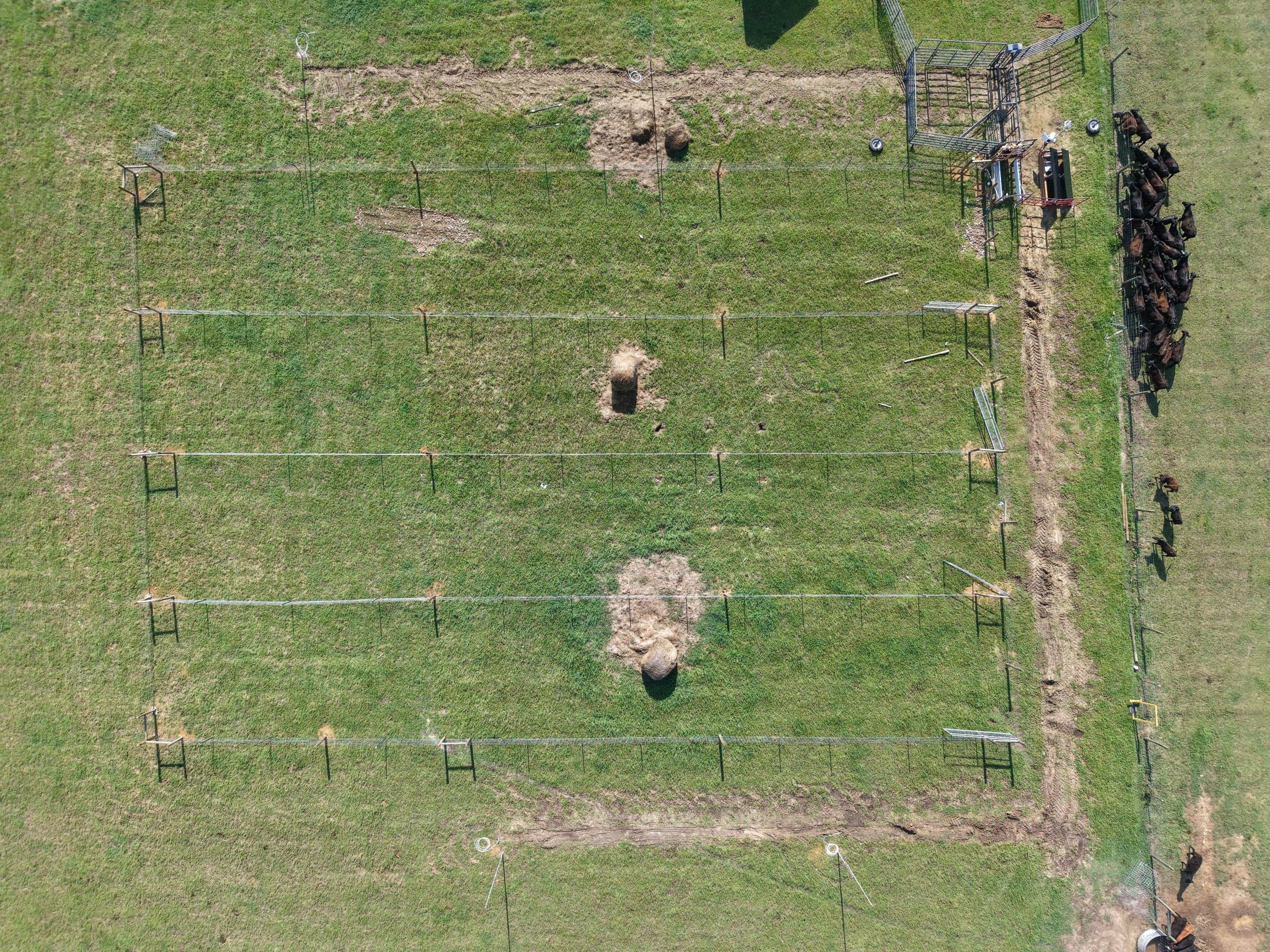
Aerial view of four monitored cattle pens at the Tuskegee University feedlot
Feedlot cattle inventory & movement control

Know What Is in Every Pen.
Know What Changed.

Continuous camera-based cattle inventory for commercial feedlots: reconcile observed pen counts, flag movement exceptions, and connect visual identity evidence with the EID/RFID workflow you already use.

Start with the inventory, movement, or identity workflow that matters most to your yard, then design the field platform around it.

No new wearable requiredEdge processing on your yardSite-specific camera design

Installed and recording at the Tuskegee University research feedlot

60 head
Field deployment
Four research pens
24/7
Continuous capture
Day and night evidence
3 views
Chute reference
Face, muzzle, and ear tag
On-site
Edge infrastructure
Operator-owned data
Three operating questions

Start with the question costing your team time.

Your software records what should have happened. Cameras add evidence of what the yard actually observed—then send people the exception, not another dashboard to watch.

01

Does the pen count match?

Compare the head count your yard expects with the cattle the camera system observes. Focus staff on mismatches instead of asking them to recount an entire yard.

  • Observed counts by pen and time
  • Expected-versus-observed exceptions
  • Reviewable imagery behind each result
02

What changed between counts?

Surface cattle-out, gate, alley, and wrong-pen events while there is still time to correct the operating record before the next processing or shipping decision.

  • Pen-entry and pen-exit evidence
  • Movement exceptions routed to the right role
  • A clearer record of what changed between counts
03

Can chute identity follow the animal?

Capture visual tags, face, and muzzle views at the chute and connect that evidence to the EID/RFID workflow you already use. Chute reference imagery provides identity context alongside EID/RFID and official records.

  • Optical tag capture during processing
  • Designed for EID/RFID association at the chute
  • Reference imagery when a visible tag is missing

What the feedlot team receives

Cameras do the watching. Your team reviews the exception.

The system organizes camera observations around the yard record so operators can investigate a count mismatch, movement event, or identity question without mining hours of video.

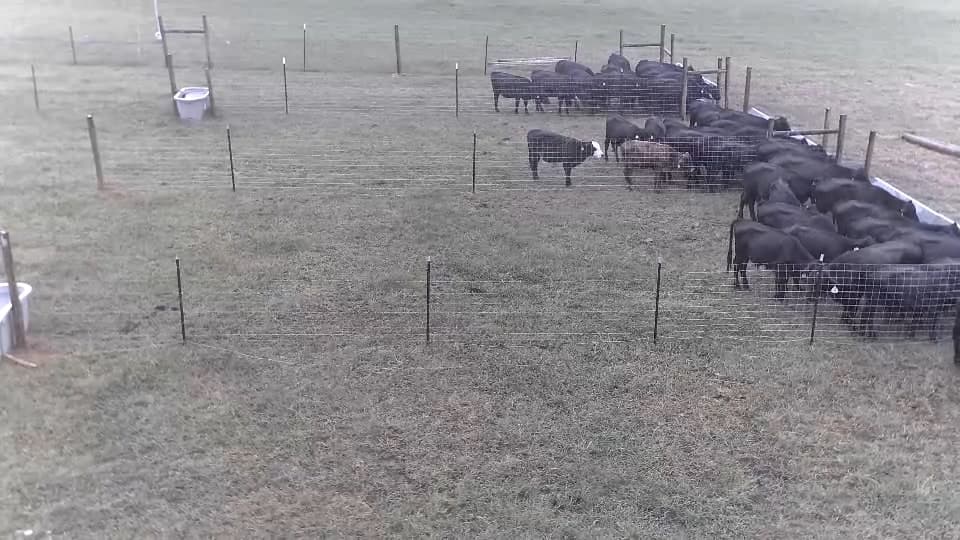
  1. Field-installed camera view of cattle gathered along a feed bunk at Tuskegee University
    Documented field camera view
    01Capture

    Cameras observe the operation

    Fixed color and thermal cameras preserve time-stamped views of pens, gates, bunks, alleys, and the chute.

  2. Computer-vision output showing detected cattle in an overhead pen view
    Computer-vision detection output
    02Measure

    Software turns pixels into observations

    Computer-vision models, geometry, time, and thermal values organize detections into count, presence, movement, and reference observations.

  3. Review requestedPen 4 · 6:20 AM

    Observed count differs from the yard record

    Expected

    60

    Observed

    Review

    Illustrative interface—not a reported field result.

    03Compare

    Site rules surface what changed

    Expected records and observed activity are compared so the team can focus on a pen mismatch, movement event, or identity review.

  4. Source evidence ready

    Review the moment, then choose the action.

    1. 1Open the source frame or clip
    2. 2Compare with the operating record
    3. 3Confirm, correct, or investigate

    Illustrative workflow; deployment outputs are scoped to the site or study.

    04Decide

    A person reviews the source evidence

    The operator or researcher sees the relevant time, location, and source imagery before deciding what happens next.

Direct observations come from captured imagery and time. Counts, movement exceptions, identity associations, and study measures are produced through deployment-specific models, geometry, rules, and validation.

Identity continuity

Visual ID and EID Are Stronger Together

An EID gives the animal a unique electronic record at a read point. A camera can preserve the visual tag, face, muzzle, location, and movement evidence around that record. The practical workflow is not one technology replacing the other—it is a stronger association at the chute and more context between reads.

Processing workflow

Read EID/RFID → capture visual tag and reference views → associate the records → carry observed pen presence and movement evidence forward for review.

USDA guidance describes cattle traceability as important to health management, marketability, and feedlot inventory, and encourages retaining animal-origin and movement records. Read the APHIS feedlot guidance.

Explore the Nose ID chute workflow
Nose ID research frame showing a visible ear tag and detected muzzle region on the same animal

Controlled chute capture connects animal-reference imagery to the yard's known records.

Exception-first operations

Your Team Needs an Answer, Not a Data Dump

Configure the output around the role. Management sees reconciliation. Yard staff see the exception. Technical teams can inspect the source evidence and full record when needed.

Management

Which pens do not reconcile?

An exception list tied to time, pen, and reviewable evidence.

Yard operations

What moved, and where?

A focused movement or wrong-pen review instead of a yard-wide recount.

Processing & records

Which identity needs review?

Visual tag and animal-reference evidence associated with the known chute record.

Commercial deployment

Design the Right Deployment Footprint

Start with the operating workflow that matters most, then design the cameras, network, compute, and review flow around the yard.

Bring your yard map or drone survey if you have one. We will use actual dimensions and operating needs to design the right deployment footprint for your pens.

  1. 1

    Choose the inventory workflow

    Start with nightly pen reconciliation, movement exceptions, missing-tag review, or chute-to-pen identity continuity.

  2. 2

    Map the deployment footprint

    Use the yard layout, pen dimensions, power, connectivity, and desired field of view to specify cameras, lenses, and data infrastructure.

  3. 3

    Design the operating workflow

    Define how observed counts, movement exceptions, and identity context connect with yard records and the teams who use them.

  4. 4

    Expand the field platform

    Add coverage and workflows as the yard needs them.

Fixed camera view showing cattle distributed across monitored pens and at the bunk
Field deployment

Documented Feedlot Installation at Tuskegee

The Livestock Technologies platform is installed and recording 60 cattle across four pens at the Tuskegee University research feedlot. The installation combines fixed camera coverage, on-site processing, chute reference capture, and continuous day-and-night recording.

Site-specific performance is designed around each yard's coverage, geometry, network, compute, and operating workflow.

Read the Tuskegee deployment field report
Feedlot operator questions

Straight Answers About Cattle Inventory Monitoring

Can the system perform a nightly cattle headcount by pen?

The platform adds continuous observed counts and reviewable movement exceptions to the yard software your team already uses. Site-specific performance is designed around each yard's coverage, geometry, and operating workflow.

Does this replace our feedlot management software?

Livestock Technologies adds continuous observed counts, movement exceptions, and identity context to existing yard software. Your feedlot system continues to manage the records and workflows your team uses.

Does it replace EID or RFID tags?

The platform connects chute imagery and visual continuity alongside EID/RFID and official records: capture visible tag and animal reference views during processing, then connect those records to pen-presence and movement evidence.

What happens when a visual ear tag is missing?

The missing-tag workflow surfaces a reviewable exception with chute reference imagery, later observations, manifests, and known records for the team to inspect.

Will operators have to mine video or raw data?

The operating workflow is exception-first. Roles can receive the count mismatch, movement event, or identity review relevant to them, with source imagery available for inspection.

Do fixed cameras make periodic aerial inventory audits unnecessary?

Fixed cameras add continuous observed counts and movement evidence between point-in-time audits, giving teams visual context for what changed.

How do you price a commercial feedlot deployment?

Pricing starts with site assessment and design based on coverage, network, compute, camera placement, and the number of pens in the yard.

Can the same system support health and bunk-behavior monitoring?

The same camera infrastructure can preserve bunk, water, movement, and thermal evidence for additional review workflows that a yard chooses to scope.

Build the field platform for your yard

Which Pen Does Not Reconcile Tonight?

Tell us your head count, pen layout, current inventory process, and the exception you need to catch. We'll design the right deployment footprint for your yard.

Discuss a Feedlot Deployment

Prefer email? steve@livestock.tech