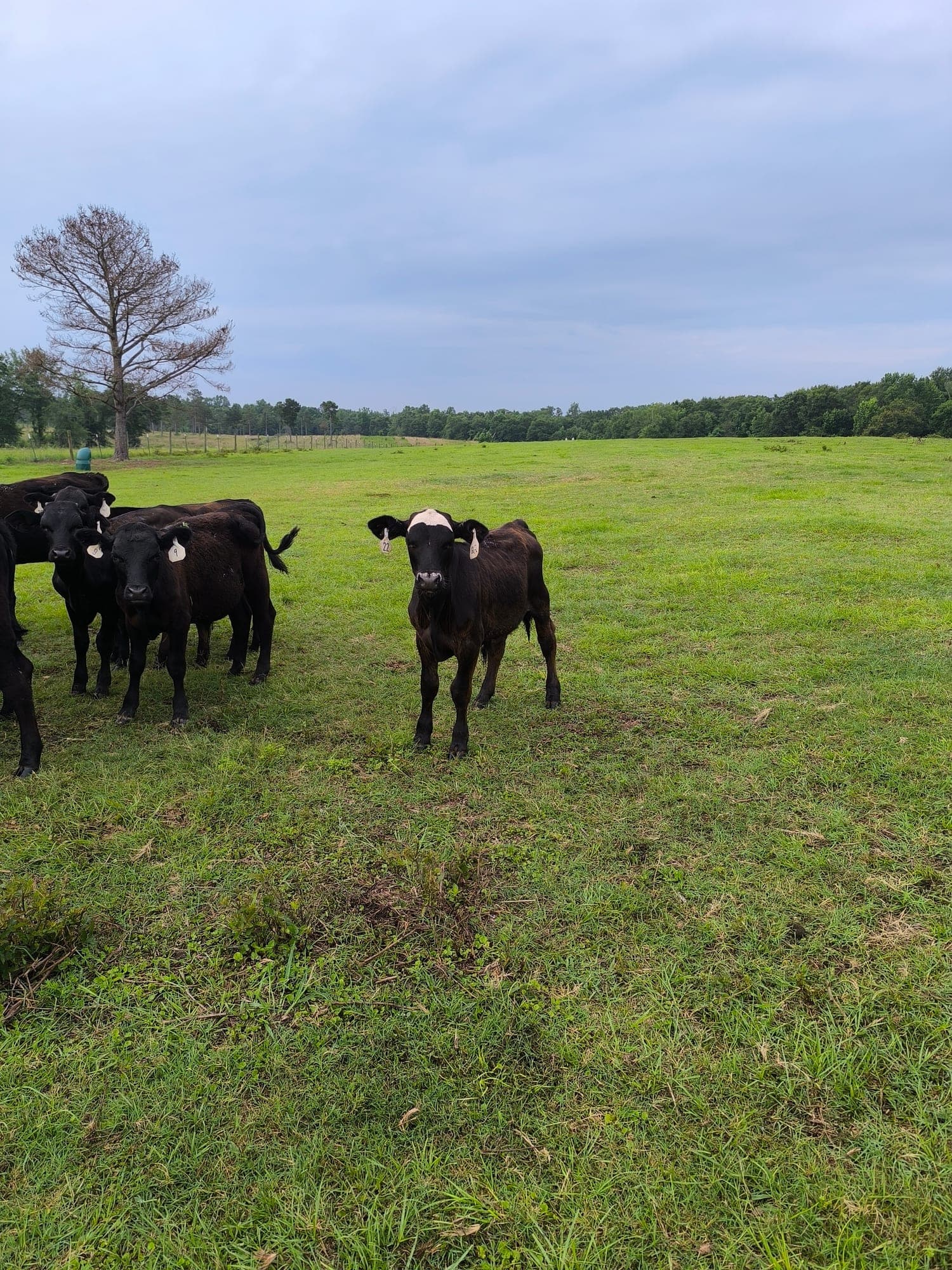
TUSKEGEE, Ala. — The cameras are on, the herd is in, and the data is flowing. Livestock Technologies has completed installation of its precision monitoring platform at the Tuskegee University research feedlot, where 60 head of cattle across four pens are now under continuous, individual-level AI observation — day and night — under a Sponsored Research Agreement with a clear goal: prove that AI can detect a sick animal earlier, and more reliably, than the human eye.
Cattle hide illness, so it’s often caught late. The goal: prove AI can flag a sick animal earlier — and more reliably — than the human eye.
A Real Milestone, Not a Render
In agtech it is easy to ship a polished dashboard and a list of promises. It is much harder to put hardware on poles, power and connect it in a working pasture, and keep it recording through dust, heat, and weather. That gap — between the demo and the dirt — is where most livestock AI quietly fails.
This is a different kind of update: no hypotheticals. The nodes are mounted, the edge is live, and animals are in the pens being tracked by sight alone. Here is what we built, and what we will measure next.
Industry and Academia, in the Same Pasture
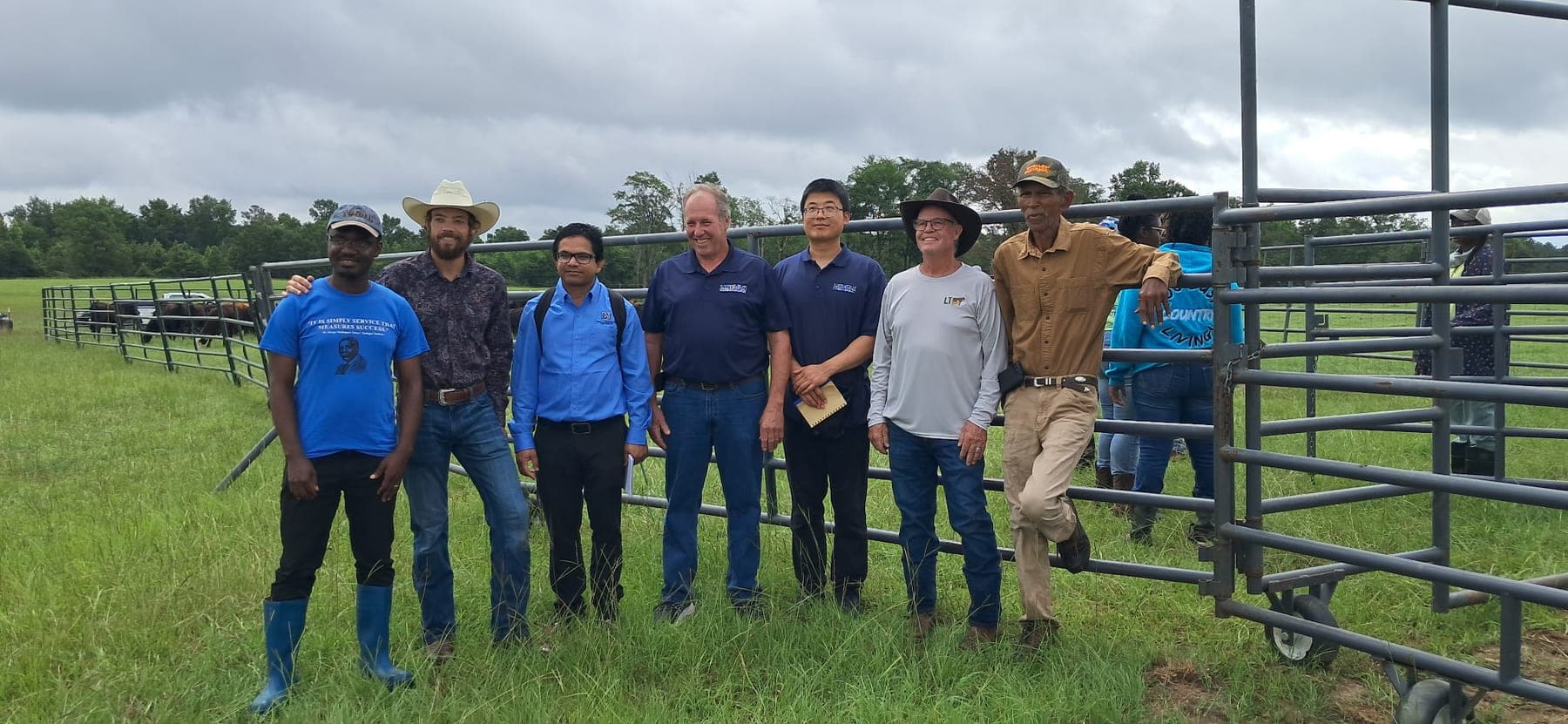
We chose to validate the platform through a university partnership for a simple reason: claims should be tested by people with every incentive to be skeptical. Under a Sponsored Research Agreement, Tuskegee University leads the science, validating the system across cattle, goats, and sheep.
It would be hard to find a more fitting home for this work. Agricultural science is woven into Tuskegee’s DNA — it was here that George Washington Carver turned the laboratory toward the everyday needs of working farmers, a farmer-first ethos that still drives the university’s 1890 land-grant mission today. An institution that helped pioneer practical agricultural science is exactly the right partner to put its next chapter — AI — to the test, and Tuskegee’s researchers have embraced these modern tools with real enthusiasm.

That visit reflects something bigger. Across the network of 1890 land-grant universities — institutions with deep roots in agriculture and a long mission of service — there is a shared, forward-looking appetite for technology that helps producers, strengthens rural communities, and puts cutting-edge tools in the hands of the next generation of animal scientists. We’re honored to build alongside them.
“Unlike competitors who rely on marketing claims, we’re subjecting our technology to peer-review-standard research.”
From Pasture to On-Site AI Server
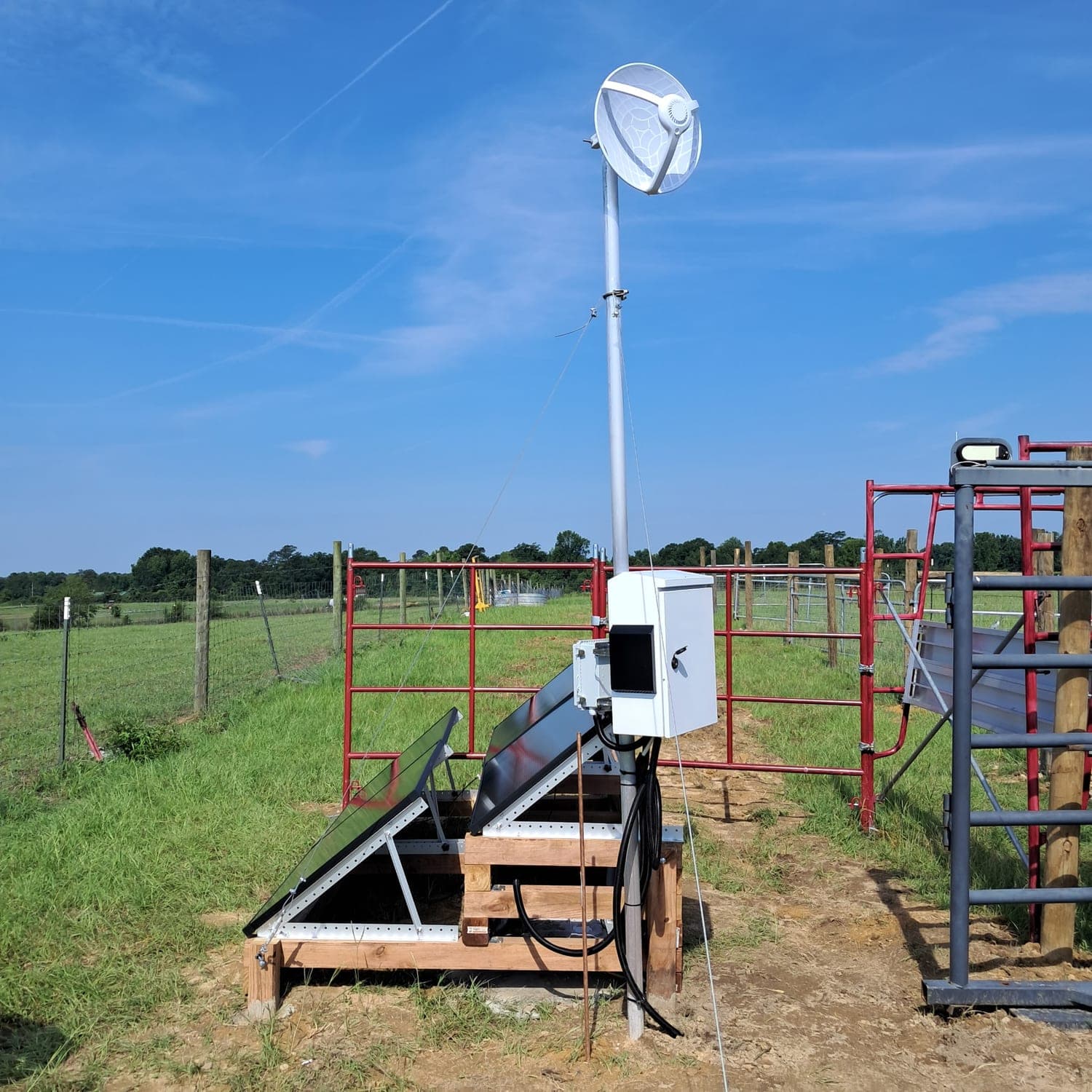
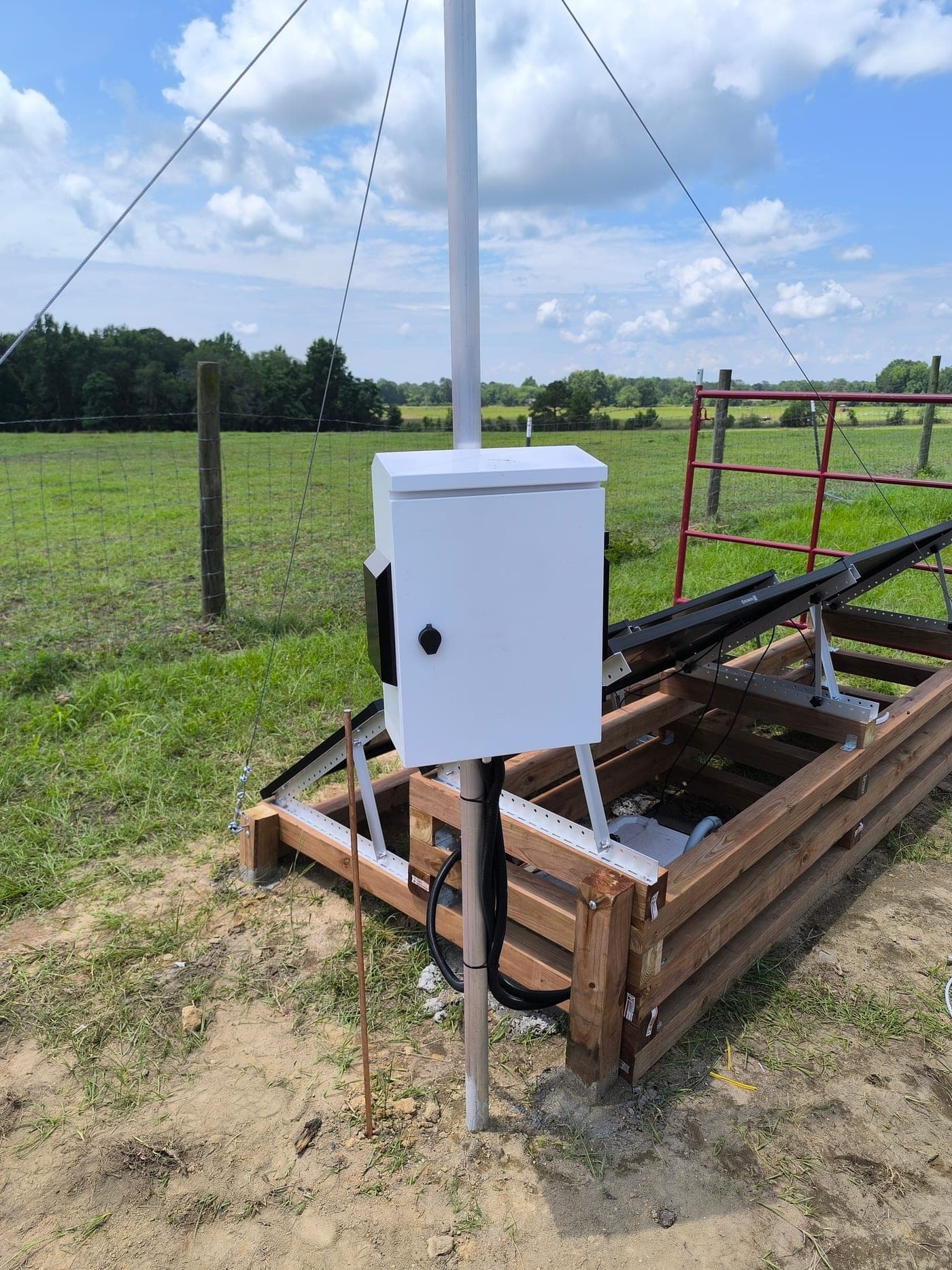
The system pairs bi-spectrum cameras — 4K digital alongside a thermal channel — positioned for zero-occlusion coverage of the pens, feed bunks, and water troughs. A working pasture has no convenient wiring, so the imagery is carried back over a solar-powered point-to-point wireless link to an on-site AI server, where every frame is processed and stored locally, and nothing has to leave the property.


From those continuous feeds, the on-site AI builds a behavioral baseline for every individual animal:
- Normal feed-zone and water-zone time
- Total movement and resting duration
- Bunk dynamics and social hierarchy
- Structural soundness and body condition
Off the Grid, Behind the Firewall
Solar power and battery storage run each node anywhere — no utility drop, zero grid connections. And because the 4K video is processed locally on the on-site AI server, the producer owns the hardware and owns the data. No cloud outage can take it away, and nothing has to leave the property.

Every piece was installed by our own field team and hardened for pasture conditions — the system drops onto existing infrastructure with custom power and connectivity tailored to the site.

Loading the Feedlot
With the nodes verified and calibrated, the pens were loaded: 60 head, divided into four treatment groups of 15. As animals came through the chute, each was enrolled into the system — capturing the Nose ID biometric that ties every future observation back to a single, permanent identity. An animal’s noseprint is like a fingerprint; we map its ridge and bead patterns into a 99.9% accurate identity, with no tag to fall out and no collar to break.

It Doesn’t Just Watch. It Reasons.
Raw detections are cheap; understanding is the hard part. Our edge AI engine runs a five-step loop on every animal, turning pixels into an explanation a researcher can act on:
Detect
Every animal, continuously, with zero occlusions — no tag, collar, or wearable required.
Identify
Nose ID ties each detection to the individual through its permanent muzzle-and-face biometric.
Compare
Each animal’s behavior is measured against its own rolling baseline — not a herd average.
Diagnose
Why-Reasoning looks past the anomaly to the cause: feed absence, low movement, social displacement.
Alert
Researchers get an actionable, explainable flag with evidence attached — never a raw data dump.
No Blind Hours
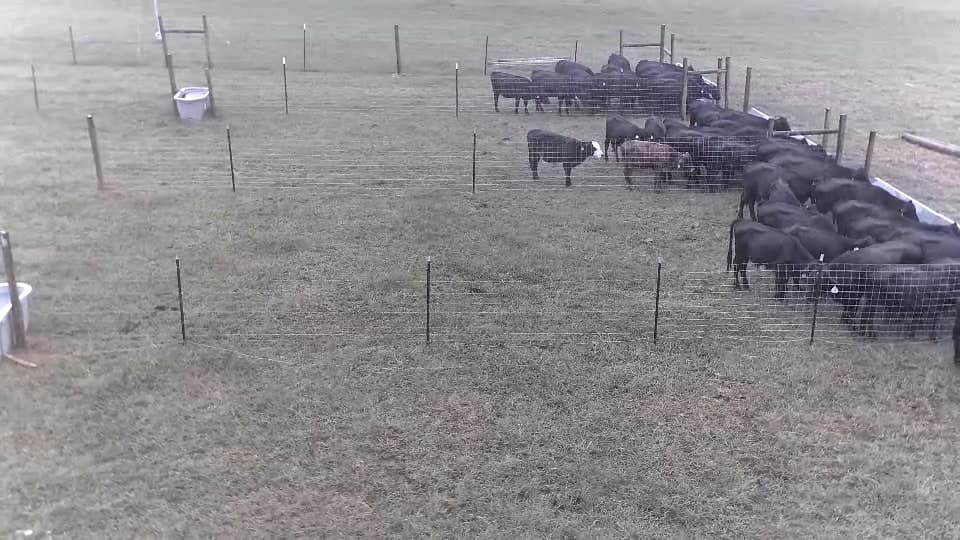
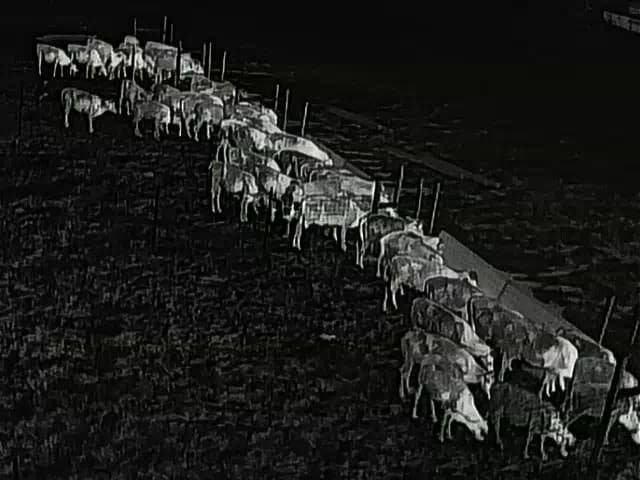
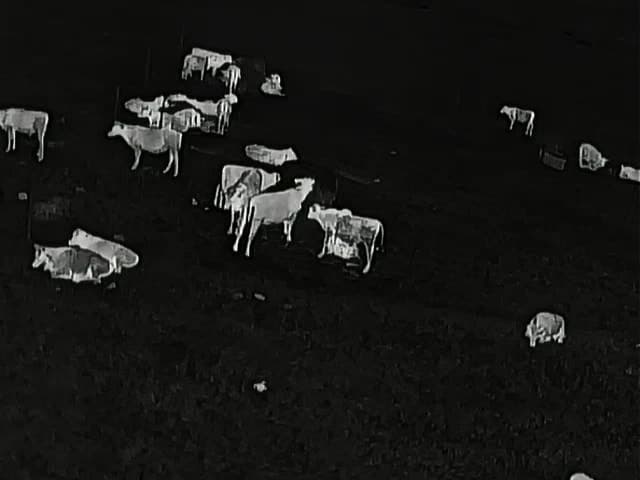
Where infrared cameras fail for 12 or more hours, our thermal channel keeps every animal tracked through the night. Detection is driven by body heat, not illumination — so resting, feeding, and movement are observed around the clock, and thermal anomalies can flag an animal worth a closer look. The frames below are straight from the nodes: the same bunk by day in 4K, then the herd in pure darkness on thermal.


A Digital Twin From the Air
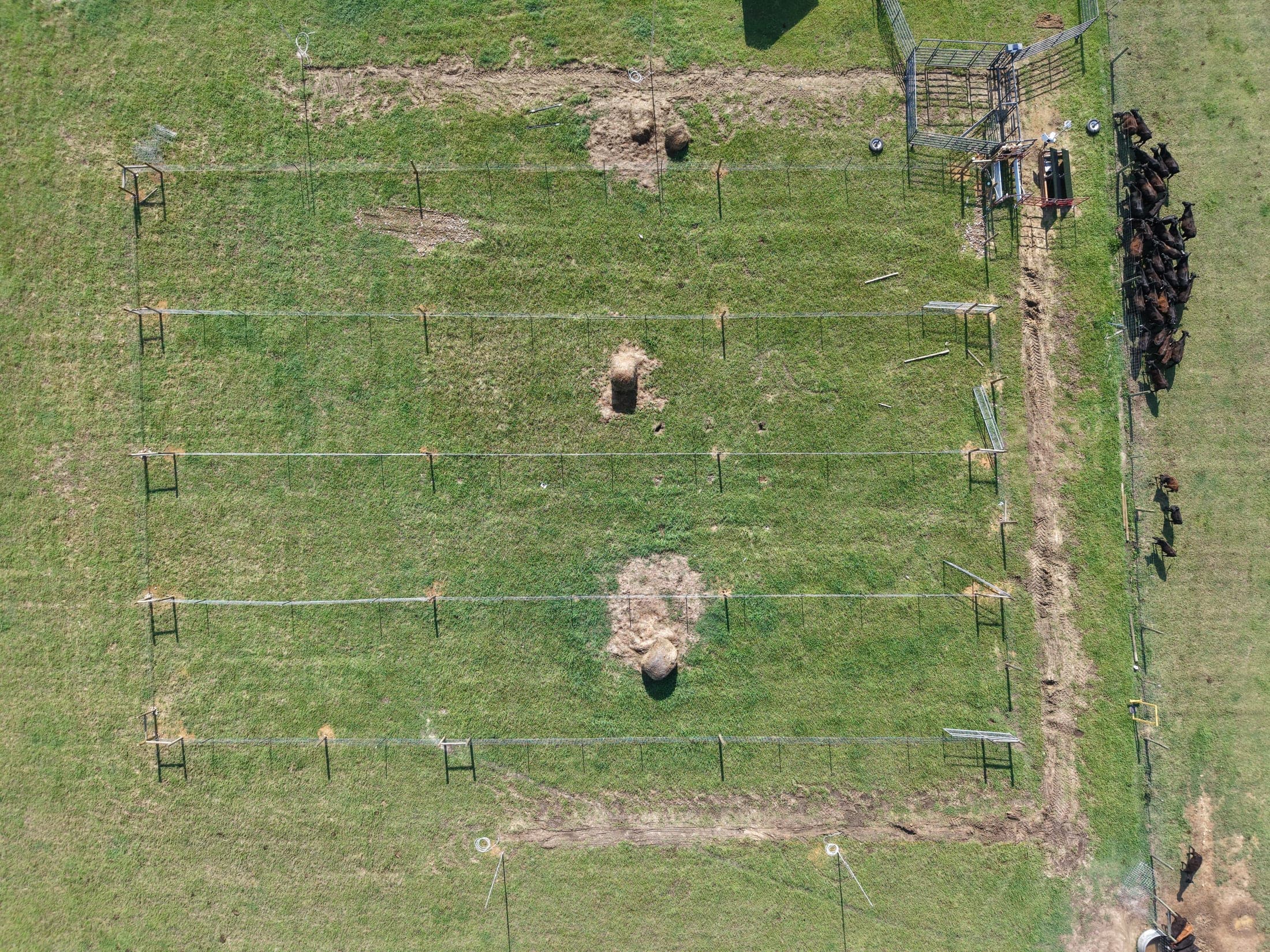
Each drone flyover rebuilds a spatial model of the site — pens, bunks, water, and fences. The AI runs every alert against that twin, so a flag always knows exactly where, and in which pen, it happened. It is the difference between “an animal is off” and “the animal in Pen 3, away from the bunk, since dawn.”

What We Capture
Per-animal, continuous, and yours. Every layer feeds structured streams researchers can query, chart, and model — retained 100% on local hardware:
What We’ll Measure Next
This is a full-retention research deployment: rather than keeping only the highlights, we are preserving the complete record so the data can stand up to independent scrutiny. The central question is early sickness detection. Cattle are prey animals that instinctively mask illness, so a sick animal is often spotted late — the study tests whether the platform’s behavioral signals flag it sooner than the human eye. Over the coming months, the system tracks feeding and watering behavior, mobility and resting patterns, social dynamics, and thermal signatures — each tied to an individual by Nose ID, each compared against that animal’s own baseline, and each surfaced through explainable Why-Reasoning rather than a raw data dump.
For producers, it means technology proven in conditions that look like their own. For the research community, it means high-fidelity, individual-animal data instead of pen-level averages. We’ll share what we learn as the study progresses — this is the start of the data, not the end of the story.
Frequently Asked Questions
What is the Tuskegee AI feedlot project?
It is a research deployment of the Livestock Technologies computer-vision platform at a Tuskegee University feedlot, monitoring 60 head of cattle across four pens under a Sponsored Research Agreement to scientifically validate AI livestock monitoring across cattle, goats, and sheep.
What is the study trying to prove?
The central goal is to test whether AI can detect a sick animal earlier and more reliably than human observation. Because cattle instinctively mask illness, sickness is often caught late; the study measures whether continuous, individual behavioral monitoring flags at-risk animals sooner than the human eye.
How does the system monitor cattle at night?
Each bi-spectrum node pairs a 4K digital camera with a thermal channel. Detection is driven by body heat rather than illumination, so animals are tracked through the night where infrared cameras typically go blind for 12 or more hours.
Does it use ear tags or collars?
No. The platform identifies each animal by its noseprint — a permanent muzzle-and-face biometric mapped to a 99.9% accurate identity — so animals are tracked by sight alone, with zero contact and no wearables to fail or fall off.
What does the system measure?
Continuous, per-animal streams including headcount and presence, feed-zone and water-zone time, movement index, resting duration, social interaction, thermal signatures, and explainable Why-Reasoning health flags — all retained 100% on local hardware.
How is the equipment powered?
Each node runs on solar power with battery storage and processes 4K video locally at the edge — zero grid connections and full data ownership behind the producer’s own firewall.
Want results you can trust?
Whether you run a feedlot or a research program, we’d love to show you what continuous, individual-animal intelligence looks like in the field.