Livestock Technologies has completed its Tuskegee University research feedlot installation. The site is recording across four pens and provides a real operating model for commercial feedlots that want field-ready camera infrastructure, local data control, and reviewable pen-level evidence.
A Completed Field Installation
The installation brings together 60 cattle, four pens, RGB and thermal camera nodes, solar power, battery storage, wireless backhaul, an on-site server, and chute-based reference capture. It is a complete feedlot system designed to operate in the conditions where commercial yards work.
Tuskegee University researchers lead the sponsored research program evaluating automated interpretation workflows. Livestock Technologies delivers the field infrastructure, capture design, on-site computing, and commercial deployment capability that make that work possible.
What the Installation Shows
60 cattle across four pens
The Tuskegee University research feedlot installation covers 60 head in four pens. The system is in place, recording, and providing a working reference for feedlot camera placement, coverage, and daily operations.
RGB and thermal capture at the pen
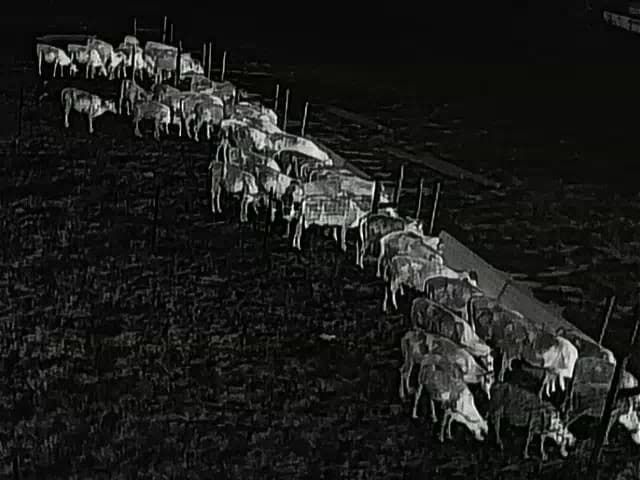
Each installed node combines digital RGB imagery with a thermal channel. The paired views preserve practical evidence at bunks, water zones, alleys, and night conditions for review by the operating team and research partners.
Solar power and wireless backhaul
Solar generation, battery storage, and point-to-point wireless carry the installation without a utility drop at every camera location. That field architecture gives commercial yards a proven starting point for remote pen coverage.
On-site compute and storage
The Tuskegee system processes and stores its camera archive on site. Livestock Technologies designs commercial deployments around local operational control, with documented access, retention, export, backup, and support arrangements.
Chute reference capture
During chute processing, the workflow captures face, muzzle, and ear-tag views alongside the loading record. Those references connect the arrival process to the camera program and strengthen the record available for later review.
Commercial Deployment, Built for the Yard
A commercial deployment starts with the operating question: what does the yard need to see, review, and act on? Livestock Technologies turns that question into a camera layout, power and wireless design, local compute plan, data-handling plan, installation schedule, and crew workflow.
Coverage that matches the yard
A site survey maps pens, bunk lines, water points, traffic patterns, structures, solar exposure, wireless paths, and service access. The resulting camera plan is built around the workflows the yard wants to see.
Evidence for the operating team
Commercial systems preserve bunk presence, visit duration, occupancy, water-zone activity, movement, rest, and crowding context. Source frames and time-linked clips give supervisors material they can review with their crews.
Acceptance measures agreed before installation
Each deployment plan defines camera coverage, data availability, review-queue workflow, retention, export, operational owners, and the records used to evaluate usefulness. The measures make the handoff from installation to operations clear.
What the System Watches
The camera program is designed to give feedlot teams time-linked evidence around the places and events that matter most in daily management:
- Bunk activity: presence, visit duration, and occupancy patterns.
- Water-zone activity: visits, congestion windows, and the context around access.
- Movement and rest: reviewable changes in pen activity over time.
- Social context: crowding and displacement events captured in the record.
- Thermal views: additional visual evidence in low visible-light conditions.
Camera observations support informed human review; they do not provide a veterinary diagnosis, official traceability record, or a feed-conversion measurement.
Available to Commercial Feedlots
Livestock Technologies is enrolling commercial feedlots nationwide, with priority scheduling for operations in Florida, the Gulf Coast, and the Southeast. Our Southwest Florida field team works directly with yard leadership to plan infrastructure that fits the operation.
Bring us the pens, workflows, and management questions you want to see more clearly. We’ll bring the field-tested deployment design and a practical plan for putting it to work.
Ready to see it on your yard?
Tell us about your operation and we’ll walk you through the deployment: pens, poles, power, camera coverage, local data, and the review workflow for your crew.