Building the Business Case for Livestock Monitoring
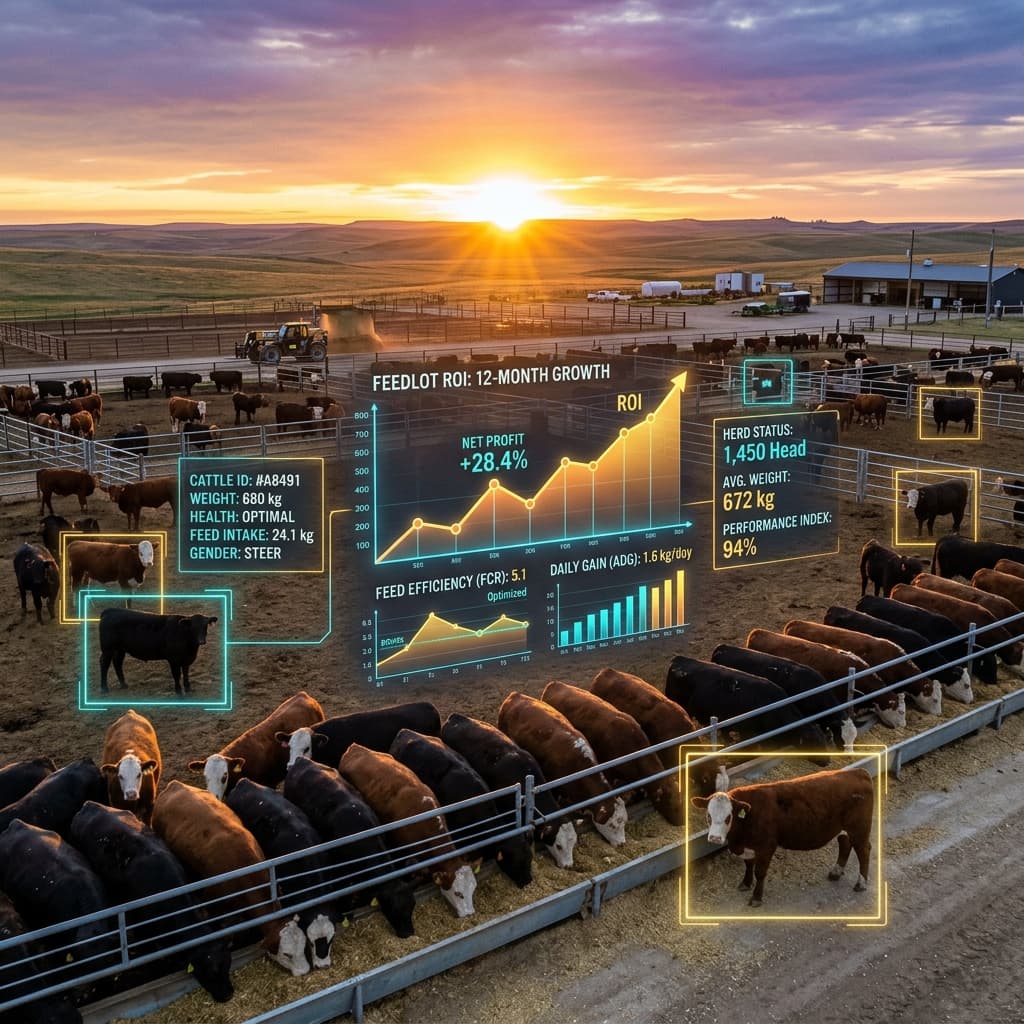
A livestock-monitoring business case starts with one operating decision, its current baseline, and the records that establish what happened. Buyers can then compare the complete cost of deployment with verified changes in that workflow.
The strongest evaluation plan is agreed before installation. It names the owner, comparison window, acceptance measures, stop criteria, cost categories, source records, and method for attributing a benefit.
Build the case in six steps
Name the operating decision
Choose one workflow with a clear owner: pen-count reconciliation, movement review, bunk-zone observation, camera coverage, or evidence retrieval.
Measure the baseline
Record current event volume, staff time, error and exception rates, source records, handoffs, elapsed time, and unresolved outcomes.
Count the full deployment cost
Include hardware, installation, power, connectivity, storage, integration, training, review time, support, maintenance, downtime, and exit work.
Set acceptance measures
Define coverage, evidence quality, queue precision, missed events, review burden, response time, system availability, and resolution criteria before launch.
Measure attributable benefit
Use agreed source records and comparison windows to separate observed workflow change from unrelated operational or market changes.
Decide with the complete record
Compare verified benefit with total cost, document uncertainty, and use the acceptance and stop criteria agreed at the start.
Start with the operating baseline
The baseline describes how the work happens today. For a pen-inventory workflow, that may include expected counts, receiving and movement records, the time staff spend reconciling a mismatch, the number of unresolved exceptions, and the point where ownership changes hands.
Capture representative event volume and operating conditions. Record the denominator behind every rate, preserve missing states, and separate direct measurements from estimates. A baseline that is clear enough to audit is clear enough to compare.
Count the full deployment cost
| Cost area | What to include |
|---|---|
| Hardware and site work | Cameras, compute, mounts, enclosure, power, network, civil work, spares, and commissioning |
| Software and integration | Licensing, configuration, data interfaces, identity and record mapping, security, and testing |
| People and process | Training, change management, review labor, supervision, quality checks, and workflow documentation |
| Operations | Connectivity, storage, energy, monitoring, support, maintenance visits, cleaning, and replacement parts |
| Reliability and lifecycle | Downtime, degraded coverage, backup, recovery tests, upgrades, decommissioning, and data export |
Define workflow value and acceptance measures
Workflow value is the verified change in the bounded task: evidence found faster, an exception resolved with a documented cause, a missing observation surfaced, or a handoff completed with the required context. Acceptance measures specify how consistently that value appears and what workload accompanies it.
| Measure | Baseline record | Pilot record |
|---|---|---|
| Coverage | Current observation and record coverage by place, time, and event | Usable camera coverage, missing intervals, obstruction, and quality states |
| Exception workflow | Current exception volume, discovery path, owner, and elapsed resolution time | Queued events, source-evidence availability, reviewer disposition, and resolved cause |
| Review labor | Time spent searching records, reviewing events, correcting data, and completing handoffs | Queue review time, added checks, retraining, escalation, and total staff workload |
| Reliability | Existing system availability, failure handling, and recovery work | Camera, compute, network, storage, maintenance, and recovery performance |
| Decision value | Current cost or consequence of the defined unresolved workflow | Verified change tied to an accepted source record and comparison method |
Treat review labor as part of the system
Camera monitoring shifts work as it creates evidence. Measure the time required to open an event, inspect source frames, compare records, escalate uncertainty, document a resolution, maintain cameras, and recover from missing coverage. Training and supervision belong in the same workload record.
This makes the buyer's question concrete: did the complete review workflow improve against the agreed baseline after all new work was included?
Calculate ROI from attributable benefit
Assign a financial value only where the pilot's source records and comparison method support attribution. Keep observed operational measures, financial valuation, and broader business context distinct.
ROI = (Attributable Benefit − Total Cost) ÷ Total Cost × 100
Use source evidence buyers can inspect
Research sources can inform study design and measurement choices. Site records remain the basis for the buyer's own baseline, acceptance decision, and financial calculation.
Buyer assessment
Build a measurable livestock-monitoring business case
Bring one workflow, its source records, and the people who own the decision. We will map the baseline, deployment scope, acceptance measures, total cost, and evidence plan.