Six Questions to Ask a Livestock Technology Partner
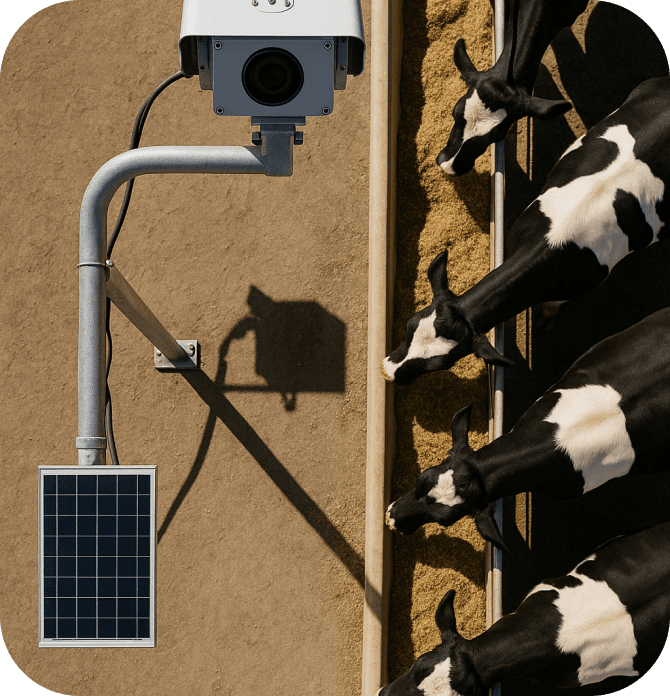
Livestock-monitoring claims should be testable before purchase. Ask every vendor—including Livestock Technologies—for definitions, field evidence, failure behavior, and contract terms for these six areas:
- ✗Night performance: What is captured, and how does accuracy change by lighting and camera channel?
- ✗Weather and site conditions: How are dust, rain, heat, mud, crowding, cleaning, and camera movement tested?
- ✗Retention and recovery: What is stored, for how long, where are backups, and how are gaps reported?
- ✗Coverage and occlusion: How does the system represent an animal outside view or blocked by another animal?
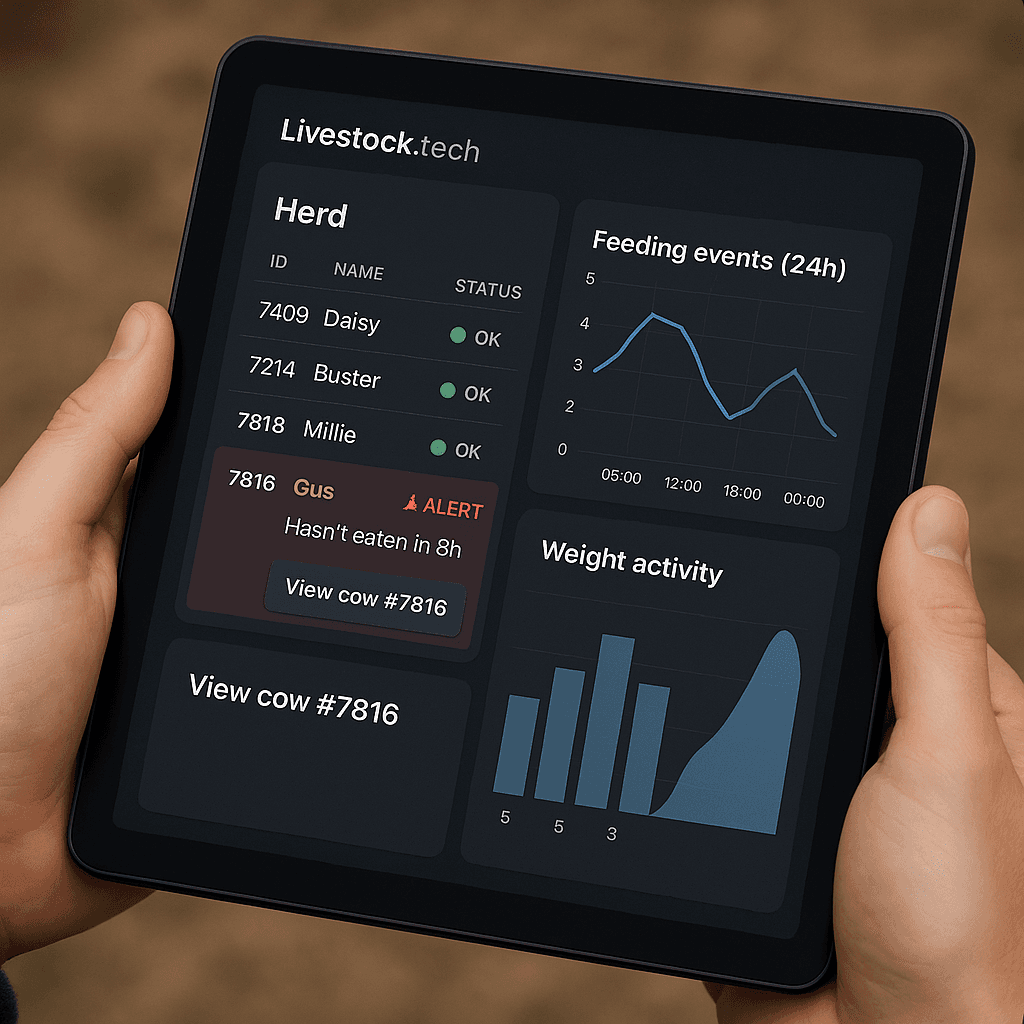
- ✗Review evidence: Does each alert link to the source clip, confidence, model version, and correction history?
- ✗Infrastructure and support: What power, network, storage, maintenance, access, and staff time does the system require?
What Evidence to Request
- ✓Uptime by condition: Measured capture, processing, and delivery uptime—with maintenance excluded or included explicitly.
- ✓Coverage report: Occlusions, missed observations, unresolved identities, and time outside the useful field of view.
- ✓Retention test: Expected versus available records, backup and restore results, deletion terms, and export format.
- ✓Identity validation: Comparison with a trusted EID, RFID, manual, or chute reference; confidence thresholds and false-match rates.
- ✓Decision workflow: What the system observed and which team owns the next review.
- ✓Acceptance measures: Predefined measures for usefulness, error, workload, total cost, and stop conditions.
The Bottom Line
A credible technology partner documents coverage, uptime, identity confidence, and retention; agrees on a measurable deployment plan; and helps the operation compare results with its own baseline before expansion.
Livestock Technologies' Field-Built Answer
Livestock Technologies builds local-first field systems with fixed RGB and thermal cameras, solar and wireless infrastructure, on-site compute and storage, controlled-chute references, review workflows, and integrations with existing records. The documented Tuskegee deployment records 60 cattle across four pens.
Measured outcomes should be reviewed with the relevant site and cohort details.