For a decade, precision livestock farming technology had a one-way relationship with data: sensors talked, researchers listened — then spent their evenings wrangling exports. In 2026 that relationship became a conversation. Large language models learned to use tools: to query databases, pull live camera frames, and generate charts on request. Animal science is one of the first fields where you can watch it happen on real animals, because at the Tuskegee University research feedlot, the monitoring platform now answers questions in plain English.
The 2026 Shift: From Models That Answer to Agents That Act
The research literature has pivoted fast. Reviews in Animal Frontiers now survey large language models alongside computer vision as core tools for animal farming. Scientific Reports has published human-in-the-loop frameworks for LLM-driven farm management insight. And new benchmarks like AgroTools exist specifically to measure how well tool-augmentedAI agents perform on agricultural tasks — not what a model remembers, but what it can find out.
That last distinction is the whole story. A chatbot answering from memory is a liability in science. An agentanswering from your instruments — with the query, the tool call, and the returned evidence all logged — is something else entirely: a research assistant whose every claim is traceable to ground truth.
The Wall Between Researchers and Their Own Data
Every animal scientist knows the wall. The monitoring system collects beautifully — then the workflow is: log into a vendor dashboard, click through menus, export a CSV, clean it in R or Python, and only then ask the question you had in the first place. Reviews of the field describe exactly this problem: PLF systems that operate as isolated data silos rather than integrated ecosystems, with the integration burden dumped on the scientist. Our individual-animal monitoring data is designed to keep the evidence and the explanation connected.
The result is a quiet tax on research velocity. Questions that should take seconds — was Pen 2 under heat stress during the trial’s third week? what does the bunk look like right now?— take hours, so they get asked less often, or not at all.
MCP, Briefly: A USB Port for Research Data
The piece that made agents practical is the Model Context Protocol (MCP)— an open standard introduced by Anthropic in late 2024 that gives AI assistants a common way to connect to external tools and data. By 2026 it is supported across the major AI platforms, with an ecosystem of thousands of servers. The practical consequence for a lab: expose your instrument or dataset through one MCP server, and it becomes queryable from whichever assistant your team already uses — no custom integration per tool, per model, per vendor.
Agriculture is starting to adopt it. We believe our deployment is among the first — to our knowledge, the first — live livestock research facilities in the world exposed to researchers through MCP.
What Talking to a Feedlot Actually Looks Like
At the Tuskegee deployment, the platform’s agent interface sits on top of the same permissioned APIs that drive the dashboard. Ask, and it serves — live views, herd data, environment, charts. Three real examples:
Show me Pen 3 right now.
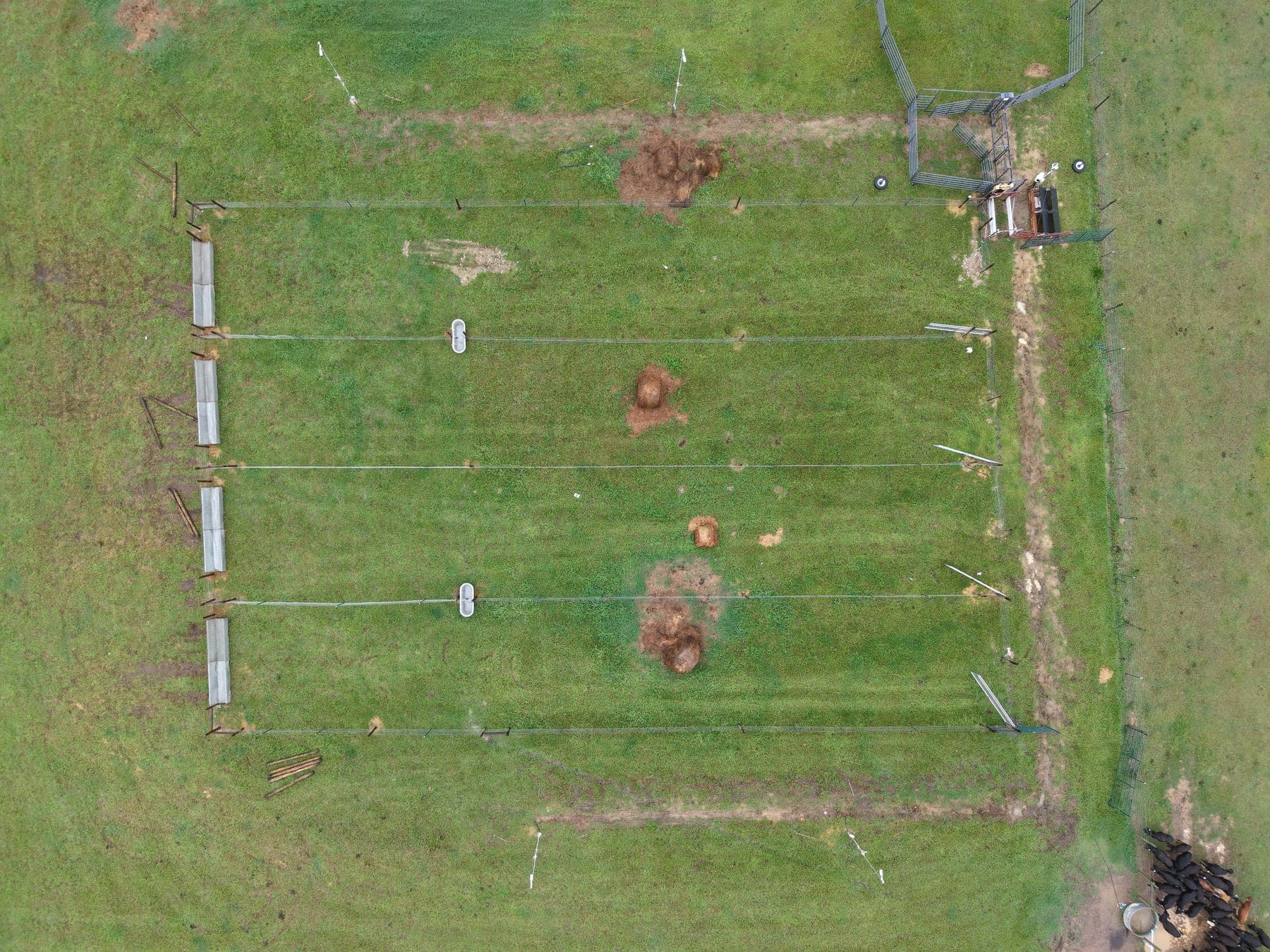
Returns the live 4K digital view and both thermal views of Pen 3, side by side — the same frames the archive stores 24/7.
How hot did it get for the herd yesterday?
Returns the Temperature-Humidity Index (THI) computed from live local weather — the cattle-industry standard — with per-pen alert history.
Chart weights for the heavy cohort.
Returns a generated chart from the enrollment and weigh records — no export, no spreadsheet, no scripting session.
Note what is nothappening: the model is not guessing from training data. Every answer is a tool call against the live system, returning the same images and records a researcher could pull by hand — just without the hand-pulling. The camera views come back in both spectrums, digital and thermal, because that is how the site actually sees.
What the Agent Stands On
An agent is only as good as the instruments beneath it. Under the conversation layer, the platform runs a research-grade livestock sensing stack:
- Tuned and evaluated on site. Detection models use labeled frames from the research pens; performance is reported for the defined protocol and conditions rather than treated as universal.
- Controlled chute enrollment. As each animal moves through the chute, the system captures face, muzzle, and visible ear-tag reference views for an identity research gallery.
- Identity cross-checks. Reference captures are associated with the loading manifest and existing tag records alongside existing tag records and the research workflow.
- Industry-standard heat stress. The NRC/Thom Temperature-Humidity Index computed continuously from live local weather, with per-pen alerting.
Deployed vs. In Development — Because Researchers Check
Agentic AI has a credibility problem in science, and it is earned: models hallucinate, and vendors overclaim. Our answer is to label capabilities the way we would want them labeled if we were writing the grant. This is the current, honest state of the platform:
- Synchronized RGB and thermal camera capture with a searchable field archive
- Controlled-chute capture of face, muzzle, and visible ear-tag reference views
- On-site compute, storage, review workflows, and data exports
- Research dashboard and protocol-organized evidence queues
- AI-assisted organization of available study materials and outputs
- Study-specific multimodal evidence organization
- Protocol and methods support for graduate research and grants
- Reproducible analysis and export design
Research teams use AI-assisted workflows to organize evidence, protocols, review queues, exports, and reproducible analysis around the study question.
Why This Matters for Your Research Program
Beyond the novelty of talking to a feedlot, the agentic layer changes four practical things for a research group:
- Velocity. Exploratory questions cost seconds instead of an export-and-clean cycle, so you ask more of them — and catch problems mid-trial instead of at write-up.
- Reproducibility. Agent tool calls can be logged against retained source records, with retention and replay defined by the study protocol.
- Non-contact observation. Cameras can add behavior and location evidence without a body-worn sensor for those observables; visibility, identity, and measurement limits still need validation.
- Individual animals as research units. The Tuskegee trial includes 60 head in four weight-grouped pens, each enrolled at the chute with a reference gallery. Researchers can organize controlled-chute references and pen-level evidence within their study methods.
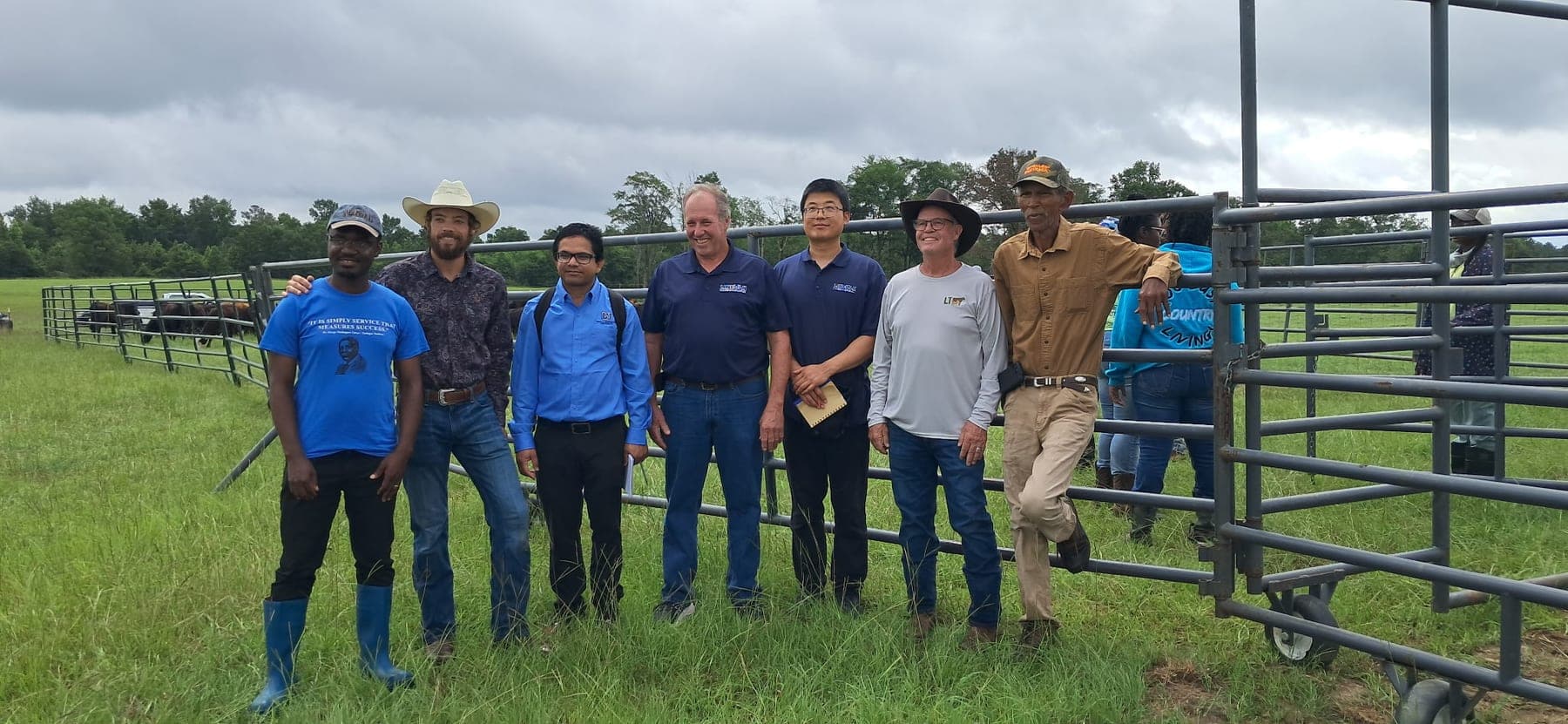
The study runs under a Sponsored Research Agreement with Tuskegee University. The installed infrastructure and research protocol are established; performance results and transfer to other sites must be reported separately as the work proceeds.
Funding It: The FY26–27 Landscape
Funding programs change by fiscal year. Use these program areas as starting points, then verify every date, amount, eligibility rule, and allowable cost in the active request for applications:
- USDA NIFA data science and artificial intelligence programs. Review the current NIFA program page and active funding notice for scope, dates, and award limits.
- NIFA equipment opportunities. Confirm whether the active program permits the proposed hardware, software, installation, and data work before treating the platform as an allowable cost.
- Precision Agriculture in Animal Production & the AI Institutes.NIFA’s targeted animal-production program lines, plus the NSF/USDA-funded National AI Research Institutes (including AIFARMS for livestock and farm AI), continue to anchor larger collaborative proposals.
Procurement structure and grant allowability are not the same question. Ask for a site-specific quote and data-ownership terms, then have the institution’s sponsored-programs and procurement offices test each cost against the active notice before building a budget.
Frequently Asked Questions
How can AI-assisted workflows help an animal-science study?
AI-assisted workflows can organize multimodal livestock evidence, protocol materials, review queues, exports, and reproducible analysis around the questions a research team is studying.
What can research teams scope with Livestock Technologies?
Teams can scope synchronized RGB and thermal capture, on-site compute and storage, controlled-chute reference capture, review workflows, versioned outputs, exports, and methods development.
What remains the researcher's responsibility?
Researchers remain responsible for protocol, ground truth, interpretation, and consequential decisions.
Build the research workflow for your next study.
Scope the capture, protocol materials, review queues, exports, and reproducible analysis your research program needs.
Sources & Further Reading
- Artificial intelligence for livestock: computer vision systems and large language models for animal farming — Animal Frontiers
- A human-in-the-loop approach to applying large language models for farm management insight — Scientific Reports
- AgroTools: A benchmark for tool-augmented multimodal agents in agriculture — arXiv
- From isolated data to integrated ecosystems: the AI revolution in precision livestock farming — PMC
- Recent advances in computer vision for non-contact phenotyping and weight estimation in livestock: a systematic review — ScienceDirect
- Model Context Protocol — overview and platform adoption
- USDA NIFA — Artificial Intelligence (DSFAS / A1541)
- USDA NIFA — Precision Agriculture in Animal Production
- USDA NIFA — current funding opportunities (verify dates and amounts in the active RFA)