Answer first
A useful cattle behavior model must work on data it has never seen
Hold out complete animals, later dates, different pens, and separate camera views. Preserve poor light, blocked views, broken identity tracks, and outages as real test conditions. Report where performance falls instead of hiding the drop inside one average.
Start with a written behavior rule and trusted reference labels. Then keep every prediction connected to the source video, study animal, camera, model version, and reviewer decision.
What recent studies show
Strong results on familiar clips do not prove field readiness
The 2026 MooCap benchmark contains 42 hours of synchronized video from 43 cattle. It covers seven interaction settings, 23 behaviors, 39 body points, and 157 test sessions. The authors report lower performance during interaction-heavy segments, where cattle, people, and objects overlap.
A July 2026 University of Florida review reached a similar practical conclusion. It examined whether cattle-vision studies matched real management tasks. The review emphasizes tests on cattle absent from training, longer observation periods, varied barns, and direct reporting of deployment limits.
A separate 2026 preprint tested posture models across animals and years. The authors reported a sharp drop during the cross-year test.
Treat that finding as early research, not a universal rate. Its lesson is still useful: a later season can expose shortcuts that a random clip split misses.
The University of Illinois Cattle Mooves project shows how to strengthen reference data. Researchers pair marker-free video with marker-based measurements of joints and hooves. That pairing helps connect what a model sees with a more precise physical reference.
Before labeling begins
Define the behavior and the decision it supports
“At the bunk” is a location. “Head down” is a posture.
“Eating” is an activity that may need a longer view or another measurement. Write these differences into the study dictionary before annotation.
Next, name the intended decision. A model built to measure daily lying time needs different labels from one built to find short movement changes. The time window, error cost, and review path should match that decision.
If direct observation cannot answer the study question, add a qualified reference. That may include a force plate, marker-based motion capture, EID event, water flow meter, electronic feeder, or trained animal-science review.
Field validation checklist
Seven checks before a behavior model leaves the study pen
Define one visible behavior
Write the behavior rule before labeling video. State when an event begins, when it ends, and what a reviewer must see. Keep posture, location, and activity as separate labels when they answer different questions.
Build trusted reference labels
Train reviewers with the same examples and edge cases. Measure agreement, preserve disagreements, and route hard clips to a qualified reviewer. A model score cannot repair weak or changing labels.
Hold out complete animals
Keep every clip from selected cattle out of training. This tests whether the model learned the behavior instead of memorizing an animal, coat pattern, pen position, or repeated routine.
Hold out later dates and site conditions
Test on later weeks, another season, or a changed pen. Record light, weather, mud, dust, vegetation, camera movement, and management events. These changes often expose a model that only fits one collection period.
Challenge each camera view
Report results by camera, distance, angle, zone, and time of day. Include overlapping cattle, blocked views, low light, glare, and empty scenes. Never turn an unobservable animal into a negative behavior label.
Report the errors people must review
Show missed events, false events, broken identity tracks, early starts, late endings, and uncertain clips. Report each behavior separately. One overall accuracy number can hide the failure that matters most.
Freeze the result with its evidence
Keep the source clip, label version, animal and pen record, camera setup, model version, threshold, and reviewer decision together. A later reader should be able to reopen the exact event.
Research record
Keep the result connected to the record that produced it
| Record | What to keep | Why it matters |
|---|---|---|
| Source video | Original clip, camera, time, zone, frame rate, and file checksum | Lets reviewers return to what the camera recorded. |
| Behavior label | Written definition, reviewer, confidence, start, end, and disagreement state | Shows how the reference answer was created. |
| Animal and setting | Study ID, pen, cohort, assignment dates, treatment events, and scene conditions | Separates animal effects from place and time effects. |
| Coverage state | Visible, partly blocked, outside view, poor light, outage, or clock issue | Prevents missing evidence from becoming a false label. |
| Model result | Code, weights, threshold, split, prediction, confidence, and review outcome | Makes the reported result repeatable and reviewable. |
How Livestock Technologies helps
Build the field record around the study question
Livestock Technologies configures fixed RGB and thermal cameras around study-defined zones, events, and observation windows. The platform can preserve reviewable clips, time-stamped observations, labels, coverage states, and structured exports for the research team.
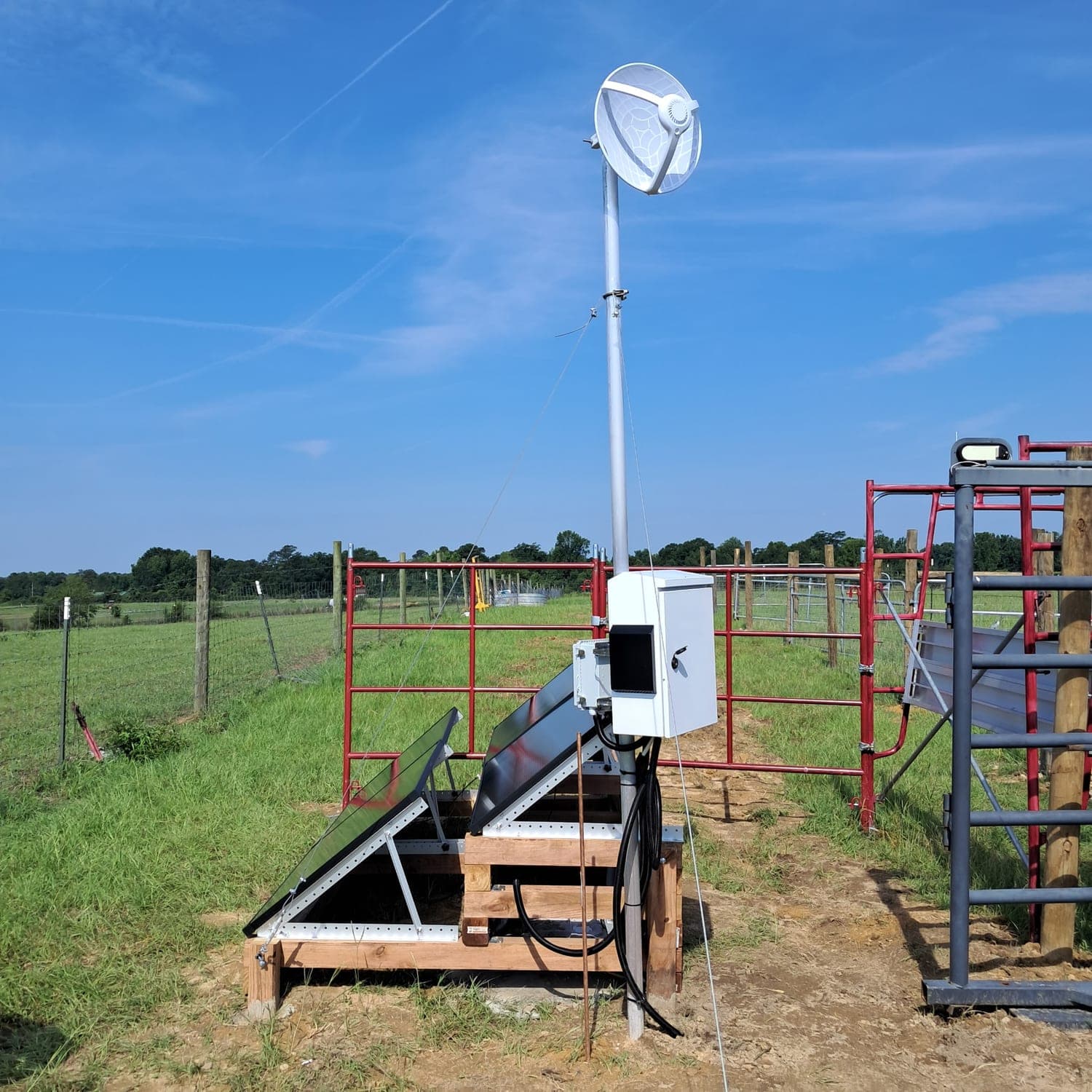
At Tuskegee University, field-installed nodes provide a working base for camera-based livestock research. The study team still defines the behavior, reference method, acceptance rules, and scientific conclusion. Livestock Technologies helps keep the observation and its source evidence together.
See the documented Tuskegee field evidence and the research deployment options before setting the capture and export plan.
Review before release
Six questions for the final study report
- Were complete animals held out from training?
- Does the test include later dates or a different collection period?
- Are results reported by camera, behavior, and coverage state?
- Can a reviewer reopen every important error in the original video?
- Are blocked or missing views kept separate from negative behavior labels?
- Does the report identify the exact model, threshold, labels, and test split?
Sources and current research
Read the studies behind the checklist
- CVPR 2026: MooCap multi-view cattle behavior benchmark
- University of Florida: Operation-centered review of computer vision for dairy cow management
- University of Illinois: Cattle Mooves imaging and reference-measurement project
- npj Veterinary Sciences: Video-based cattle behavior detection under barn conditions
- 2026 preprint: Cattle posture classification under animal-level and temporal shift
A practical next step
Bring one behavior question and one difficult field condition
We can map the cameras, labels, reference method, holdout plan, review steps, and exports for a focused cattle-behavior study. Start with the behavior your team needs to measure and the condition most likely to break the model.
Plan a behavior-AI study