Individual and Pen-Level Cattle Data: Choosing the Right Evidence
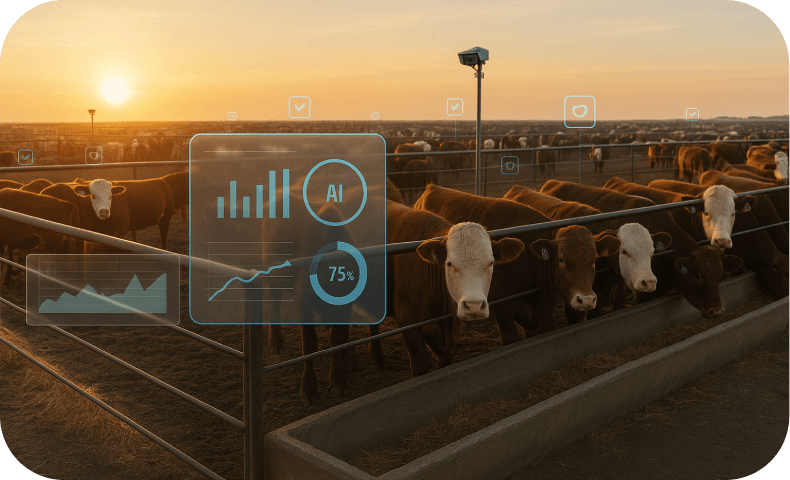
Good feedlot decisions start with the right evidence. Pen-level data explains the shared conditions around a group of cattle; individual data adds a focused timeline when an operation needs to follow one animal through a defined workflow.
Pen-level evidence
Counts, movement, group activity, bunk and water-zone context, and pen conditions answer questions about what is happening in a shared operating space.
Individual timelines
Controlled identity references connect an observation sequence to an animal record when the job calls for an individual review.
One connected record
Livestock Technologies brings pen context and individual evidence together so teams can move from a pen-level question to the right source frames, timeline, and operational record.
When Pen-Level Evidence Answers the Job
Pen counts, movement patterns, visible bunk activity, water-zone use, rest, crowding, and environmental context give a crew a coherent picture of the group. This evidence supports daily rounds, count reconciliation, movement review, and the questions that naturally begin with a pen rather than a single identifier.
When an Individual Timeline Adds Value
Controlled chute processing can capture face, muzzle, and visible ear-tag reference views with the loading record. Those references create a structured starting point for individual timelines that can be connected to subsequent camera observations and the team’s operating records.
From Reference Capture to Review
Livestock Technologies combines controlled identity references, pen-level camera context, source clips, and record integration. The result is evidence that can move naturally from group context to an individual review when the question requires it.
Evidence That Works Across the Yard
A pen-level exception can lead a team to the relevant camera views. An individual timeline can add record context. Together, they give inventory owners, pen riders, and animal-health teams a stronger shared account of what happened, where it happened, and what the crew reviewed.
A Practical Implementation Sequence
- Map pen zones, camera coverage, and the operating questions that need evidence.
- Capture controlled identity references during chute processing.
- Connect source imagery, pen context, and the existing operating record.
- Give accountable team members a review queue and correction path.
Individual-level results depend on identity confidence, coverage, missing observations, and ground truth.