Cow Nose Imaging and EID/RFID: A Connected Identity Workflow
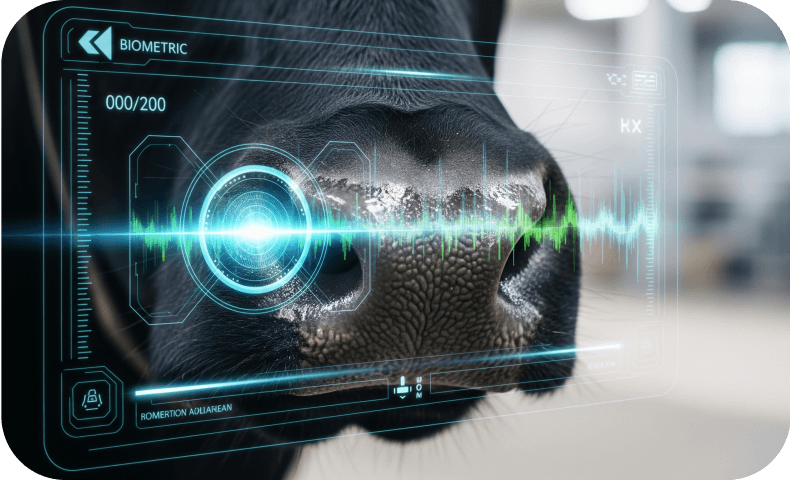
Visual tags, EID, RFID, and the operation's system of record remain important identity tools. Chute-based face and muzzle imagery can add a reference that helps staff cross-check an animal when a tag is difficult to read or a record needs review.
Livestock Technologies captures face, muzzle, and visible ear-tag imagery during chute processing. Muzzle segmentation is working, and the workflow builds reference galleries and visual continuity alongside official IDs. Biometric matching and passive open-pen performance are evaluated by site and protocol; official identification remains authoritative.
The Problem with Traditional Ear Tags
Tags can be obscured, damaged, entered incorrectly, or separated from a record. Those are reasons to build a redundant identity workflow, not reasons to discard the system of record:
- ✗Exception Handling: A missing or unreadable tag should create a documented identity exception for staff review.
- ✗Reference Capture: When cattle are already in a chute for approved processing, fixed cameras can collect consistent reference imagery without adding a separate identity event.
- ✗Record Quality: A useful workflow preserves the source image, tag reading, timestamp, confidence, and any human correction.
Where Cow Nose Imaging Can Help
The near-term goal is a reviewable identity aid. Each claimed match should include enough evidence for a person to confirm it, and uncertain cases should remain unresolved rather than being forced into an identity.
1. Redundant Reference Evidence
Face and muzzle imagery can sit beside EID or RFID records as controlled-chute visual references.
2. Consistent Chute Capture
Controlled camera geometry can improve image consistency during an already scheduled handling event. It does not establish a performance or welfare benefit without a comparative study.
3. Identity-to-Observation Research
Reference galleries can connect reviewable chute observations with the records used by the operation.
4. Measurable Operating Requirements
Camera uptime, cleaning, lighting, storage, backup, network access, missed captures, and manual-review time belong in the pilot plan and total cost.
How to Evaluate the Business Case
Compare a documented baseline with a measurable deployment: identity exceptions resolved, false matches, missed captures, review time, equipment and support cost, and any verified reduction in duplicate work. Do not count projected health or performance gains as realized savings.
"The useful question is not whether imagery replaces a tag. It is whether another source of evidence makes identity exceptions easier to resolve without weakening the system of record."
Build a Connected Identity Workflow
Livestock Technologies can help design chute-camera geometry, reference capture, EID/RFID connections, and human-review workflows for a connected identity deployment.