Answer first
A lighter arrival weight and a missing animal are different problems.
Shrink is a change in body weight. A head-count exception means the observed number of cattle does not match the load record. An identity exception means an animal or ID does not match.
Keep those records separate, then connect them by load, time, and receiving pen. This prevents a normal weight change from hiding an inventory problem.
What cattle shrink means
Cattle can lose fill and body water during transport.
Oklahoma State describes two parts of shrink. Fill shrink is the loss of rumen contents, manure, and urine. It often returns faster after normal feed and water intake resumes.
Tissue shrink includes fluid loss from body tissues. It is more associated with longer periods without feed or water and may take longer to recover.
Transit time, diet, gathering, handling, weather, cattle condition, and weighing conditions all matter. That is why one shrink percentage cannot explain every load.
Three records, one load
Ask a different question for count, identity, and weight.
Head count
Did the number unloaded match the number expected?
Record: Expected head, observed head, recount result, time, lane, and reviewer.
Identity
Did the animals and IDs match the load record?
Record: EID/RFID reads, visible tags, visual references, duplicates, unread tags, and unresolved animals.
Weight
How did the documented arrival weight compare with the source weight?
Record: Scale, group, time, feed and water access, transit duration, weather, and weighing conditions.
Why late-summer receiving needs care
Heat adds another condition to the arrival record.
University of Nebraska-Lincoln says late-summer receiving can combine transport, heat, commingling, diet change, and limited intake. It recommends prompt water access and careful processing timing.
Record arrival weather, cattle condition, water availability, and when the load first had access to water and feed. Those facts help a qualified team interpret later weights and care records.
For water-system checks, use our feedlot water capacity and access audit.
The receiving workflow
Build one traceable record in six steps.
Freeze the source record
Keep the load manifest, expected head count, source weight, scale details, and departure time. Preserve any listed IDs before editing the yard record.
Count cattle during unloading
Record the observed head count at the receiving lane. If it differs from the manifest, recount before cattle mix with another load.
Resolve identity exceptions
Record missing, unread, duplicated, or unexpected tags. Keep each exception open until a person connects it to the correct animal and source record.
Document the weighing conditions
Record the scale, time, group, transit duration, weather, and access to feed or water. A weight without its conditions is hard to compare fairly.
Record the first pen assignment
Connect the load, animals, arrival time, receiving pen, and any later movement. This creates a clear starting point for the yard inventory.
Set the next review
Follow the nutrition, cattle-care, and veterinary plan for water, feed, processing, and rechecks. Keep later weights separate from the arrival record.
How Livestock Technologies helps
Preserve the unload and route exceptions to a person.
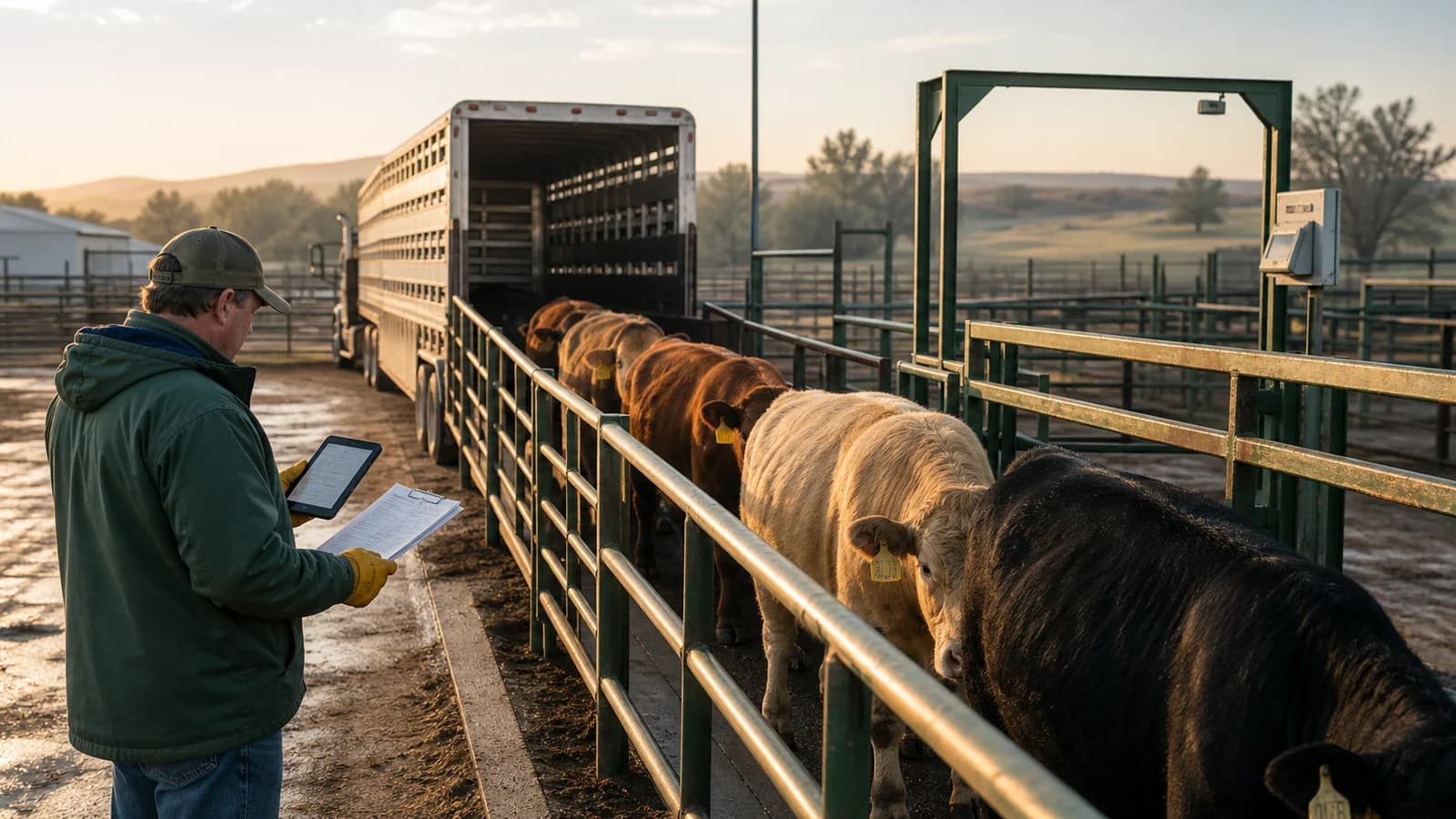
A fixed camera can preserve the unloading lane, time, cattle flow, and visible source evidence. Software can compare an observed count with the expected load and flag a difference for review.
The receiving team can connect the reviewed count with EID/RFID, visible tags, a Nose ID chute reference, and the first pen assignment. The original clip stays available when an exception needs review.
Cameras do not weigh cattle or determine why weight changed. The scale and documented weighing conditions provide the weight record. The camera workflow supports inventory and identity reconciliation.
See the installed cameras, on-site processing, and chute-reference workflow in our Tuskegee University field evidence and review the full feedlot inventory workflow.
A practical next step
Show us one receiving lane, one load record, and one pen assignment.
We will map where an observed count, identity exception, source clip, and first pen movement can fit beside the scale and records your yard already uses.
Sources and current guidance
- University of Nebraska-Lincoln: Can Your Receiving Program Handle the Heat?
- Oklahoma State University: Managing Shrink and Weighing Conditions in Beef Cattle
- University of Florida IFAS: Shrink in Beef Cattle: A Marketing Consideration
- Beef Quality Assurance: Transportation Manual
Published August 14, 2026. Follow current BQA transportation practices and the operation's nutrition, cattle-care, veterinary, weighing, and receiving procedures for each load.