The short answer
The border announcement changes cattle flow. Your job is to keep the receiving record and the cattle in front of you aligned.
USDA says the Douglas, Arizona, port is scheduled to reopen August 24, contingent on Mexico meeting the Joint Action Plan. Every animal entering through the reopened ports will receive a full USDA inspection for signs of New World screwworm. Once cattle reach a feedlot, the operational challenge becomes receiving, processing, pen assignment, and exception review.
The timing matters. USDA's new July cattle inventory counted 94.2 million cattle and calves on U.S. farms. Beef cows were down 1% from a year earlier, the 2026 calf crop was down 2%, and all cattle on feed were up 2% at 13.2 million head.
That combination—tight cow and calf numbers, more cattle already on feed, and a phased reopening of cross-border trade—puts attention on the handoff between national supply and the actual cattle moving through a feedlot's receiving system.
A practical operating plan
Four checkpoints for every incoming load
Know the expected load
Start with the manifest, source information, expected head count, and destination pens before the trailer is unloaded.
Preserve the inspection handoff
Keep USDA and veterinary inspection records connected to the receiving event. Camera observations support—not replace—required inspection.
Reconcile every movement
Account for cattle moving from unloading to processing, receiving pens, hospital pens, and final home pens.
Review exceptions quickly
Route an unexplained count or movement to a person with the time window and visual evidence needed to resolve it.
Where our system fits
Turn receiving video into an inventory exception workflow
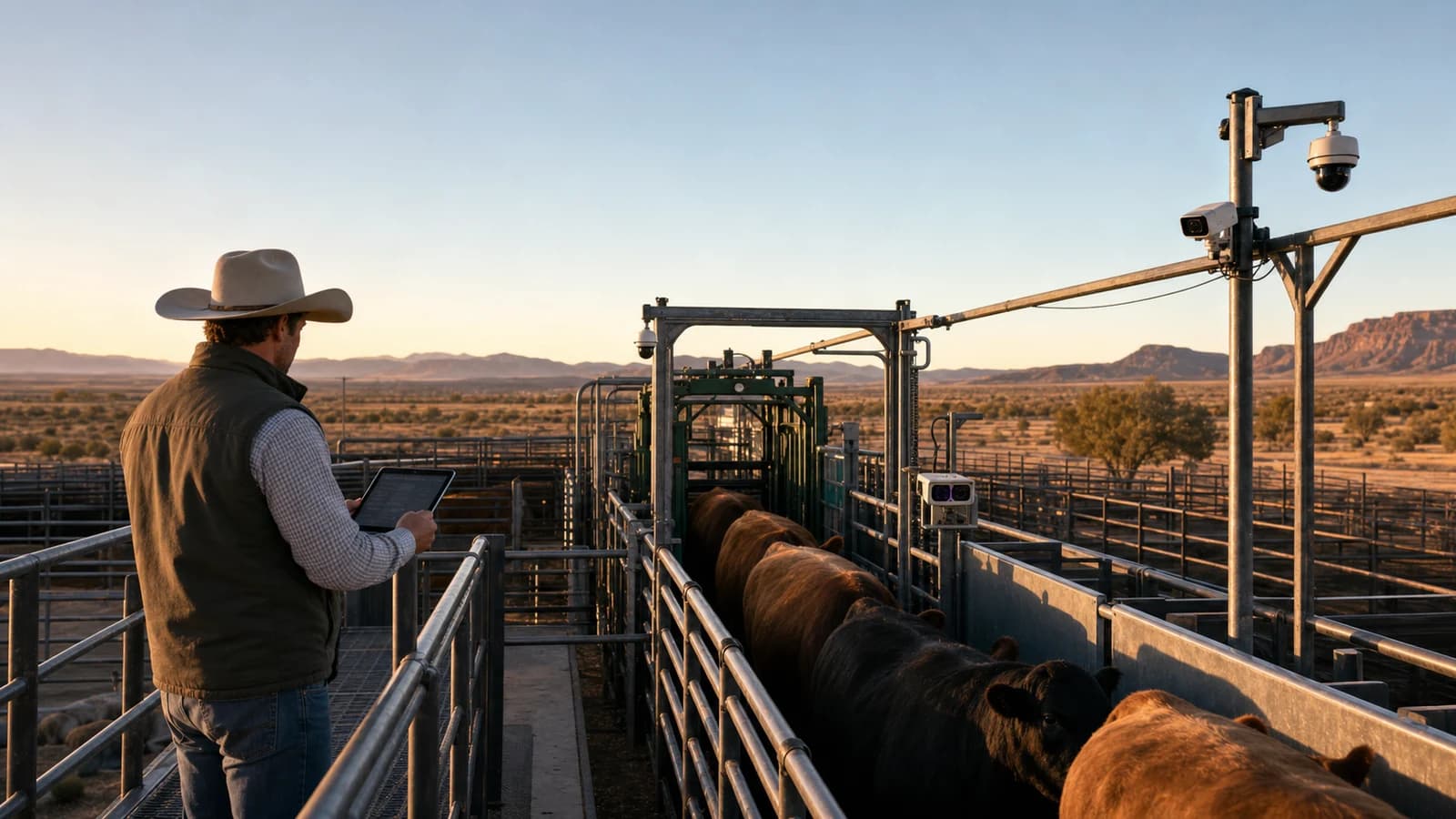
Livestock Technologies adds a fixed-camera observation layer to the yard system you already use. The yard record says what should have happened. Cameras preserve what was observed at unloading, processing, alleys, and destination pens. The system can then narrow attention to a count or movement that does not reconcile.
At a controlled chute passage, EID/RFID reads can be associated with visual ear-tag, face, and muzzle references captured at the same time. Those references help connect a documented receiving event to later visual evidence without pretending that cameras replace the feedlot's system of record.
The operator's question
“We expected 126 head. Which 126 entered, where did they go, and what evidence explains the difference if the destination pen is short?”
The useful output is not more video. It is one exception, one time window, and the evidence needed to close it.
Biosecurity handoff
Inspection at the port does not end vigilance at receiving
USDA inspection determines whether an animal may enter through the reopened port. A feedlot still needs a clear process for escalating visible wounds or unusual heat patterns noticed later.
A Livestock Technologies Nose ID chute can be outfitted with synchronized RGB and thermal cameras. The paired views are designed to preserve visible wound evidence and localized thermal differences for human review. They are an early-warning and evidence workflow—not a diagnosis and not a substitute for veterinary examination.
Read the technical explanation in our RGB and thermal screwworm monitoring guide.
Before August 24
Feedlot receiving readiness checklist
- Expected head count and source manifest loaded before arrival
- Receiving, processing, hospital, and destination pens clearly mapped
- EID/RFID reads and visual reference images associated at the controlled chute
- A named person responsible for resolving count and movement exceptions
- A defined escalation path for visible wound concerns or unusual thermal patterns
- End-of-shift reconciliation between expected inventory and observed cattle flow
Never lose an animal
Start with one receiving lane and a small group of pens.
We will map the cattle flow, expected records, camera locations, and exception owner with your team. The goal is a bounded pilot with clear acceptance criteria—not a disruptive replacement project.
Primary sources
- USDA APHIS: Phased reopening of southern livestock ports
- USDA NASS: July 2026 United States cattle inventory
- USDA NASS: Cattle on Feed releases
Published July 29, 2026. Government schedules and animal-health requirements can change; operators should confirm current requirements directly with USDA APHIS and their veterinary authorities.