The short answer
Heat-ready receiving starts with a clear first-24-hours checklist.
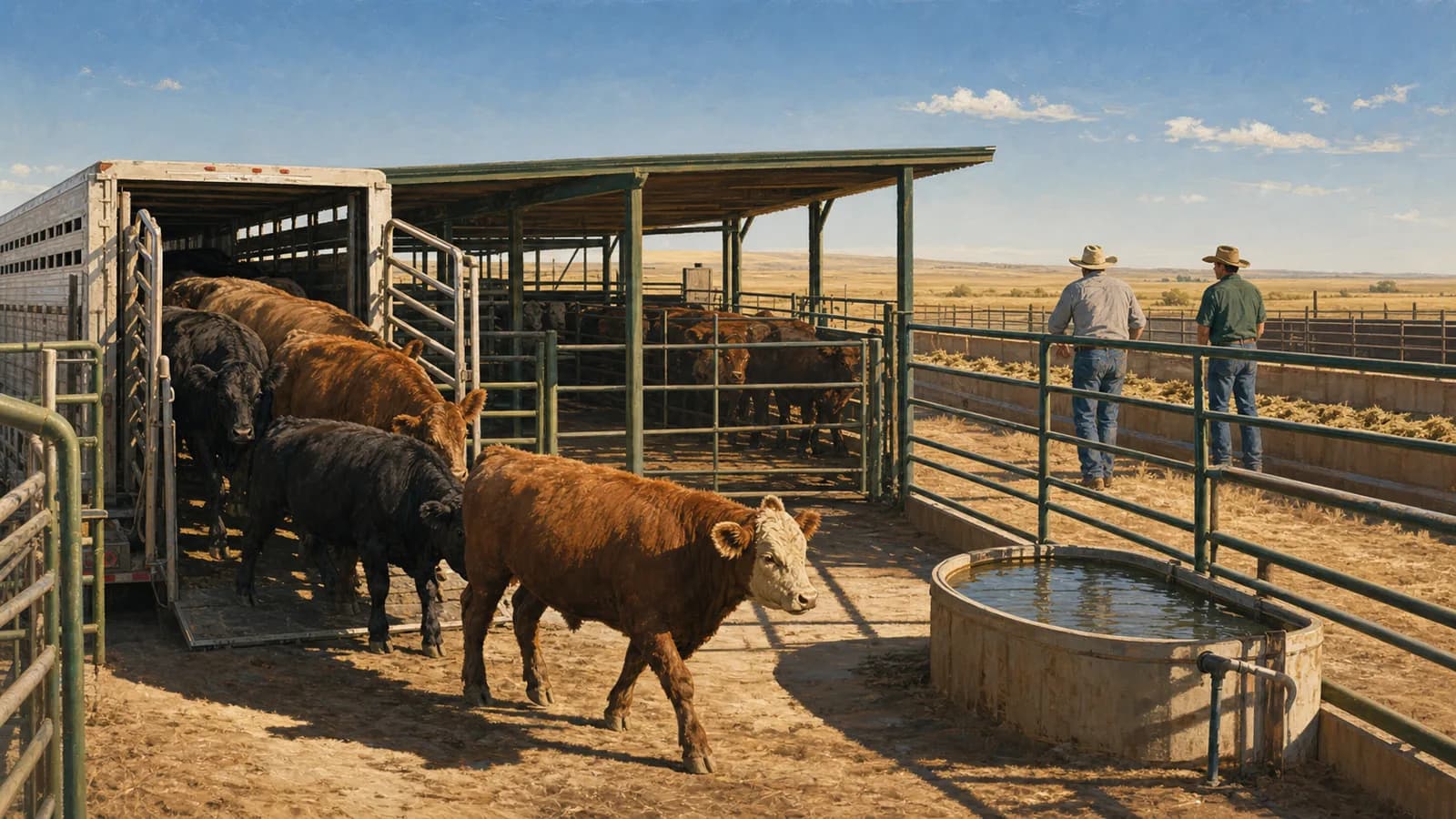
Nebraska Extension's August 1 guidance emphasizes water access, steady feed delivery, processing after cattle have time to hydrate, cooler work windows, and lower heat and handling load. Put water, shade and airflow, processing timing, receiving diet, lot and pen reconciliation, bunk and water-zone review, and crew observations on the first-24-hours plan. Camera evidence shows zone presence and duration and supports review; it does not diagnose or measure intake.
Why this matters now
August receiving joins transport stress with a changing heat load.
Late-summer placements can bring transportation, commingling, a new ration, unfamiliar pens, and hot weather together on the same day. Nebraska Extension notes that heat can reduce feed intake and shift cattle toward cooler feeding periods, making consistency harder just when the receiving program needs it most.
NOAA's July 31 monthly outlook favors above-normal August temperatures across the western and southern two-thirds of the contiguous United States, with its highest confidence across much of the Southern Plains. That outlook provides regional context for receiving plans. Use the local National Weather Service forecast, overnight-lows pattern, humidity, wind, pen conditions, and cattle risk factors for daily decisions.
South Dakota State University emphasizes accumulated heat load: several hot, humid, still days with limited nighttime cooling can matter more than one afternoon maximum. That is why a useful receiving plan begins before arrival and keeps a time-ordered record after the gate closes.
Before the truck backs in
Make the receiving pen easy to use, not merely available.
Water
Confirm the tank is clean, filling, easy to find, and reachable without forcing newly arrived cattle through a crowded corner.
Pen conditions
Prepare shade, airflow, dust control, usable bedding or high ground, and enough bunk and water access for the actual receiving group.
Processing window
Decide who can delay processing until cattle are hydrated and adapted, and who can move the work into the coolest practical part of the day.
Receiving diet
Set the feed-delivery plan and intake steps with the feedlot nutrition and animal-health team before the truck arrives, not after a pattern looks wrong.
Write down the expected arrival time, head count, destination pen, feed-delivery time, processing decision, and person responsible for each check. A verbal plan can disappear at shift change. A short receiving record gives the next person a baseline and makes an exception visible.
Site-specific first 24 hours
Run the first 24 hours against the receiving checklist.
Window
Arrival to 2 hours
Expected pattern
The lot is reconciled into the correct pen; cattle can locate water and settle without unnecessary handling.
Review trigger
Head-count disagreement, blocked water access, prolonged crowding, a gate event, or cattle remaining in the receiving flow.
Window
2 to 6 hours
Expected pattern
The group has repeated opportunities to approach water, rest, seek shade, and begin exploring the bunk area.
Review trigger
Little visible use of a key zone, persistent crowding, or a camera blind spot that prevents a confident observation.
Window
6 to 24 hours
Expected pattern
Bunk- and water-area activity can be compared with delivery times, weather conditions, processing, and crew observations.
Review trigger
A missed delivery, sharp change in zone activity, unexplained pen movement, or disagreement between the record and what the cameras preserved.
These are site-specific workflow review windows, not clinical thresholds. Follow the feedlot's animal-health protocol for individual cattle, abnormal signs, treatment decisions, and emergency response.
Where cameras fit
Use bunk and water-zone activity to focus the receiving review.
Livestock Technologies can place fixed camera views around the receiving pen, bunk line, water area, gate, and connecting alley. The useful output is a time-linked observation: the group entered the pen, activity appeared near a zone, a delivery or pen move occurred, or the view was too obstructed to say. Evidence can be retained for human review according to the deployment's documented retention plan.
The review combines time-stamped zone activity with arrival records, feed delivery, processing events, local weather, and crew observations so the receiving team can inspect the right window of the day.
Use an exception-first receiving workflow: join the arrival record, head-count reconciliation, feed-delivery schedule, processing event, local weather context, and visible bunk and water-zone activity. Route the relevant time window to the feedlot team when the expected and observed story differ.
For feedlot operators
Start with one receiving pen and one definition of a useful exception.
Bring the pen map, arrival and feed-delivery records, processing sequence, current camera views, and the receiving questions your crew already checks. We will define coverage, blind spots, evidence retention, and human-review rules before promising what a camera can observe.
Sources and current guidance
- Nebraska Extension: Can Your Receiving Program Handle the Heat?
- NOAA Climate Prediction Center: August 2026 monthly outlook discussion
- South Dakota State University Extension: Heat Stress in Feedlot Cattle
- BEEF Magazine and Iowa Beef Center: Preparing for heat stress in feeder cattle
Published August 1, 2026. Use the linked extension, weather, nutrition, and animal-health sources alongside the receiving plan for your operation.