Answer first
Make every result traceable to what the camera recorded
A cattle-camera research export should include source-file references, timestamps, camera IDs, animal links, label definitions, coverage states, method versions, and reviewer notes.
It also needs a data dictionary. That document explains each field, unit, allowed value, and missing-data rule in plain language.
Plan the export alongside the camera setup. That gives the team a clear route from a field observation to the dataset it will analyze.
Why the export matters
Connect the result with the moment it came from
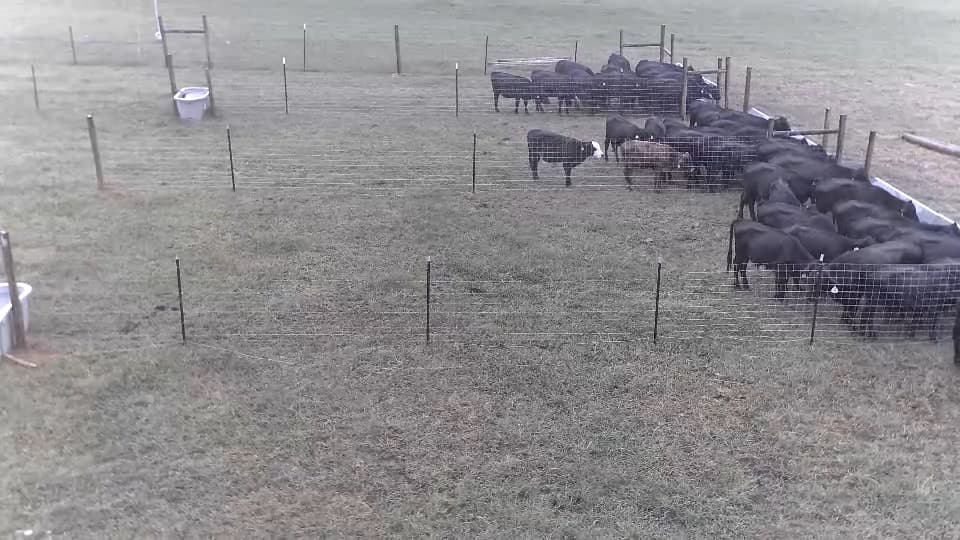
A row may say that an animal was feeding at 10:42. A reviewer still needs the supporting clip, camera, animal reference, label rule, and coverage state.
Those links let the team inspect the original moment, understand the conditions, and compare observations using the same method.
A reviewable export keeps raw observations, annotations, and derived results separate. It then connects them with stable identifiers.
What current research shows
Useful cattle datasets explain their structure
A 2026 Scientific Data release includes 3,218 cattle images and 11,318 labeled instances across ten behavior categories.
The authors describe seasons, lighting, indoor and outdoor scenes, label review, and two common annotation formats.
The 2026 MooCap benchmark connects synchronized video with cattle, session, behavior, body-point, zone, object, and human-interaction records.
These datasets answer different questions. Both show why media, labels, subjects, setting, and method details must travel together.
USDA data-management guidance reaches the same practical point. Researchers should define expected data types, metadata, formats, standards, storage, access, roles, and monitoring.
Export contents
Keep eight parts together
| Export part | What it should preserve |
|---|---|
| Study manifest | Study name, protocol version, site, cohort, dates, time zone, responsible team, and approved uses |
| Source-media index | File name, checksum, camera, start and end time, frame rate, resolution, storage location, and access state |
| Camera and coverage log | Position, view, clock source, calibration, outages, moved equipment, poor light, blocked views, and unavailable periods |
| Animal crosswalk | Study ID and approved links to EID, RFID, pen, treatment, or cohort records, with unknown identity kept explicit |
| Annotation table | Label, visible start and end, animal, camera, zone, reviewer, review state, confidence rule, and source-file reference |
| Derived results | Measure, units, method, model or code version, threshold, input files, output time, and quality state |
| Data dictionary | Field name, plain definition, data type, allowed values, units, missing-value rule, and example |
| Release record | Export version, included files, checksums, known limits, access terms, citation, and change notes |
Missing data
Make unknown states visible
“No feeding event” is different from “animal outside the view.” It also differs from a blocked camera, outage, uncertain label, or missing file.
Give each state its own allowed value. Do not use a blank cell for several different problems.
When identity is uncertain, export an explicit unknown state and the supporting time window. Do not force a match.
Six-step export plan
Design the handoff before the cameras start
Name the research question
State the behavior, event, location, identity, or measurement the study must support.
Choose the smallest useful record
Keep the fields needed to trace each result without filling the export with unexplained data.
Define clocks and identities
Choose the time source, camera IDs, study-animal IDs, and approved links to other records.
Write missing-data rules
Separate no event, animal outside the view, blocked view, outage, uncertain label, and missing file.
Connect results to source files
Use stable file references and checksums so reviewers can reopen the exact supporting image or clip.
Freeze versions and definitions
Release the data dictionary, protocol, labels, code or model version, and change notes with the export.
How Livestock Technologies helps
Keep field capture connected to the study record
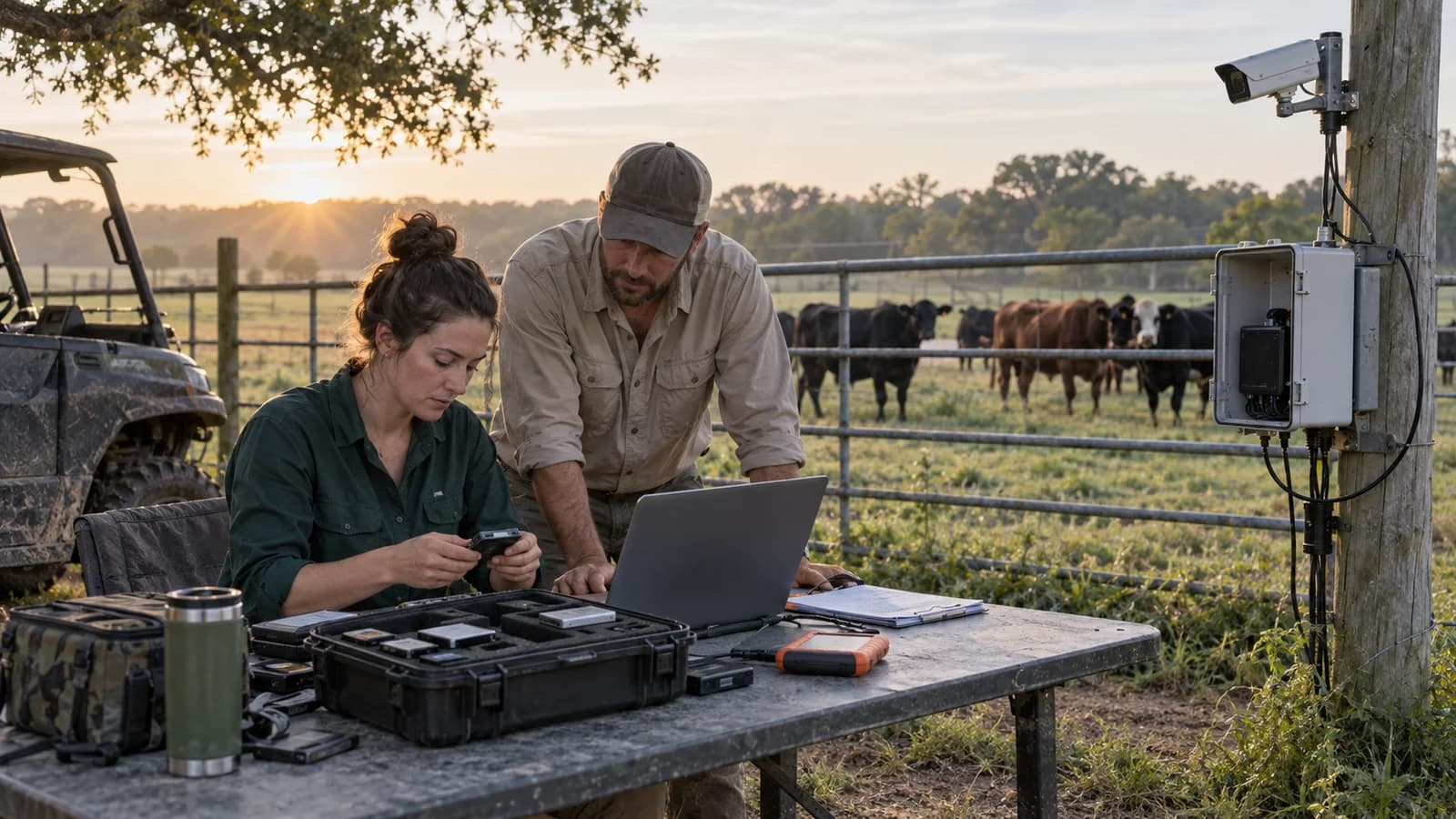
Livestock Technologies combines cattle-focused computer vision with RGB and thermal capture, on-site processing, and storage. At Tuskegee University, that infrastructure is installed across four research pens with 60 cattle.
Research teams can define cameras, clocks, zones, cattle references, labels, observation windows, review states, and export fields around one study question.
Source imagery and time-stamped records can remain connected to derived events, measures, and reviewer decisions.
Our Tuskegee field results document fixed RGB and thermal capture, local processing, wireless backhaul, and controlled-chute reference work.
See the research program and camera technology for the platform details.
From data to findings
Make the dataset ready for the research question
A structured export gives researchers the observations and supporting footage needed for their analysis.
Study design, reference measurements, and analysis determine which biological or welfare conclusions the data can support.
Access rules may also limit what a team can share. Record those limits in the export instead of removing context silently.
Sources
Read the research and data-management guidance
- USDA National Agricultural Library: Data Management Planning
- USDA National Agricultural Library: Ag Data Commons User Guide
- Scientific Data: Multi-Target Behavior Detection Dataset for Simmental Beef Cattle
- CVPR 2026: MooCap Multi-View Cattle Behavior Benchmark
- Livestock Technologies: Tuskegee University Field Results
Practical next step
Plan the data your next study needs
We will map the camera, identity, label, coverage, version, and export fields needed to keep that result reviewable.
Plan a research data review