Answer first
Choose the camera from the measurement, not the equipment list
Fixed RGB video is often enough for presence, relative posture, activity, and events inside a stable view.
Add depth, stereo, thermal, or multiple views only when the study needs distance, hidden anatomy, surface patterns, or 3D movement.
Record placement, calibration, clocks, coverage limits, and reference measurements before collection begins.
What current research says
The best camera depends on the cattle question
A September 2026 review compared 114 livestock pose-estimation studies published from 2015 through 2025.
It found that plain RGB remains the common choice for relative posture and movement. Depth and multi-view systems matter more when absolute geometry or occlusion drives the question.
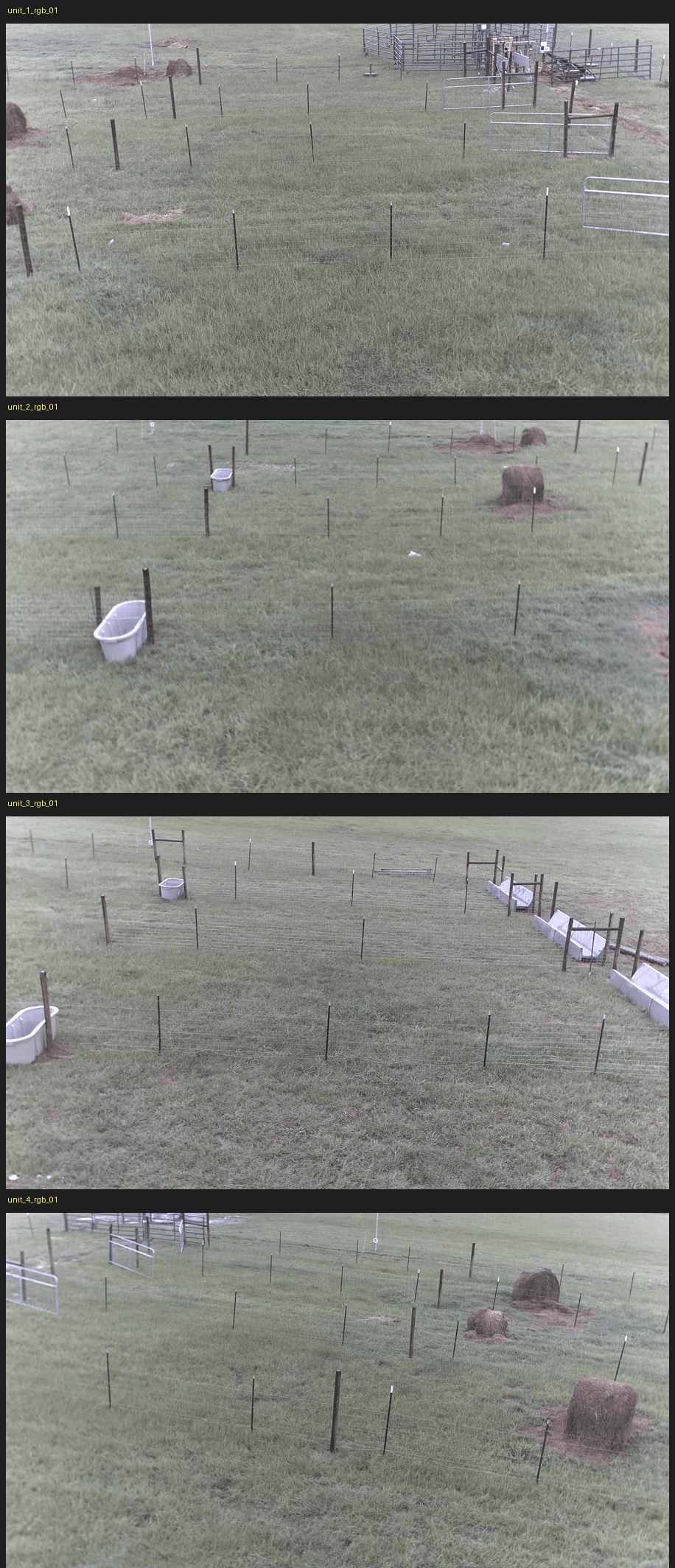
A current Texas State pasture study used nine solar trail cameras and about 132 hours of video. Common grazing and hay-feeding classes were easier to recognize than rare behaviors.
The MooCap benchmark used synchronized views, structured cattle interactions, body points, spatial zones, and detailed behavior labels. Its difficult interaction segments still challenged current models.
These studies point to one practical rule: camera hardware cannot rescue a vague measurement, weak reference, or unrecorded blind spot.
Camera choices
Match each system to the evidence it can preserve
| System | Useful when | Record these limits |
|---|---|---|
| Fixed RGB | Presence, relative posture, activity, and events in a stable view | Light, glare, weather, compression, and blocked anatomy |
| RGB with depth | Body dimensions or spacing when distance must be measured | Sunlight, reflective surfaces, range, power, and depth gaps |
| Stereo or multi-view | Occlusion recovery, 3D movement, and interactions across views | Calibration, synchronization, storage, and camera handoffs |
| RGB plus thermal | Paired surface-pattern and visible-scene research | Thermal settings, body region, weather, time, and a qualified reference |
Placement before models
Put the view where the needed feature stays visible
Side views can preserve stride timing, limb position, and back shape when cattle cross a defined area.
Top-down views can help separate animals and show pen-level movement. They may hide side anatomy needed for gait or body shape.
Oblique views can cover larger areas, but distance changes pixel size and detail. Multiple views reduce some blind spots while adding calibration and handoff work.
Run a field walk at expected collection times. Check sun angle, shadows, rain, dust, vegetation, gates, feeders, workers, and cattle overlap.
Six-step setup plan
Make the study repeatable before recording starts
Name the measurement
State the behavior, location, movement, or body measure the study needs. Define the qualified reference before choosing hardware.
Choose the simplest useful view
Use fixed RGB when relative position or activity answers the question. Add depth or more views only when the endpoint needs them.
Map visible and hidden areas
Walk the pen, alley, bunk, water point, and handling area. Record distance, angle, glare, overlap, and expected blind spots.
Lock clocks and geometry
Preserve timestamps, camera IDs, frame rate, resolution, lens, mounting position, calibration files, and any synchronization check.
Test real field conditions
Include changing light, weather, mud, dust, animal overlap, empty scenes, maintenance, outages, and moved equipment.
Keep every result reviewable
Connect each derived event or measurement to the source clip, study animal, camera state, model version, and reviewer decision.
How Livestock Technologies helps
Keep field video connected to the research record
Livestock Technologies builds camera-based livestock intelligence for animal-science researchers and commercial feedlots.
Our field setup can preserve camera identity, time, location, visible cattle activity, source clips, and review states across study areas.
Researchers can connect those records with study IDs, EID or RFID events, direct observations, environmental data, and qualified measurements.
The camera record supports review. It does not create a diagnosis, biological conclusion, or validated study outcome by itself.
See the research program, camera technology, and Tuskegee field evidence.
Sources
Read the camera and study-design research
- Computers and Electronics in Agriculture: Livestock Pose Estimation Review and Design Framework
- Texas State University: Camera-Based Cattle Behavior Detection on Pasture
- CVPR 2026: MooCap Multi-View Cattle Behavior Benchmark
- University of Illinois: Cattle Mooves 3D Imaging and Reference Measurements
- Sensors: Camera Placement Optimization for Cattle Monitoring
Practical next step
Bring one research question and one field area
We will map the needed measurement, camera views, direct references, field limits, and review record around your study.
Plan a cattle camera study