Answer first
The project supports feeder-cattle market evaluation
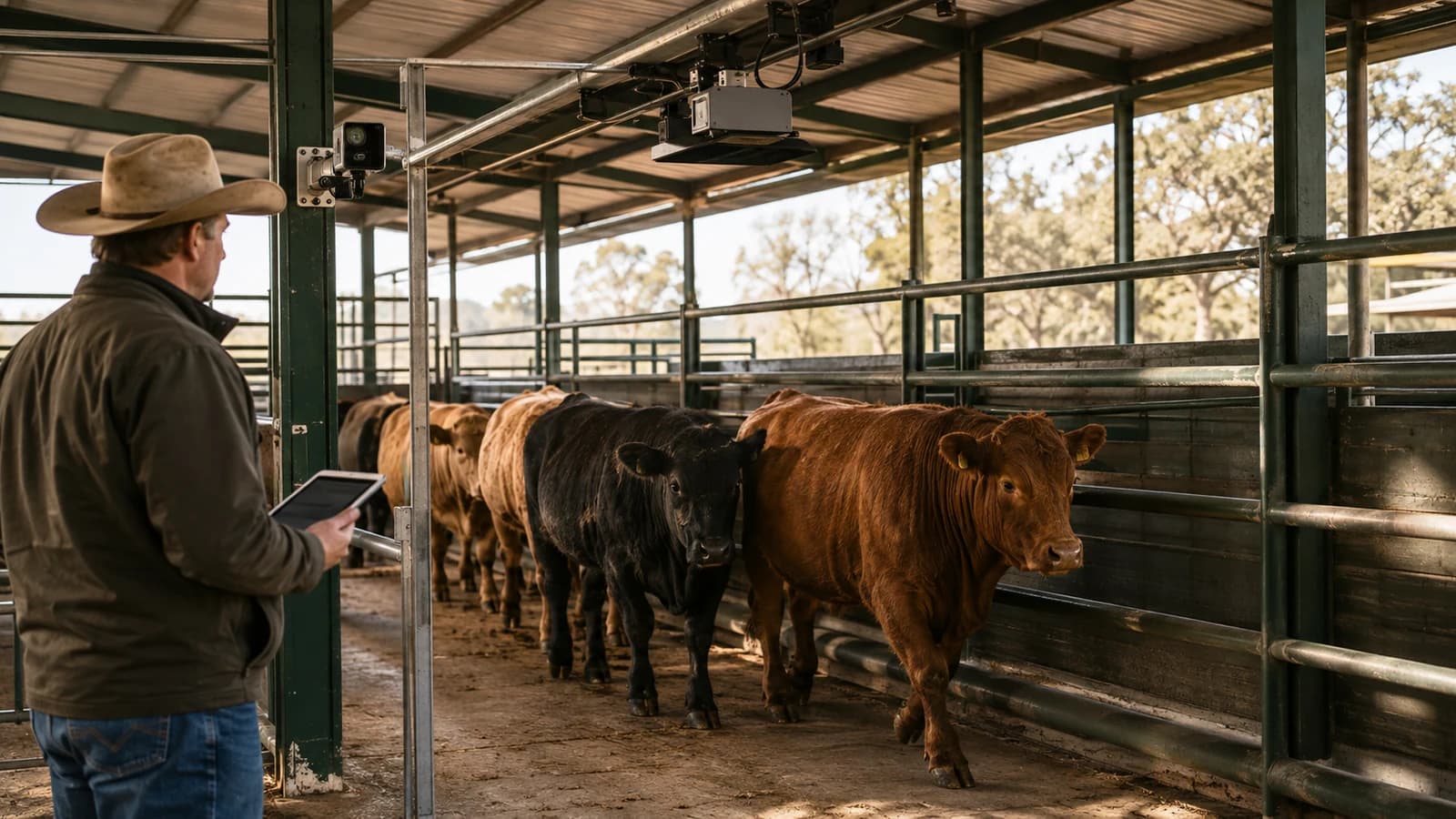
USDA describes AI Feeder Cattle as a mobile, non-contact measurement system for livestock and auction markets.
It combines LiDAR, which uses light to measure distance, with machine learning. The goal is to support live animal evaluation against USDA feeder-cattle standards.
Those standards separate frame size, muscle thickness, and thriftiness. Market reporters use that common language when describing feeder cattle.
For cattle operations, the useful distinction is where the technology works: market evaluation at sale time versus inventory, movement, and activity monitoring in the yard.
Why depth matters
LiDAR adds shape and distance to the view
An ordinary color image records visible light. LiDAR measures the distance between the sensor and points on the animal or surrounding structure.
Those distance measurements form a three-dimensional view. Software can use it to estimate body dimensions while reducing some effects of color, shadow, and background.
Depth still depends on the cattle position, sensor angle, blocked body parts, calibration, and the reference measurement used for testing.
A 2026 University of Illinois study used depth video from 196 Angus steers. Body-size traits predicted weight well in that study but did not explain residual feed-efficiency traits.
That distinction is useful. A sensor may support one defined measurement without answering every cattle-management question.
Current program status
USDA is still testing the system in working markets
USDA's September 4 update lists the AI Feeder Cattle project among its launched market-data efforts.
The agency's 2026 program materials provide the important detail. USDA Market News says development and live testing continue with livestock and auction markets.
The planned workflow would help market reporters collect more graded auction-sale information. USDA also describes a future producer phone application as a later goal.
USDA describes the phone application as a future goal. The live market testing is the current stage described in these program materials.
Two different camera jobs
Market evaluation and pen inventory need different records
| Question | USDA AI Feeder Cattle | Fixed feedlot cameras |
|---|---|---|
| Primary job | Support feeder-cattle evaluation for market reporting | Observe cattle presence, movement, and visible activity in a yard |
| Typical location | Livestock and auction markets | Pens, gates, alleys, bunks, water zones, and chutes |
| Sensor emphasis | Mobile LiDAR depth measurement with machine learning | Fixed RGB and thermal video with on-site processing |
| Reference record | USDA feeder-cattle standards and market-reporter workflow | Expected counts, EID or RFID, yard records, and direct crew checks |
| Responsible review | USDA Market News and its testing partners | The cattle operation, its crew, and qualified advisers |
Product walkthrough
Fixed cameras follow cattle activity across the yard
Livestock Technologies installs fixed RGB and thermal cameras at pens, gates, alleys, bunks, water zones, and controlled chutes.
The workflow begins with the cattle record the operation already uses. Expected pen counts and movements remain separate from what the cameras observe.
Camera evidence adds time, place, visible cattle, movement, and coverage state. A reviewer checks a difference before the yard record changes.
At Tuskegee University, the documented system covers four research pens with solar field nodes, wireless backhaul, and on-site processing and storage.
See the feedlot inventory workflow, monitoring scope, and field deployment evidence.
Before comparing systems
Ask five questions about the decision and evidence
What cattle decision must the system support?
Name the decision before comparing sensors, software, or model claims.
What does the sensor measure directly?
Separate color video, temperature patterns, depth, weight, identity references, and human observations.
What reference decides whether the output is right?
Use the applicable grade standard, scale, yard record, direct count, or qualified review.
What happens when the view is incomplete?
Require blocked views, missing periods, uncertain cattle, and failed measurements to remain visible.
Who accepts or corrects the result?
Keep a named person responsible for review, correction, and the final operational record.
Sources
Read the program documents and cattle research
- USDA: September 4, 2026 cattle-industry announcement
- USDA: Plan to Fortify the American Beef Industry
- USDA NASS: 2026 Spring Data Users Meeting publication
- USDA AMS: Feeder Cattle Grades and Standards
- University of Illinois Extension: Orr Beef Research Center Field Day 2026
- Frontiers in Animal Science: Predicting body weight and efficiency traits in beef cattle based on depth image data
- Livestock Technologies: Tuskegee University field deployment
Practical next step
Explore camera-based cattle inventory for your yard
We will map the camera view, expected cattle record, direct checks, movement evidence, coverage limits, and reviewer around that decision.
Review your cattle camera workflow