Start with the current notice—and the campus question
The USDA National Institute of Food and Agriculture's FY 2026/2027 1890 Capacity Building Grants notice includes a focus on building AI and machine-learning capacity in teaching, research and Extension at 1890 institutions. NIFA lists eligible applicants as 1890 Land-grant Universities and gives November 4, 2026 at 5:00 p.m. Eastern as the FY 2026 deadline.
That creates a timely reason for campus teams to talk across animal science, agricultural engineering, research administration and Extension. It does not mean a particular vendor, camera platform or equipment cost is eligible. The university's sponsored-programs office must determine whether a project and its planned expenses fit the complete notice; the official NIFA opportunity page is the current source for status and details.
Walk through a real cattle-research installation
At Tuskegee University, Livestock Technologies has installed fixed color (RGB) and thermal camera views across a four-pen research site covering 60 cattle. The documented platform also includes solar-powered field nodes, wireless links, on-site processing and storage, and chute reference capture. The full field report explains the installation.
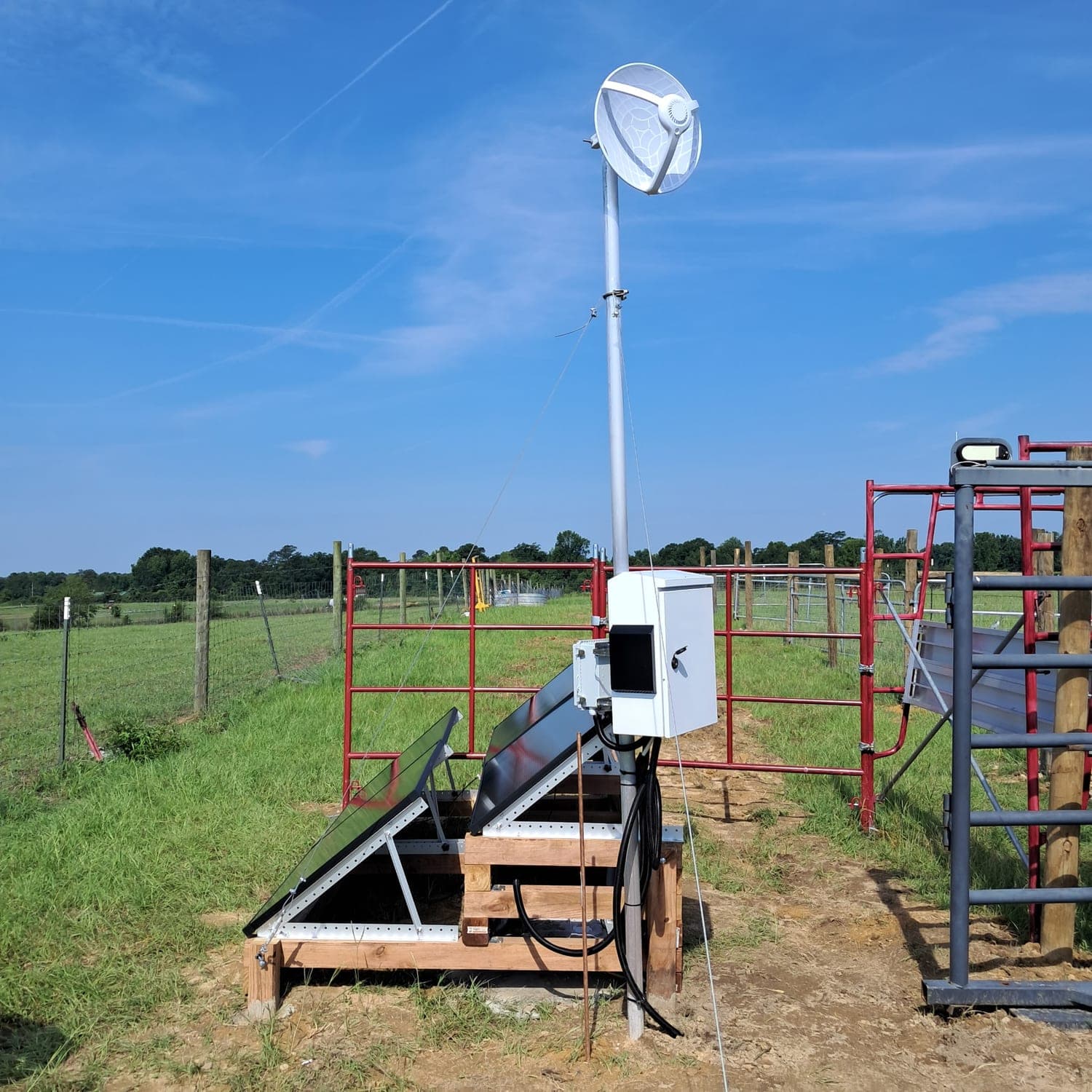
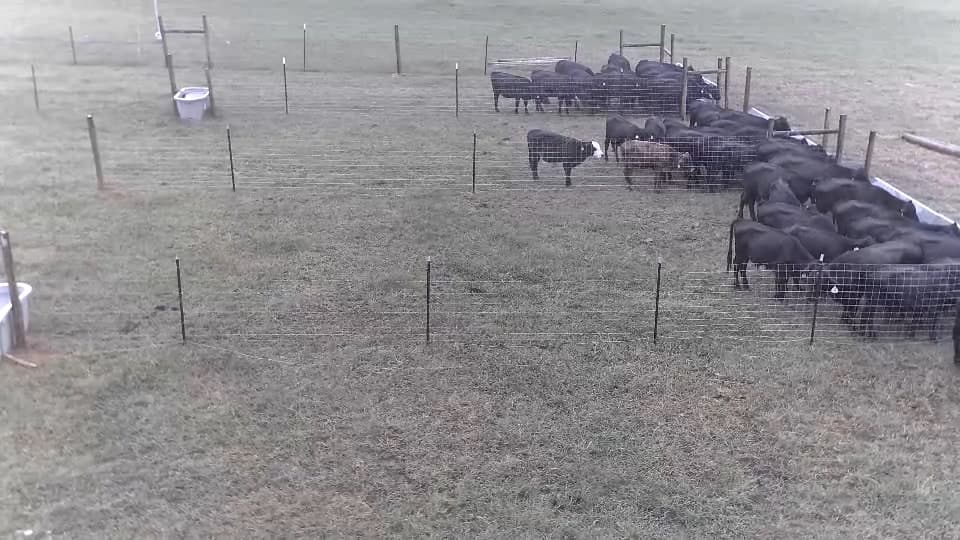
Those are two different kinds of evidence: one photo shows field infrastructure; the other is a frame from a fixed camera. Together they make the technology easier to evaluate than a specification sheet alone. The shareable university capabilities brief lays out what is installed and what would be defined with a research team.
Choose the project work before naming the equipment
A camera system is most useful when it serves a specific project, rather than becoming a technology purchase in search of a question. NIFA's notice separates education, research and Extension project types. A campus team can first identify which work its proposal is designed to deliver:
- Research
- Name the cattle question, observation period and evidence needed to check an output. A visible bunk visit, for example, is not the same measurement as feed consumed.
- Teaching
- Decide what students will learn by using or studying field equipment, and what course or hands-on experience the project is meant to support.
- Extension
- Specify the producer or community need, who will take part, and how the activity connects with the operation's existing cattle-care work.
These are planning prompts, not a reading of grant eligibility. The full notice sets its own criteria and application rules. Campus grant staff should confirm program fit and any partner or equipment costs before a proposal names a supplier.
Give the science team a concrete validation plan
A recent Journal of Animal Science paper by a Texas A&M-affiliated research team offers a useful independent example. Published September 29, 2026, it describes three computer-vision case studies at a research feedlot, including feeding-event classification compared with physical bunk-sensor readings.
The practical lesson for a campus project is to decide in advance what an image-based observation will mean and what independent evidence will check it. Those methods and results belong to the paper's authors. At Tuskegee, Livestock Technologies' contribution is the installed field-capture and on-site data infrastructure; a new project would define its own research methods, validation and deliverables.
What to bring to a first partnership conversation
Bring a draft project aim, the species and field setting, and the team roles that would turn the aim into day-to-day work. For a camera-based cattle project, it helps to consider pen coverage, available power and connectivity, who can review footage, how long source data must be retained, and what reference measurements the research question needs.
Livestock Technologies can show the Tuskegee installation and discuss a site-specific platform scope. Your institution can then determine how the work fits its research or teaching plans, procurement process and funding requirements. Our research partnership page explains how to begin, while the capabilities brief is easy to share with investigators and equipment decision-makers.
Never lose an animal.
Bring us the livestock question your campus wants to study.
We can show you what is installed at Tuskegee and discuss the cameras, field infrastructure and data scope a faculty-led project may need. The goal is a useful research partnership, built with care for the animals and respect for the people responsible for them.
Discuss a university research partnership →