Start with a field asset, not just a camera purchase
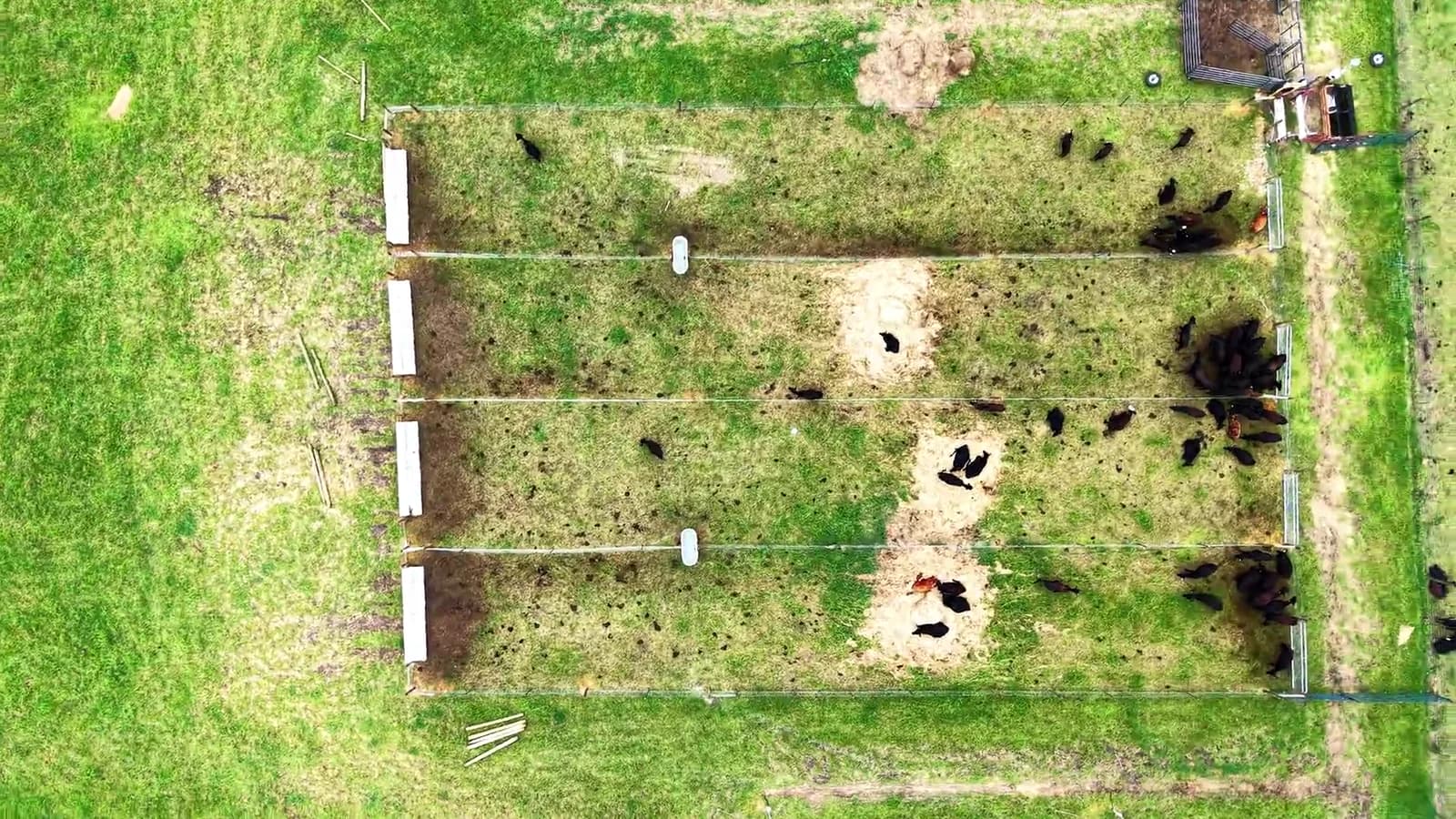
At Tuskegee, the documented installation covers 60 cattle in four research pens. It includes fixed RGB (ordinary color) and thermal views, solar-powered field nodes, wireless connectivity, on-site computing and storage, and chute reference capture.
The overhead image shows the pen layout; the field-view tour shows what the cameras actually see.
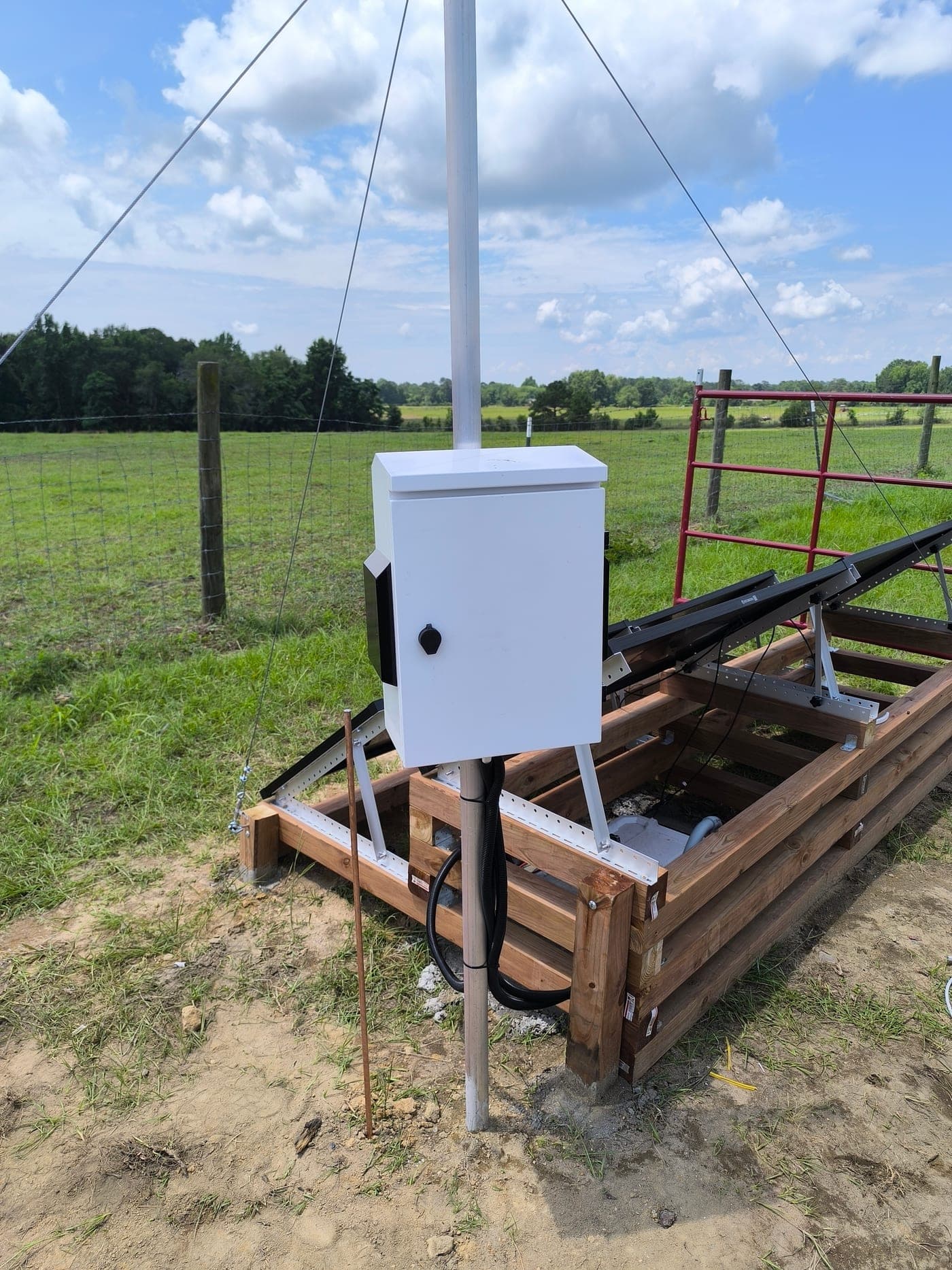
That installed layer matters because the next investigator does not have to begin with a blank field site. They can begin by asking whether the existing views cover their question, then define any change in camera placement, observation rules, access or outputs before the next study starts. The hardware is a starting point—not a promise that every measurement is already available.
Picture two different questions at the same pens
One proposed team might study how often cattle are visibly present at a bunk across the day. It would define the bunk zone, choose observation windows and agree on what counts as a visit. The fixed video provides source footage the team can return to when checking an observation.
A later team might ask how cattle use different parts of a pen after dark. The same field setting could supply thermal views, but that second project needs its own definitions, review method and data outputs. Presence at a bunk does not measure feed intake, and thermal appearance does not measure core body temperature. If either outcome is essential, the study needs an independent measurement.
This is the useful distinction for a director: the physical platform can persist; the scientific claim does not carry over automatically. Each project still earns its answer through its own design and validation.
Give the investigator, field team and equipment office one shared picture
The investigator needs to know which cattle, views and time periods answer the research question. The livestock team needs to know where equipment sits, how the work fits animal care and what people must do on site. The equipment office needs a clear description of the installed asset, ownership, support, access and what a new study would add.
Those are not three separate sales pitches. They are three views of one scoped project. Our ungated university capabilities brief shows the Tuskegee equipment and the questions to settle before a site-specific proposal; the researcher page explains how to start with a study question.
Other universities are making field platforms part of the research
Cornell describes its agricultural testbed as a place where an interdisciplinary team can test a dairy device under farm conditions. Iowa State describes a cross-disciplinary livestock-monitoring project that plans tests on campus farms. Both illustrate why a real field setting matters when animal scientists and engineers build a research program together.
Our contribution is concrete: a documented cattle field installation with digital and thermal observation, local infrastructure and source footage. A university can use that evidence to ask for a practical scope for its own species, site, study and team.
What to bring to the first conversation
Bring one likely first study, the pens or animals involved, and the observation period. If other faculty might use the installation later, name those possible questions too—without trying to specify every future analysis today. We can distinguish the equipment that serves the site from the study-specific work, then discuss coverage, data access, support and a proposed equipment scope.
That is a responsible way to build toward more than one study: make the first project useful on its own, while giving later researchers a field foundation they can evaluate rather than a claim they must take on faith.
Never lose an animal.
Plan the first study—and the field platform behind it.
Tell us what your team wants to study and where. We'll discuss the installed Tuskegee example and what your institution would need in a site-specific research scope.
Discuss a university research project →