Begin with the cattle in front of you
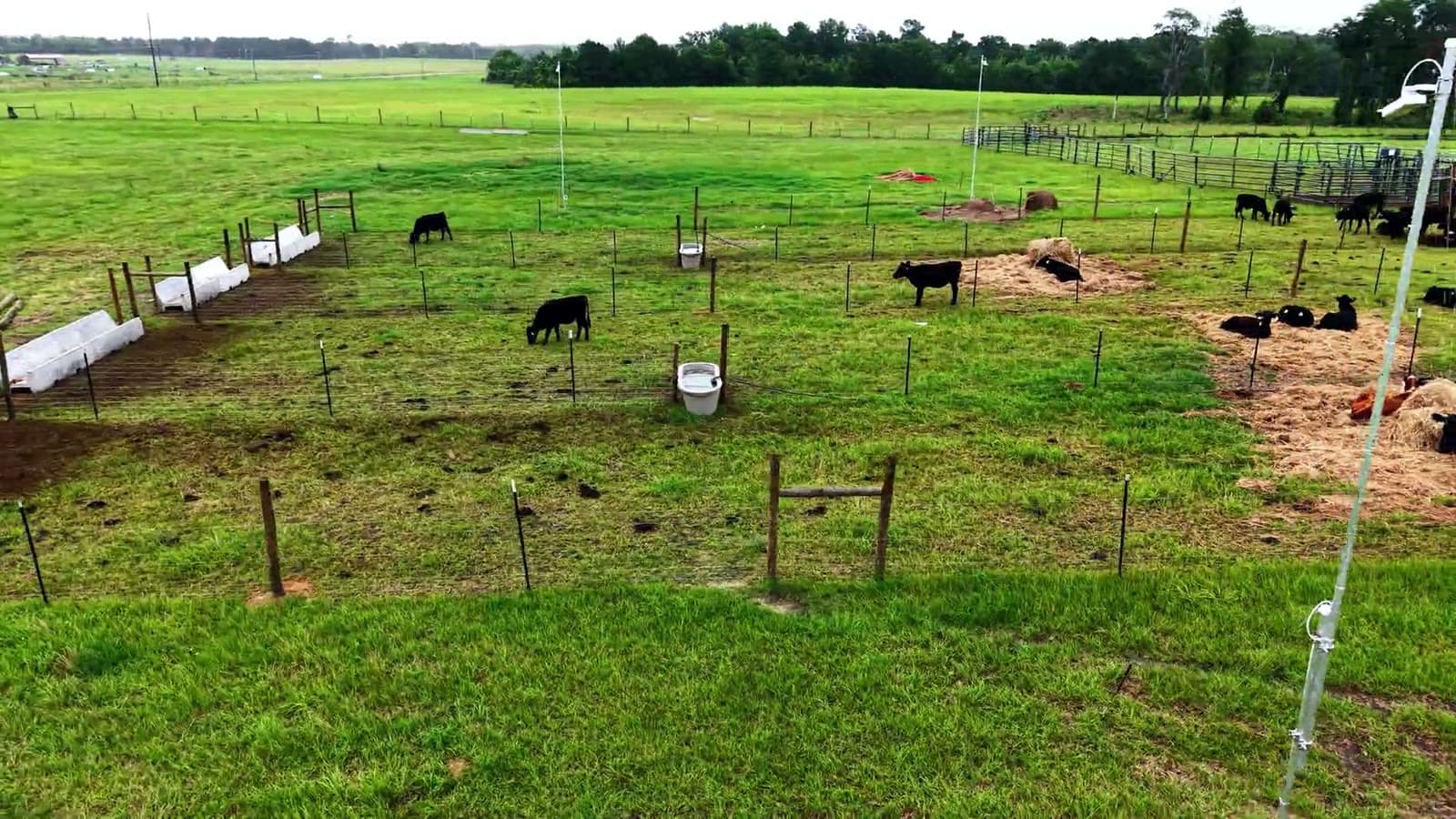
Ask a class to look at the field image above for 30 seconds. They can identify cattle, pen boundaries, bunks and a mounted camera mast. They cannot tell from this one frame how long an animal stayed at the bunk, what it ate, or whether a change in posture means illness. That distinction is the first useful lesson: an image is evidence of what was visible at a moment, not every answer about the animal.
At Tuskegee University's four-pen research site, Livestock Technologies installed fixed digital and thermal camera views with field power and connectivity, plus on-site processing and storage. The site gives a concrete way to discuss how repeated observations can be collected without making a student imagine an idealized laboratory. The public field film can anchor this suggested exercise; an actual classroom or study use would be arranged with faculty.
Now change the vantage point
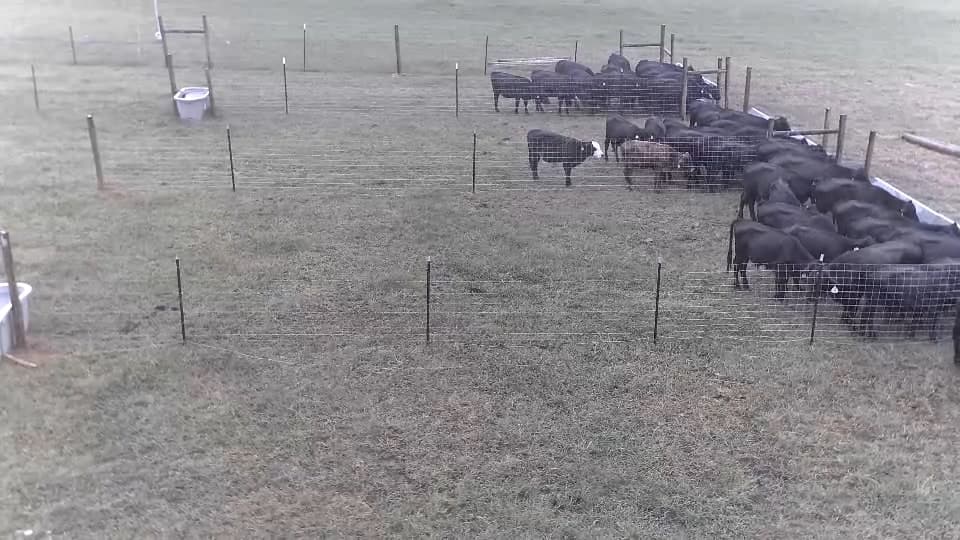
The camera frame answers a different question from the overhead film: what does a fixed pen view include and what does it miss? Cattle stand along a feed bunk, while fences and open pen space remain visible. An animal can block another animal, and activity beyond the frame cannot be measured from this angle.
That makes a simple class exercise surprisingly rich. Ask students to write one observation that they can defend from this frame, one question that would require a sequence of time-stamped views, and one claim that would require a separate field measurement. “Cattle are visible by the bunk” belongs in the first group. “How did visible bunk presence change across the day?” belongs in the second. “How much did each animal eat?” belongs in the third.
Where computer vision enters the lesson
Computer vision is a way to turn pixels into defined observations, such as finding cattle in a frame or counting animals visible in a selected area. The arithmetic is useful only after the class has agreed on the question: Does a partly hidden animal count? What if the camera angle changes? Which source frames will a person review to check the result?
Livestock Technologies' camera-to-decision system supplies continuous field views and on-site computing as the foundation for this kind of work. A faculty-led project would define the observations, data access, validation and outputs it needs. The payoff is that students can connect a computer-vision output back to the cattle and source image that produced it.
That approach matches a wider direction in agricultural education. The University of Illinois describes student involvement and educational materials in its own cattle-imaging research, while Purdue describes field-centered data exercises in digital agriculture. Those are independent programs; the Tuskegee installation is our field example here.
Turn a lesson into an answerable research question
A student team might ask how many cattle are visible near the bunk at different times of day. The animal scientist decides what “near” means and which times matter. The engineering student tests whether a method can find the cattle in varied light and with overlapping bodies. Together they review source frames where the method is uncertain, then compare the output with an independently checked sample.
In a faculty-led study, that output could describe visible presence across the day. A separate feed-intake measure would answer consumption; a clinician would assess health. This proposed exercise shows how an installed field view can become a testable research question.
For a campus team planning a real project, our ungated research capabilities brief shows the installed platform and questions to scope. The research partnership page explains the collaboration path. A first conversation can cover the faculty question, the available pen views, permissions, the reference measurements and which people will use the resulting record.
Never lose an animal.
Bring us the cattle question your students want to answer.
We can show what is installed at Tuskegee and discuss a research or teaching scope built around your faculty, students and field site. We believe better observation is part of better stewardship of the animals in our care.
Discuss a research partnership →