Start where the cattle are
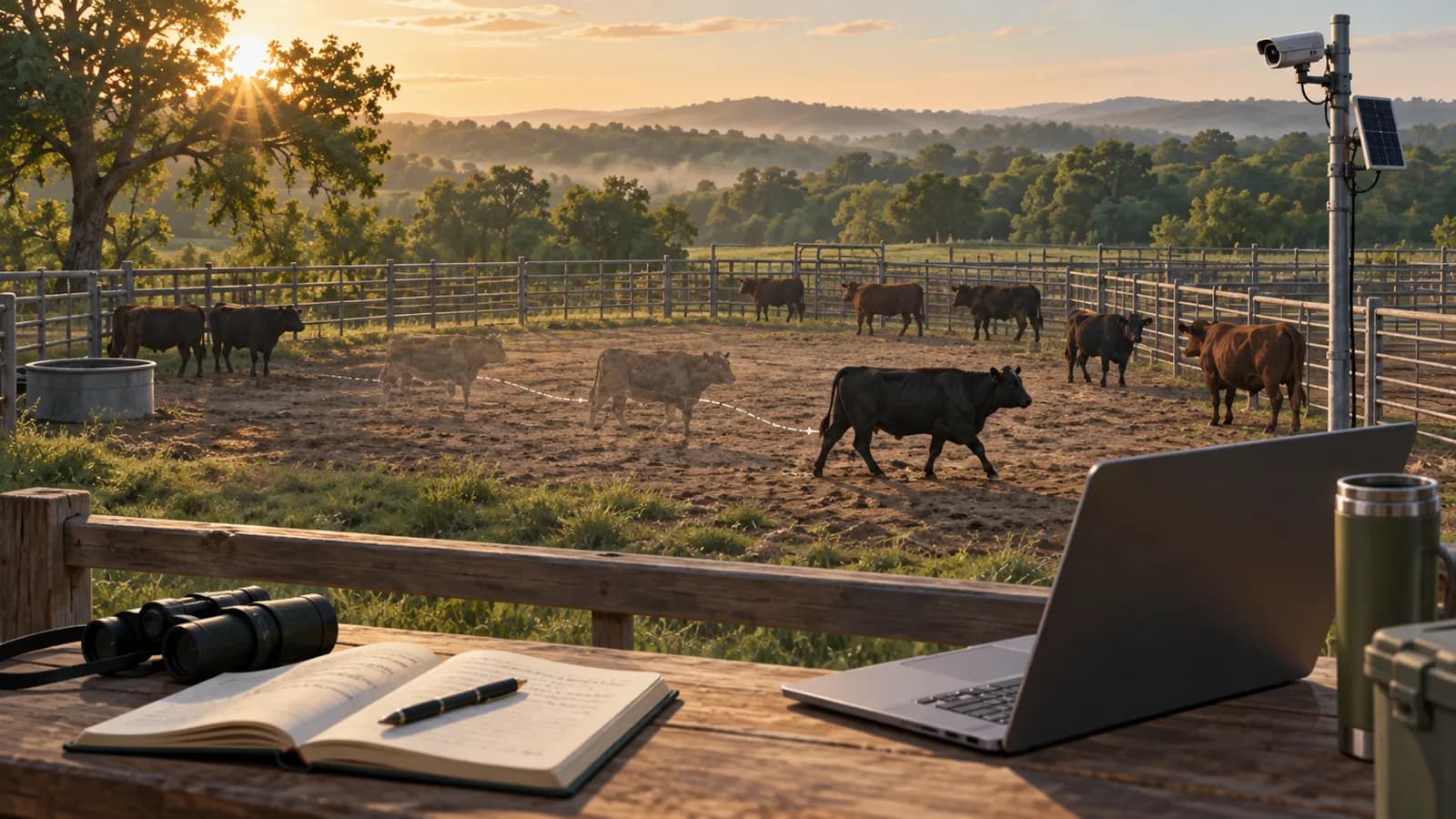
At Tuskegee University's research feedlot, Livestock Technologies has installed fixed digital and thermal camera views around four cattle pens. Solar field equipment, wireless links, and on-site processing and storage keep the observation system at the site. That is a field platform a research team can plan around, not just a camera pointed at a pen.
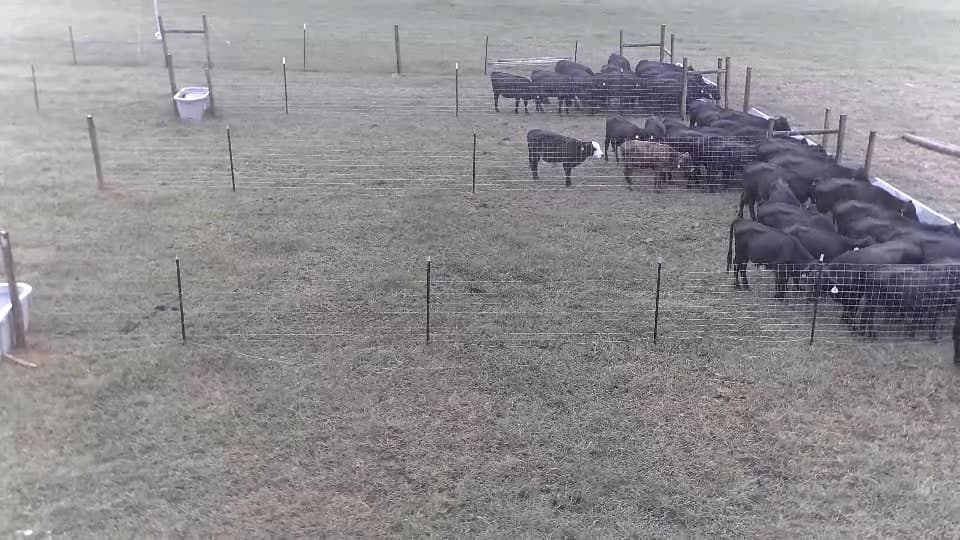
The digital bunk view below is one source frame from the installation. You can see cattle along the bunk and open space in the foreground. By itself, the frame does not tell you how long each animal stayed or how much any animal ate. Continuous footage and a defined research question are what make the view useful.
One question gives both disciplines a job
Imagine a team asking: how does the number of cattle visible at the bunk change around feed delivery? The animal scientist defines the bunk area, the observation window and what counts as visible presence. The engineer uses the camera view and timestamps to make a time series, with each observation linked back to footage a person can check.
The feed-delivery record supplies a separate clock for comparison. A reviewer then samples the easy and difficult moments: a crowded bunk, an animal partly hidden, or a camera view blocked by equipment. If the team wants to study actual intake rather than visible presence, it needs a direct intake measurement; video at the bunk cannot supply that by itself.
This is an example of a study a team could scope, not a result we claim to have measured at Tuskegee. The point is that both groups can agree on what the output means before anyone builds a model.
The result should lead back to the animal
A useful result is more than a line on a chart. It tells the reader which pen and camera supplied the view, what time period was included, what was counted, and where the source footage can be reviewed. When cattle leave the frame or block one another, the team can show that gap instead of silently calling it zero activity.
That connection between an observation and the animal in the field is central to our technology platform. Researchers can begin with a specific visible event, then decide whether their project also needs individual identity, a thermal view, or a separate physical measurement. The question determines the tools—not the other way around.
Other universities are asking related questions
University of Illinois researchers described a 2026 cattle-motion project that brings animal science together with imaging and engineering work. The University of Georgia's 2026–27 seed-grant selections include a dairy thermal-welfare project pairing animal and dairy science with electrical and computer engineering. These are independent university projects, not tests of our system. They show why animal expertise and measurement design belong in the same conversation.
At Tuskegee, the real installation gives a prospective team something concrete to discuss: the pens, camera views, local recording and the field conditions around them. The shareable research capabilities brief lays out that equipment starting point without a form gate.
Bring the question you want to answer
If your team studies cattle behavior, welfare or field technology, tell us the animal question first. Which cattle and pen matter? What event do you need to see? What record or direct measurement would make the observation credible? We can walk through the documented views, discuss the needed scope and identify which parts the researchers and Livestock Technologies would each build.
That is how a camera system becomes a research collaboration grounded in stewardship of the animals and the evidence. Explore our researcher page for the broader platform and partnership path.
Never lose an animal.
Put your cattle question in the field.
Bring your animal-science and engineering team. We'll show the Tuskegee installation and discuss a focused research scope for your site or study.
Discuss a cattle research project →