The oyster farm had a practical question
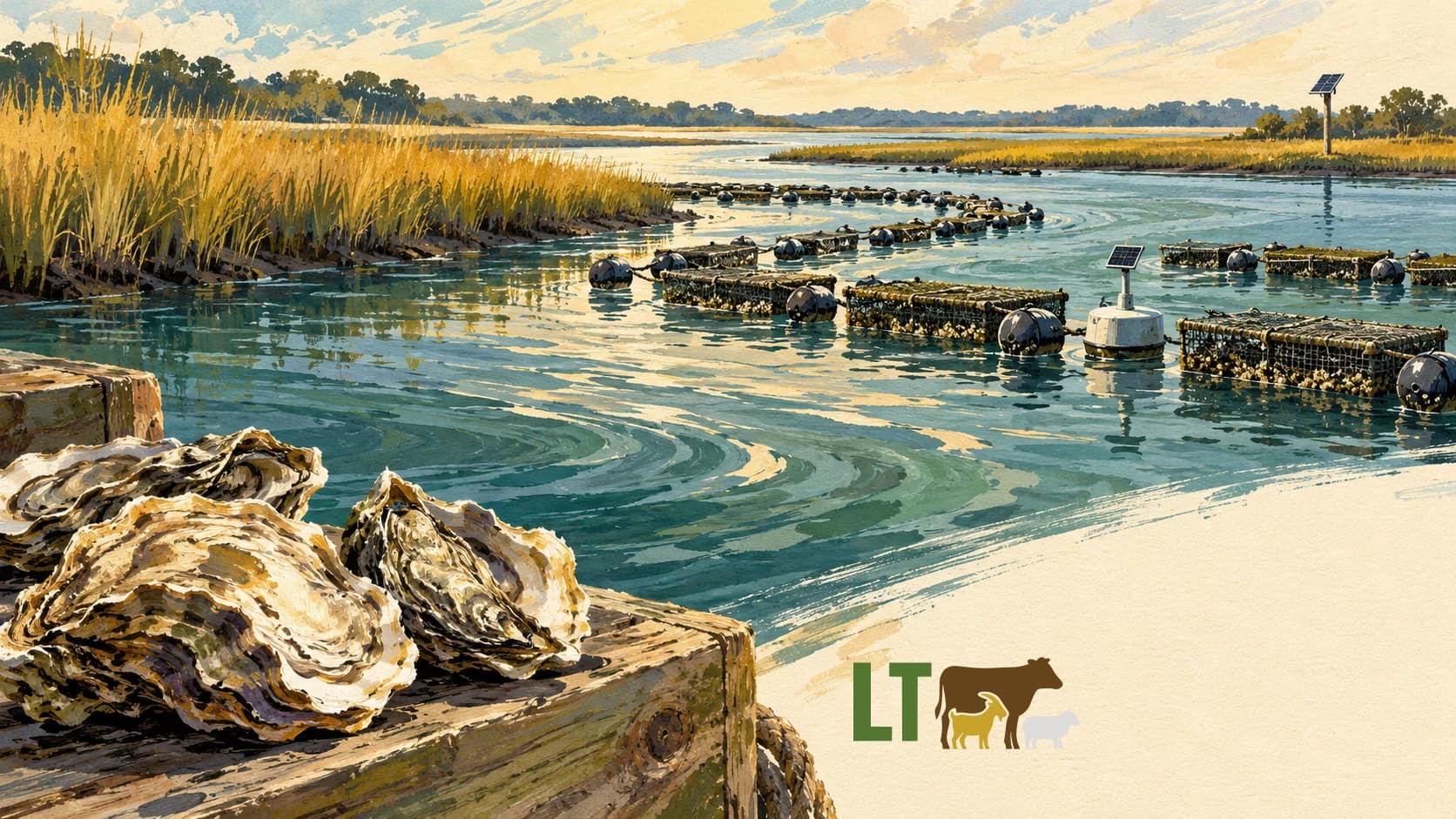
At Herring Shoal Shellfish Company in North Carolina, growers wanted a clearer picture of conditions around their oysters. Researchers at the Coastal Studies Institute, part of East Carolina University, helped build a system around that need.
The institute's July 31 field report describes a prototype deployed in Blossie Creek near Oregon Inlet during spring 2026. Its probes measure water conditions, including temperature and dissolved oxygen—the oxygen available in the water. The system was set to collect and send readings every ten minutes.
NC State supplied a small current-powered energy harvester. Moving water turns the device's blades and generator, helping charge the sensor system and extend battery life. ECU's Water Resources Center provided the route to an online dashboard.
SECOORA's project overview brings these pieces together: environmental measurements, locally harvested energy and a way to send the data back. The useful result is a connected field service, rather than a sensor left alone in the creek.
The missing link was onshore
During testing, the farm was too far from the receiving station for a strong, reliable connection. The team added a solar-powered relay partway along the route. That extra stop helped the readings reach the dashboard.
It is an easy detail to overlook when planning a field project. A probe can take a measurement and have enough power, yet the person using it may still receive nothing.
Picture a researcher opening the dashboard before leaving campus. An old reading and a fresh reading can look similar unless their collection times are clear. The practical question is whether the team can receive the information when it needs to act.
Choose the job before the power source
For a new project, begin with the observation the team needs. Then describe how often it should arrive and where someone will use it. That gives the engineering team a real job to design around.
For example, a university might want water-condition readings from an oyster lease between boat visits. It should decide whether those readings are for a later research analysis or for a person making a same-day operating decision.
Those uses create different needs. A delayed upload may still help explain last week's conditions. It may offer much less help to someone deciding whether to visit the site this morning.
Only then should the team compare power and communication options. The creek project chose an energy harvester for its own flow conditions. A different location may suit solar power or another arrangement. A promising device at one site is a starting point for design, not a ready-made answer everywhere.
A small sensor is a different job from continuous video
The oyster prototype sends periodic water readings. A camera system collecting and processing video has a different workload. Its power, connection and storage needs should be scoped separately.
The lesson is to match the whole system to its purpose. Do not assume that a power source serving a few probes will also run cameras and an analysis computer. Test the proposed equipment together under the conditions it will actually face.
The university report also describes ongoing work on the turbine and dashboard. It does not provide a universal power rating, a guaranteed operating life or a measured increase in oyster production.
Build the path from the field to the research team
Livestock Technologies works on the infrastructure behind animal observation: field power, connectivity, fixed camera views, processing and access to source footage. Our documented Tuskegee installation shows solar-powered field nodes, wireless links and on-site computing working together.
For a new university project, the useful conversation starts with the observation and its journey back to the team. We can discuss what the site needs and where a custom research collaboration fits. The oyster system described here is the university partners' independent project.
Explore our technology overview and university capabilities brief for the company's current field infrastructure and project-scoping approach.
Never lose an animal.
What does your team need to see from the field?
Bring the species, site and observation you need, along with where the information must arrive. We can discuss a practical infrastructure scope around that research job.
Discuss a university field project →