A new facility is a chance to design the evidence
On October 7, the Texas A&M University System announced a $9.75 million USDA award and matching commitments for a $19.5 million West Texas A&M research facility. The announcement describes 90 small research pens, 45 commercial-scale pens, and plans for work in areas including animal health, nutrition, and management. It is a separate project from the Tuskegee installation discussed below.
For a research director, the practical question is not which model sounds most advanced. It is what each stream will let the team observe, what will measure the scientific outcome directly, and how the records will line up when the study is analyzed.
Read the Texas A&M System’s facility announcement for the reported award, matching funds, facility scale, and planned research functions.
Give every source one job
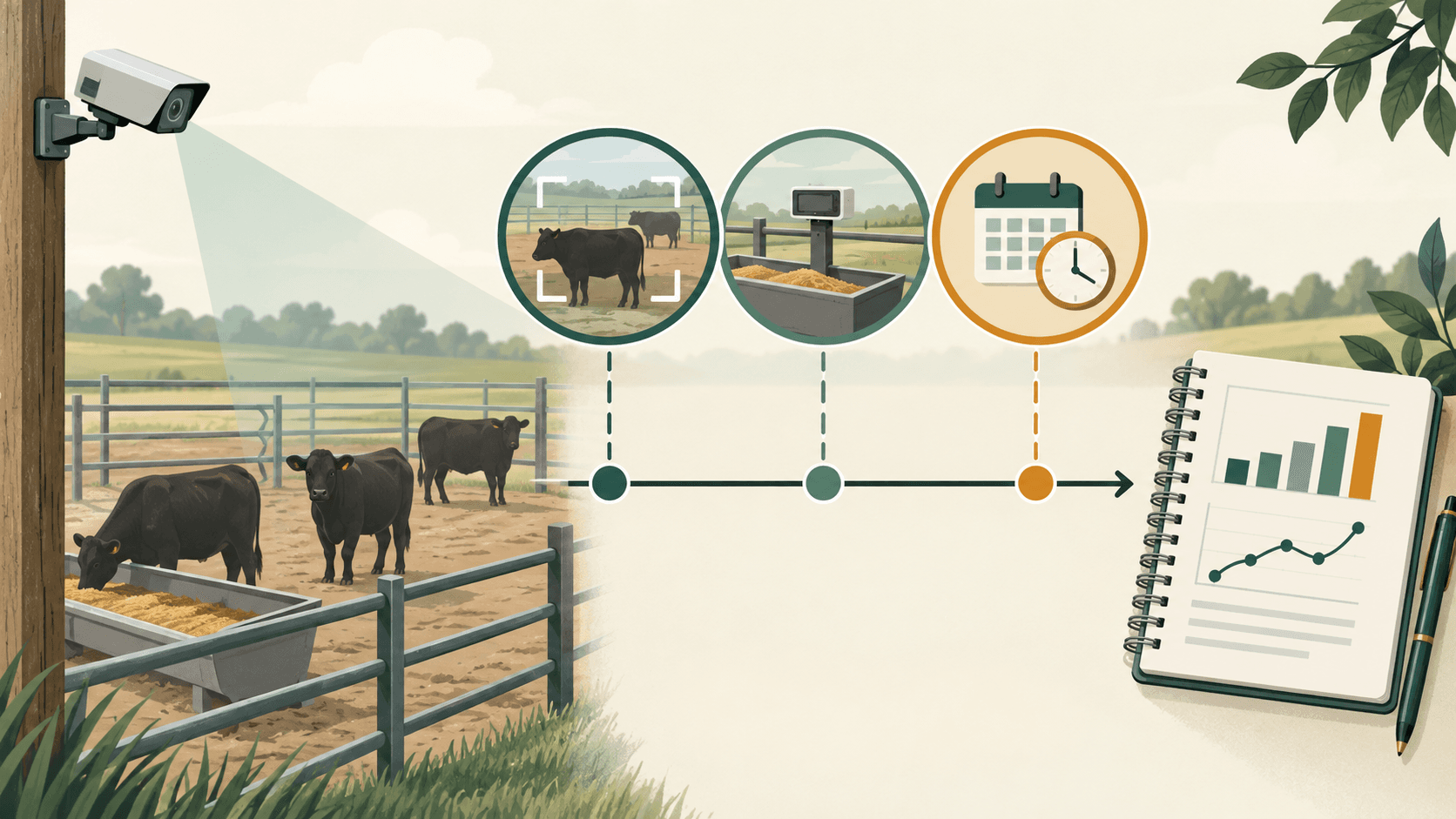
Take a study about cattle activity around a feed bunk. Video can preserve when animals are visible and what is happening in the camera’s view. A feeder instrument or production record must supply the study’s direct intake measure; the research team defines the outcome and the reference.
Write those roles down before the first observation: the outcome, its unit (animal or pen), the instrument or record that measures it, the observation period, and the source that can explain field conditions. That small data map prevents an image from being mistaken for a measurement it cannot make.
Align the clocks, animals, and views
A useful record needs more than a file. Teams should decide how camera time relates to feeder or handling records, how animal and pen identifiers are assigned, and what happens when a view is blocked, a clock drifts, or a sensor is offline. A time window should be precise enough that another analyst can find the corresponding source footage.
Then match camera placement to the physical question. A fixed view can repeatedly cover a defined bunk or pen zone, but it cannot see through an obstruction or follow cattle outside its frame. Before installation, mark the area of interest, expected animal movement, lighting, available power, network route, and where original footage and derived files will be kept.
What an installed research camera platform looks like
Livestock Technologies has installed fixed RGB and thermal camera views around four research pens at Tuskegee University, with solar-powered field nodes, wireless links, on-site processing and storage, and controlled-chute reference capture. The public field report documents the installation components; it does not claim that this system measures feed intake or diagnoses disease.
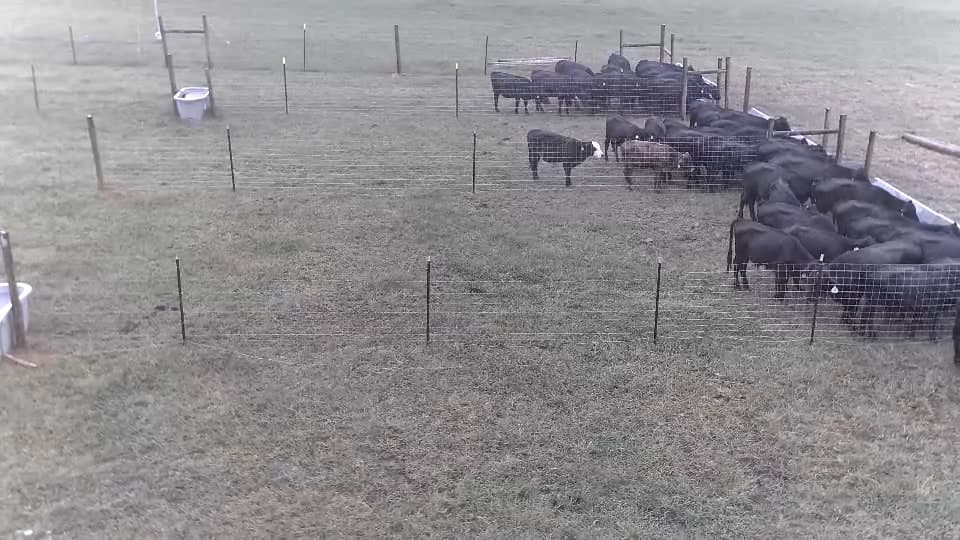
This example helps a campus team discuss what the platform contributes—repeatable visual context and field infrastructure—alongside the equipment that directly measures each study outcome. A new facility would need its own methods, equipment plan, and operating scope.
See the Tuskegee field report, the documented field results, and the ungated university capabilities brief.
Make the study portable beyond one pen
Before collection starts, decide which source files will be preserved, how event labels and exclusions will be recorded, who can access the archive, and how changes to the camera view or analysis version will be noted. These choices help a new student join the project and let a collaborator understand what a result came from.
West Texas A&M’s existing research-feedlot overview describes multiple instruments serving different purposes, including animal-behavior systems and ruminal pH and temperature monitoring. Its new facility is separate; this is an example of why an infrastructure plan should distinguish data streams instead of treating every sensor as interchangeable.
Livestock Technologies can show the installed Tuskegee platform and discuss camera coverage, connectivity, local processing, and storage for a proposed university project. Measurement methods and any connections to other instruments are scoped with the research team.
Never lose an animal.
Bring the study question and the site plan
We can walk your university team through the documented Tuskegee field system and discuss whether its camera and data infrastructure fits the research workflow you are planning.
Discuss a university research project →