The short answer
A useful LIP record connects the pre-event cattle inventory to the event, each loss, and the evidence behind it.
USDA's Farm Service Agency says applicants need verifiable livestock inventory, loss, and eligible-event documentation. Build that record while times, locations, animal references, and source files are still clear. Then review it with the local FSA office, which determines the current requirements and eligibility.
What changed in 2026
Current policy makes accurate source records more important
The current FSA program page describes 2026 changes for federally protected-animal predation losses, unborn livestock losses, and an alternative market-value option supported by verifiable sales records. It also states that all other eligible loss payment calculations remain at 75% of the determined market value. Those are program rules—not a promise that a particular animal, event, or operation qualifies.
For 2026 calendar-year losses, current USDA disaster notices list March 1, 2027 as the final date to submit the Notice of Loss and Application for Payment. Do not treat that final date as a reason to wait. Contact the local FSA office promptly so the operation can confirm the current forms, categories, evidence, normal-mortality rules, and any event-specific instructions.
Nebraska Extension's current recovery guidance makes the same practical distinction: LIP can help eligible producers after qualifying losses, but the producer still needs to show the event, the herd before it, and the animals lost beyond normal mortality. The record should be built for review, not backward from an assumed payment.
Why this is timely
Current heat, drought, and wildfire guidance points to the same recordkeeping need
USDA's July 21 Colorado disaster notice specifically directs livestock producers to preserve acceptable documentation of death losses or reduced-price sales tied to an eligible weather event. South Dakota State University's July 9 feedlot guidance says heat risk builds after hot, humid days with little air movement and limited nighttime cooling. Together, they raise a practical recordkeeping question: what should a cattle operation preserve before and after a loss event?
The safest time to build the record is before a loss event. Keep normal inventory, animal movements, timestamps, source images, weather and event documents, sale records, and mortality documentation aligned. A later claim should not depend on memory alone.
Use the cattle movement audit for disease-traceback readiness. Use the Cattle on Feed inventory audit to connect national cattle-flow data with local pen reconciliation.
The evidence packet
Keep four layers distinct and connected by time
Inventory baseline
Expected cattle by owner, class, pen or pasture, and timestamp, with the record source preserved.
Event evidence
Weather, fire, disease, or protected-animal event documentation from the appropriate qualified source.
Animal and loss record
Identity references, last confirmed location, discovery, condition or disposition, and responsible recorder.
Reconciliation trail
Movements, hospital pulls and returns, mortalities, reduced-price sales, corrections, and unresolved differences.
These layers should agree without being collapsed into one claim. A timestamped camera clip can help show cattle presence or movement at a covered location. A veterinarian or agency source addresses cause and qualification questions. The approved yard record remains the expected inventory. Keeping the layers separate makes disagreements visible instead of silently overwriting them.
Cattle loss record
Six steps from baseline inventory to FSA review
Freeze the pre-event inventory
Preserve the expected cattle count by location, class, ownership, and record source before changing the ledger. Note the cutoff time and any receiving, transfer, hospital, or shipping events already underway.
Build one event clock
Record when the adverse event began, changed, and ended using the operation record plus qualified weather, veterinary, emergency, or agency sources. Keep the source and retrieval time with every entry.
Create a cattle-level loss ledger
For every affected animal, preserve the visible tag or EID/RFID reference when available, ownership and weight class, last confirmed location, discovery time, disposition, and the person who entered the record.
Preserve original evidence
Keep dated photographs, video clips, veterinary records, purchase and production records, sale documents, and inventory snapshots in their original form. Link copies to the ledger without replacing the source files.
Reconcile the pen and movement history
Compare expected and observed cattle, then account for every known movement, hospital event, mortality, reduced-price sale, and unresolved difference. Assign an owner and next check to every open exception.
Review with the local FSA office
Ask the local FSA office which current forms, deadlines, categories, normal-mortality standards, and supporting documents apply. A complete operating record supports review; it does not determine eligibility.
Where camera evidence fits
Use cameras to preserve observations—not to decide cause or eligibility
Livestock Technologies builds camera-based livestock intelligence for commercial feedlots and animal-science researchers. For a loss-record workflow, the commercial wedge is straightforward: compare expected and observed pen inventory, connect known cattle movements and exceptions, and retain reviewable visual evidence alongside EID/RFID, yard records, veterinary documentation, and agency sources.
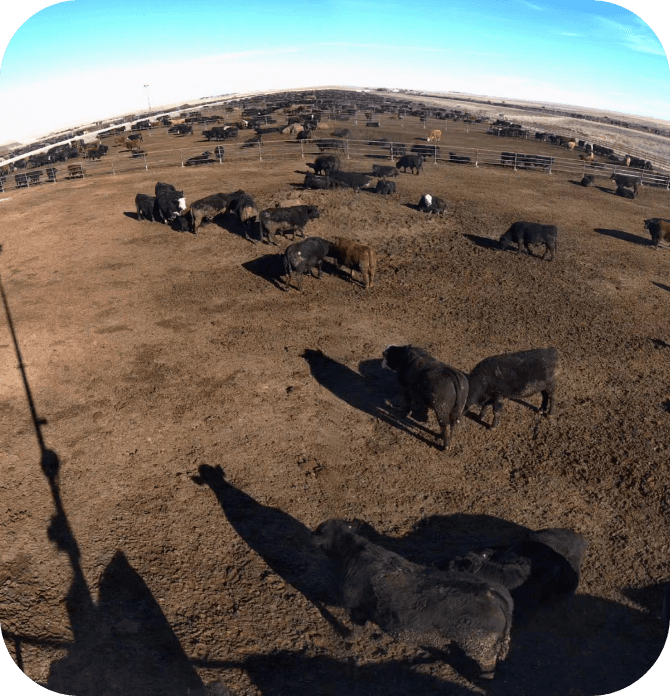
Fixed RGB views can preserve visible cattle presence, position, movement, and scene context at covered pens, gates, alleys, and chutes. Thermal views can add surface-temperature and presence context when visible-light conditions change. Controlled chute imagery can provide face, muzzle, visible-tag, and passage references associated with the operation's identity records.
None of those observations diagnose a disease, establish the cause of death, prove program eligibility, or guarantee that every animal is visible. They give the people responsible for the cattle a narrower, time-aligned evidence set to review. See the documented Tuskegee University field evidence and the current monitoring areas for the installed mechanisms and evidence boundaries.
Management review
Six questions to ask before the record leaves the yard
- Can the operation reproduce the cattle inventory immediately before the event?
- Does each affected animal or group have a record owner, time, place, and source?
- Are event evidence and animal evidence stored separately and linked by time?
- Can the team show which cattle moved, remained, entered a hospital pen, died, or were sold at a reduced price?
- Are photographs, clips, veterinary records, receipts, and inventory snapshots preserved in original form?
- Has the local FSA office confirmed the current forms, categories, evidence needs, and deadline?
Preserve amendments instead of silently editing the past. A useful audit trail shows the original value, the correction, who made it, when it changed, and the supporting source. That discipline serves everyday cattle stewardship even when no program application is filed.
A practical next step
Bring one pen map, one inventory source, and one exception workflow.
We will map where expected counts, observed cattle, movement records, visual identity references, and source evidence should meet in a bounded commercial-feedlot pilot. The goal is a clearer operating record for the people responsible for the cattle—not a claim about program eligibility or payment.
Sources and current guidance
- USDA Farm Service Agency: Livestock Indemnity Program
- USDA FSA: Disaster assistance for Colorado producers affected by drought and wildfire
- Nebraska Extension: Livestock Indemnity Program recovery guidance
- South Dakota State University Extension: Heat Stress in Feedlot Cattle
- Kansas Livestock Association: USDA enhances disaster assistance programs
Published August 11, 2026. Program rules, forms, deadlines, and local instructions can change. Confirm current requirements with the local USDA Farm Service Agency office before relying on any program detail.