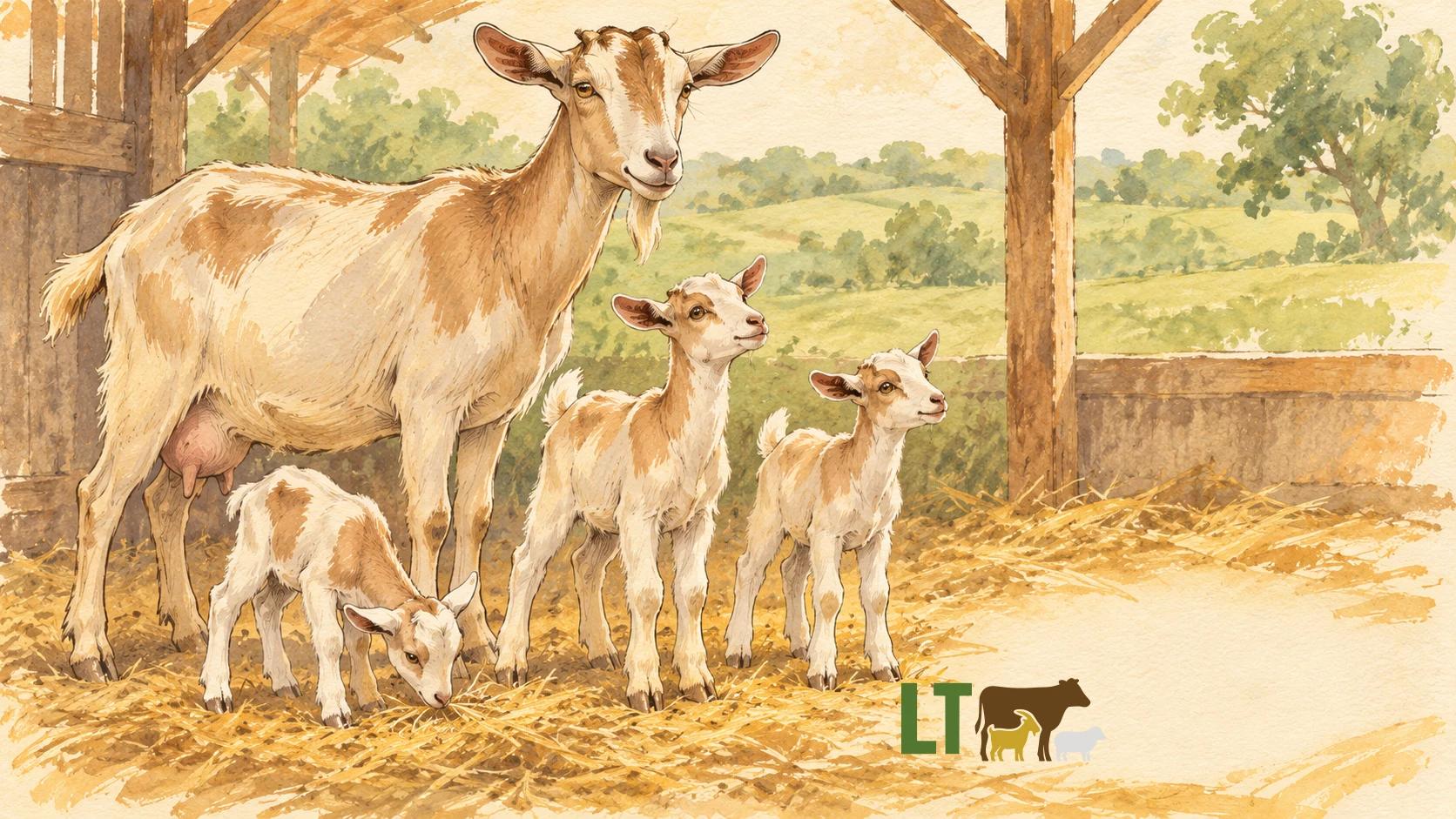
A heavier group can hide a different beginning
At a university goat farm, a weighing day can become a lively teaching moment. Students see animals they know, enter the weights and compare the groups. Soon someone asks which group grew best.
That question deserves a second look before the class names a winner. Were the kids the same age? Did one group contain more single-born animals? A heavier group may have begun with a different mix of kids.
For faculty and student researchers, the payoff is a fairer explanation of growth. Livestock Technologies can discuss observation infrastructure that helps a team revisit the animals’ daily surroundings alongside its direct weight measurements.
Four kidding seasons offered a campus lesson
A May 12, 2026 University of Maryland Eastern Shore report followed 119 kids across the 2022–2025 kidding seasons. Animal-science interns helped analyze the farm data and develop their scientific writing.
The team considered sex, birth weight and birth type: whether a kid was born alone or in a litter of two, three or four. Across the four seasons, birth type was associated with birth weight, later weight and average daily gain—the weight added per day. Single-born kids were larger and grew faster than kids from larger litters in this case.
The pooled comparison did not find a clear statistical difference between males and females. That is useful context for a class tempted to turn one season’s male–female gap into a general rule.
This was an observational campus case. It shows a pattern in those animals; it does not isolate litter size as the sole cause or set a growth target for every goat herd.
The early feeding setting belongs in the story
Langston University’s birth-to-weaning guidance explains that milk is the main part of a young kid’s diet. Under natural suckling, kids take small amounts frequently. Dry feed later helps the rumen, the stomach compartment that supports digestion of forage, develop.
That makes the rearing setting relevant to a growth question. A weight tells the team how large a kid is at that moment. It cannot describe the animal’s whole feeding experience between weighing days.
Nor should a smaller kid automatically be labeled a poor performer. Its starting circumstances help frame the comparison. An animal that needs care still deserves a direct assessment under the farm’s animal-care plan.
Picture two student groups comparing their kids
Imagine two class groups presenting their results. One worked mostly with single-born kids; the other followed mostly twins. The first group reports heavier animals at the end and concludes that its management worked better.
This is a hypothetical example, not a result from the Maryland farm. The conclusion runs ahead of the comparison. The groups differed before the proposed explanation was tested.
A more useful discussion asks how the kids changed from their own starting weights, over comparable ages and periods. It also asks whether the same pattern appears within similar birth types. That gives students a biological question to explore rather than a contest between totals.
A whole-kid-crop average can still describe the farm. It simply answers a broader question than a comparison among kids with similar beginnings.
Let students return to the animals behind the weights
Video can add a different kind of evidence to a growth project. A view of the shared rearing area could let students revisit feeding opportunities and group activity between farm visits. It would complement the scale, rather than replace direct measurements.
Livestock Technologies can scope fixed views, field connections, recording and access to original footage around the university’s question. Faculty would define which observations are useful and how to connect them with the study animals. Automatic kid identification or growth estimation would require separately defined and tested development.
Our technology overview, documented field work and university capabilities brief give teams a starting point. The goal is a clearer account of how the animals grew, with enough context to explain what the comparison means.
What would help your team explain growth?
Bring the goat research question and the rearing layout. We can discuss an observation scope that supports your faculty, students and direct measurements.
Discuss a goat research project →