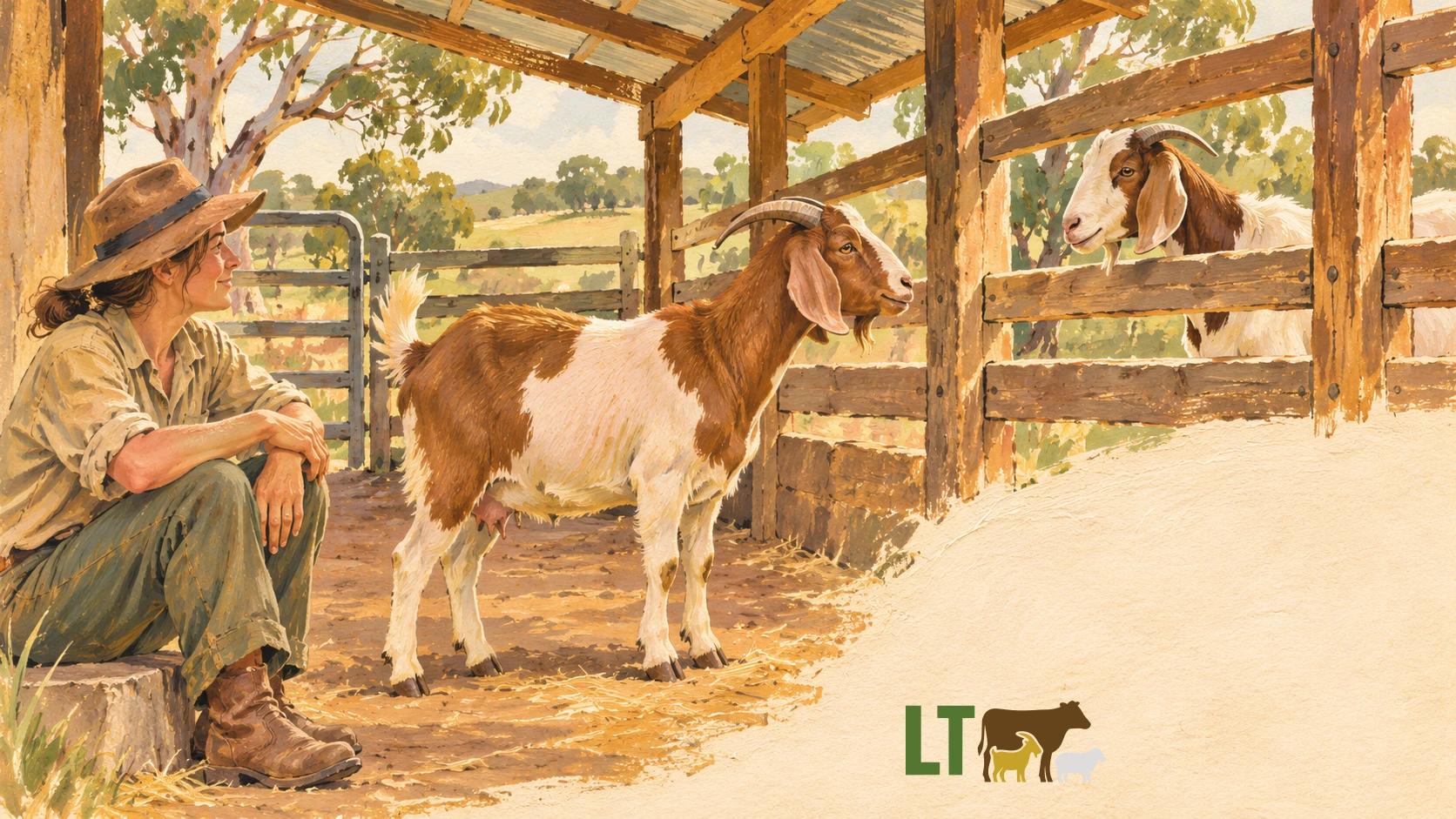
The observer can become part of the scene
A researcher standing quietly beside a pen may seem like background. To a goat accustomed to people, that person may be part of the social setting. A useful observation therefore asks what the animal is responding to, as well as what the observer can see.
This matters in a campus barn where goats meet technicians, students and visitors. An observation made beside a familiar handler may answer a different question from a recording made after everyone leaves.
The practical payoff is a clearer comparison. Before interpreting a change in activity, a team can consider whether the nearby company changed too.
A small study put nearby company to the test
A 2026 study by researchers in Poland, published in the October issue of Animal, compared four five-minute situations involving 16 goats. Animals were alone, with an unfamiliar person, with a familiar person or with another goat.
These goats were highly accustomed to human contact. Human or goat company reduced behaviors associated with distress during the brief separation. Goats more willing to accept touch in their home setting also called less when people were present.
The authors describe a possible social-support effect, but say behavioral and physiological measurements are needed to confirm it. The accessible author-university abstract supports this limited finding; it does not show that people can replace normal goat companionship.
Seeing the herd is a question of its own
U.S. research adds another useful angle. A Fort Valley State University conference abstract published November 30, 2020 compared young male Spanish goats in pens with different opportunities to see other goats.
Animals without visual contact spent more time calling or trying to escape. The researchers watched the animals for 90 minutes, a different setting and duration from the short Polish experiment.
These studies should not be blended into one result. One asks about a nearby person or goat in a highly socialized group. The other examines visual contact with goats during a longer separation. Together they give a university team two distinct questions about the social environment.
Follow the goat before naming the cause
Imagine an approved university observation during a routine move between pens. A goat looks toward the herd through an opening. A familiar technician then steps beside the pen, and the animal changes where it stands.
This example is hypothetical. The change could prompt a focused discussion: did access to the herd change, did the person attract attention, or did something else happen nearby? A continuous view can help the team revisit the sequence instead of relying on a remembered impression.
Calling, moving and approaching are different observations. A quieter animal does not, by itself, establish why the change happened or describe its whole welfare state. The study question determines which direct assessments belong alongside the visible behavior.
Research observation should fit the facility's approved animal-care plan. These findings are a reason to understand brief separation carefully, rather than to create unnecessary isolation or change a veterinary or biosecurity plan.
Keep the company in the picture
For this question, a useful camera view includes the goat, the places people can stand and any opening toward companions. A tight view of the animal alone could leave the relevant social change outside the picture.
Livestock Technologies can scope image capture, field connectivity, processing and access to original footage around that observation. Researchers can return to the moment a person arrives or a companion moves, then compare it with their own animal assessments.
Our technology overview, documented field work and university capabilities brief describe the infrastructure approach. Automatic recognition of goat interactions would be separately defined and tested development work.
The aim is a better biological explanation: what changed in the goat's surroundings, what the animal did next and which question deserves further study.
Never lose an animal.
What company does your observation include?
Bring the goat-housing layout and the research question. We can discuss a focused observation and data scope with your university team.
Discuss a goat research project →