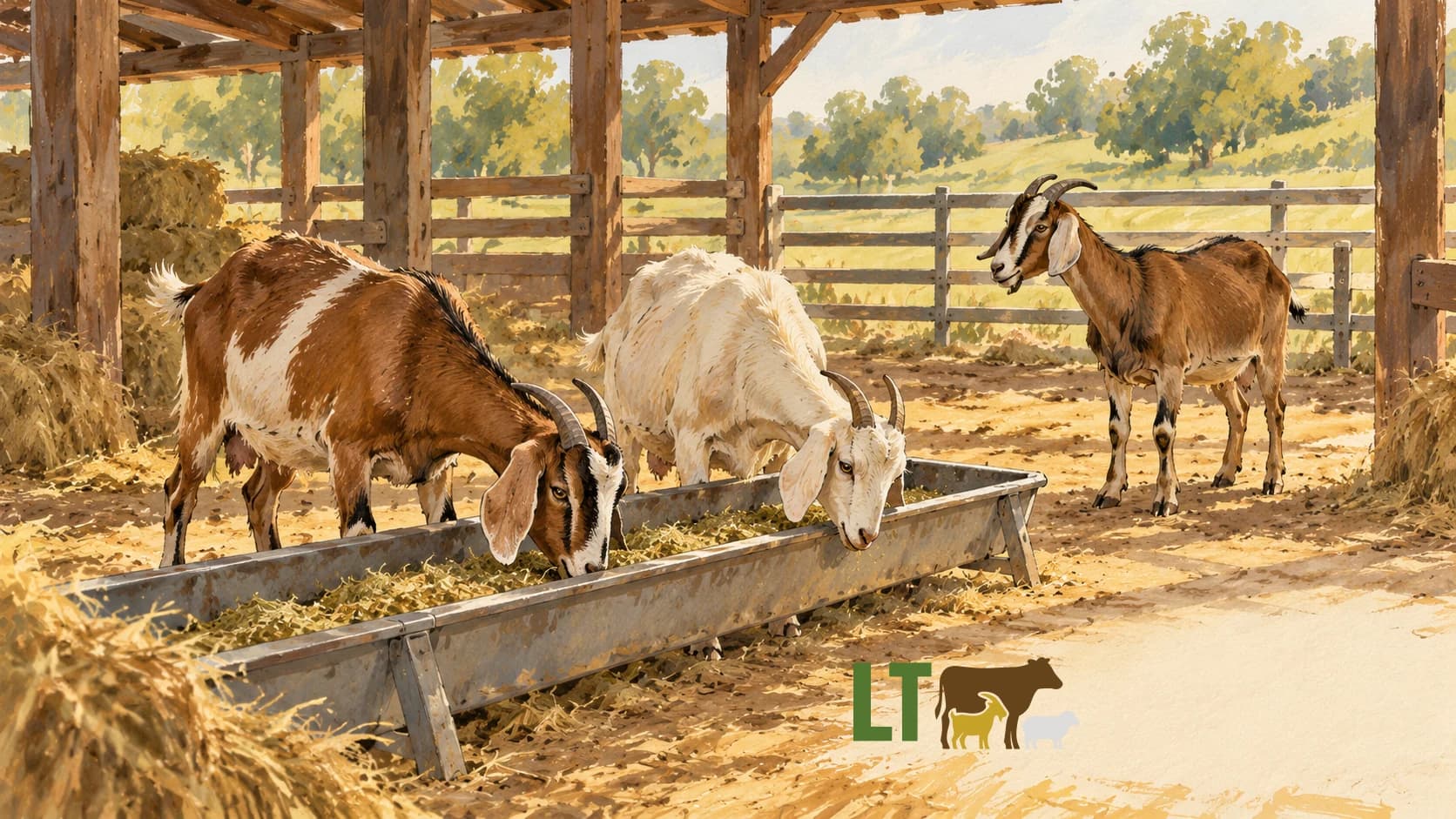
Feed in the trough is only half the picture
At the end of a barn round, feed remaining in a trough can look reassuring. But that view says little about the meal itself. An animal may have reached the feed immediately, arrived late or struggled to get near it.
For goat barn managers, the distinction is practical: feed supply and feeding access are separate questions. Livestock Technologies can discuss a custom monitoring scope that preserves the feeding area and its approach on video. The purpose is to let the team revisit the meal, rather than judge access from the trough afterward.
The feeding schedule changes the space question
When feed is offered at set times, animals need an opportunity to eat during that shared window. Penn State Extension's sheep and goat guide makes that distinction explicit: all animals should have feeder access during scheduled feeding. With feed freely available throughout the day, the space requirement has a different context.
That is why a feeder that works for one routine may not suit another. Before comparing troughs, describe the meal. Is the group gathering for feed at once, or returning throughout the day? A capacity claim without that context leaves out an important part of the barn's routine.
Count the places goats can really use
Nominal trough length can overstate usable space. Langston University's goat-feeding guidance notes that one dominant animal can control a whole side of a trough. It recommends observing feeding time to judge whether enough space has been provided.
The feeder itself matters too. Langston's feeding-systems guidance warns that horns may prevent access through keyhole feeding slots. An opening can therefore be present without being a suitable feeding place for every goat in the group.
Look at the combination: the feeder opening, the animal using it and the space beside and behind that animal. The question is whether goats can reach feed as intended. Measuring the trough is a starting point; watching the group shows how that length functions.
Follow the goat that steps back
Imagine a doe approaching a trough during the morning feed. She starts to lower her head, then steps away as another goat turns toward her. She waits nearby while feed remains within reach of the animals already eating.
This is an illustrative example, not a reported farm result. It shows why the waiting animal can be more informative than the leftover feed. Does she find another place, return later or leave the area? Watching the sequence helps the manager frame the problem before considering a change.
A repeat pattern can start a useful discussion about feeder placement, access points or group management with an Extension adviser. A goat that is off-feed or behaves unusually also needs a direct animal-care check; a social explanation should not be assumed. UF/IFAS Extension's February 2026 goat guide emphasizes knowing normal behavior and working with veterinary and Extension professionals.
Use video to bring the meal back into view
A useful view includes the goats approaching and leaving, as well as heads at the feeder. It lets a manager return to an apparent displacement and see what happened next. A close-up of feed alone cannot tell that story.
Our monitoring workflow brings together fixed views, connectivity, processing and access to source footage. For a goat barn, we would scope those elements around the actual feeding layout and the question the team needs to answer. Automatic goat identification or competition scoring would be separate work to define and test.
The documented field work shows how we build observation infrastructure. A university farm can also use the research capabilities brief when discussing a facility project. Video supplies visible behavior and context; it does not measure the amount each goat eats.
The payoff is a clearer facility decision. Instead of asking only whether feed was offered, the team can ask whether the available feeding places worked for the whole group.
Never lose an animal.
What happens around your feeder?
Bring the barn layout and the feeding-access question. We can discuss a practical camera and source-footage scope for your facility.
Discuss a barn monitoring project →