Heavy-Cattle Feeding Patterns: A Practical Bunk-Zone Review Workflow
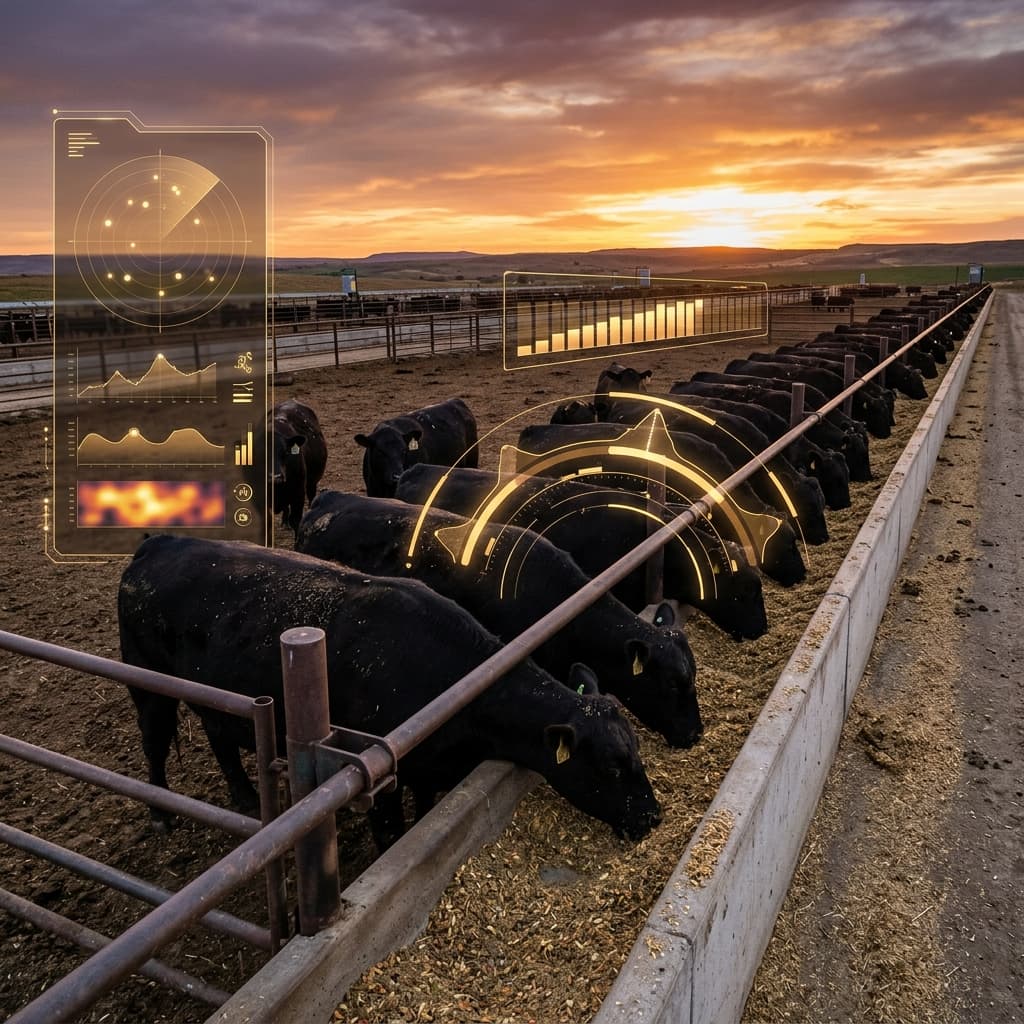
Heavy-cattle feeding patterns are best investigated by bringing bunk-zone video review together with delivery records, weather, pen observations, and nutrition-team decisions.
Weight, ration, weather, days on feed, health history, and market conditions all shape a group's feeding pattern. Camera evidence provides presence, duration, and context, while direct feed measurements and nutrition records quantify intake and efficiency.
Livestock Technologies is evaluating bunk visit duration as reviewable camera evidence. Identity confidence, camera coverage, occlusion, time outside the field of view, and human corrections must be reported with the observation.
Investigate Heavy-Cattle Feeding Patterns with the Right Records
In feedlot management, feed represents approximately 70% to 80% of total operating expenses. When cattle enter the final phase of their feeding period, their biological efficiency naturally shifts. Early in the feeding cycle, feed energy is directed toward muscle deposition, which is highly efficient. In the final phase, growth shifts toward fat deposition and maintaining a massive body mass, both of which require significantly more feed energy per pound of gain.
Pen-level delivery and performance records answer important group-level questions. Individual camera observations may add context, but a feed-efficiency comparison still requires measured feed intake and weight change over a defined interval.
Evidence Needed for an Individual Efficiency Study
- Observation: Timestamped bunk-zone visits with source clips and coverage status.
- Identity: A validated EID, RFID, or other reference plus match confidence and manual corrections.
- Outcome: Independently measured intake and weight change, with a predefined analysis plan.
Without those inputs, labeling an animal an inefficient converter or recommending early marketing would exceed what the camera evidence supports.
Bunk-Zone Video Review in the Feeding Workflow
Research systems can measure individual feed intake directly. Camera-based monitoring addresses a different task: estimating visible presence and duration in a defined bunk zone without claiming to weigh feed.
A camera pilot can evaluate the following observations and limitations:
- Bunk-Zone Visit Frequency and Duration: How often is the animal visibly present, and for how long?
- Baseline Comparison: Is the observed duration different from a defined comparison period?
- Missingness: Was the animal occluded, outside coverage, or unresolved by the identity workflow?
- Infrastructure: What uptime, power, cleaning, storage, backup, and support were required?
Bunk duration may be analyzed beside independently measured outcomes, but it should not be converted into an intake, FCR, or marketing recommendation without validation.
Animal-Care Review, Not Disease Diagnosis
A change in visible bunk visits can have many causes, including camera coverage, weather, ration timing, social behavior, handling, or illness. It can create a review item, but it is not specific to BRD, acidosis, or any diagnosis.
Pen riders, animal-health staff, and veterinarians remain responsible for assessment and treatment decisions. The source clip and observation history should be available to them rather than replaced by a model label.
No field-validated early-illness lead time has been established. A useful pilot should measure:
- Review Quality: False alerts, missed events, unresolved identities, and time required for staff review.
- Operational Fit: Whether the evidence arrives in time and in a form the animal-care team can use.
- Independent Comparison: How observations align with the operation's approved records and assessments.
The Sovereign Feedlot: Protecting Confidential Operational Data
In production agriculture, data security is paramount. A feedlot's conversion metrics, average daily gains, and health tracking represent highly confidential financial data. If leaked, this information can affect market positioning and packer negotiations.
Livestock Technologies can process data on site. A deployment agreement should state ownership, authorized access, retention, backup, export, deletion, incident response, and support connections.
Build a Practical Feeding-Pattern Review
Pen-level records remain essential. Add individual observations only where they answer a defined question and where the operation can measure identity, coverage, error, workload, and total cost.
Expand only after the pilot shows a repeatable benefit against the baseline. Until measured intake and weight outcomes are linked under a valid study design, bunk visit duration should be described exactly as an observation—not as feed intake or feed efficiency.
Bring us the livestock workflow or research question.
We'll help define the smallest useful deployment, the evidence it should produce, and how your team will evaluate fit.