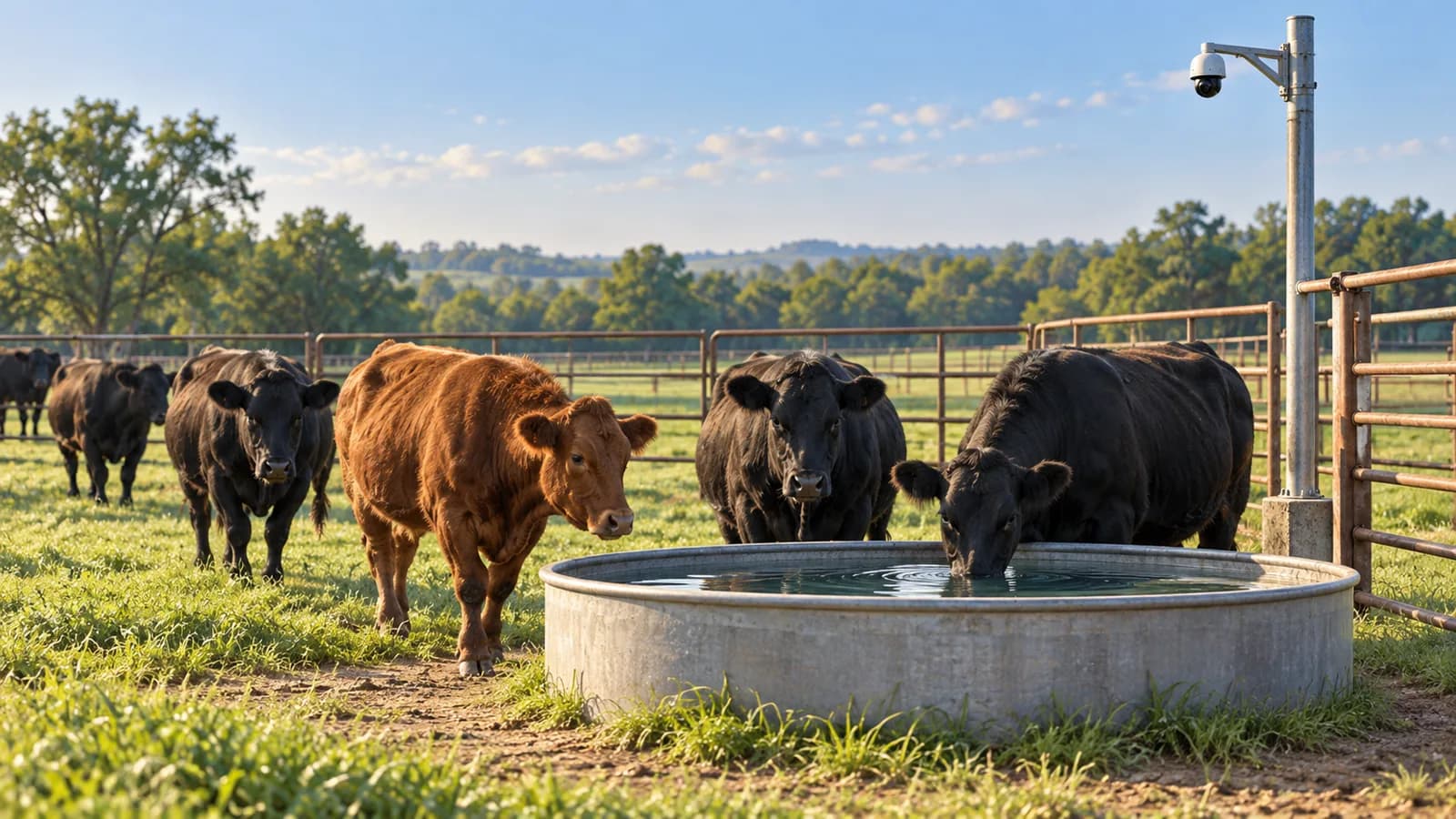
A real field view to start from
At Tuskegee University's four-pen research feedlot, Livestock Technologies has installed fixed digital and thermal cameras, field connectivity, and on-site processing and storage. The digital frame below shows cattle at the bunk and white water containers on the left. It gives a research team actual pen context to discuss, rather than a proposed system diagram.
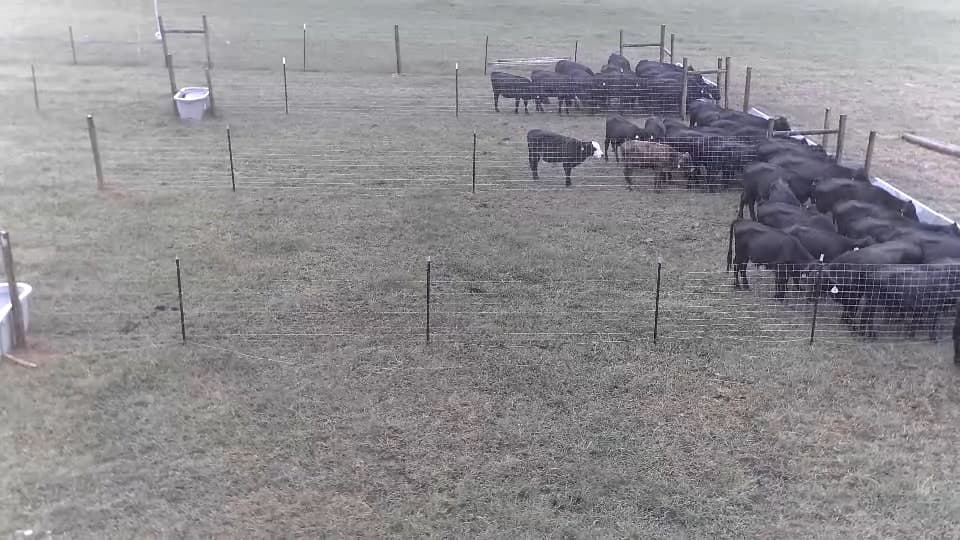
The view helps locate the water points within a working pen. For a study of head-to-water behavior, the team would first confirm that its chosen angle resolves the animal and trough clearly enough across the hours being studied. A dedicated view can be scoped if the existing one does not.
Ask a question the footage can answer
Suppose a researcher asks whether the water point becomes crowded at different times of day. The study could define an arrival as an animal entering a marked area, record how long that animal remains visible, and note when another animal waits nearby. Each observation would point back to the pen, camera and original clip.
That is different from saying every visit is a drink. An animal may stand near the trough without drinking; a second animal may block the view. The research definition should say how those cases are labeled before software summarizes them. This keeps a useful behavior question from turning into a confident but unsupported number.
Our continuous monitoring platform supplies the field observation layer. The university defines the behavior, the sampling plan and what a reviewer must be able to verify. If a project needs individual-animal visits, the team can discuss whether a suitable identity reference and camera angle are available for that protocol.
Pair the camera with the right measurement
A useful proposed result might say: between 3 and 4 PM, the water-point area had several visible visits and one interval when another animal hid the trough. The team could open those source clips, check the labels and compare the period with its weather or management record. The clip is the evidence; the summary is a way to find and compare it.
If the question is how much water cattle consumed, a direct meter or another validated measurement must be added. Camera footage alone cannot turn time near a trough into gallons. University of Tennessee researchers studied beef-cattle drinking behavior with their own camera positions and labeled video; their methods show why the definition and field view matter. University of Georgia researchers have separately investigated camera-based drinking and other behaviors in dairy cattle. Those independent projects motivate questions for a new study; neither reports a result from our Tuskegee system.
Bring the water-point question to the site
The best first conversation is specific: which pen and water point matter, what behavior you need to distinguish, whether an existing camera sees it, and what independent measurement your study requires. We can show the documented Tuskegee views and discuss a field setup and data scope with your animal-science team.
The ungated research capabilities brief gives your colleagues the equipment starting point. Our researcher page explains the broader partnership path. Both are available before you contact us.
Never lose an animal.
Study the behavior that matters to your herd.
Tell us the water-point question your team wants to answer. We'll walk through the real field views, the observation scope and the direct measurements that would make the study useful.
Discuss a cattle research project →