Follow the treatment assignment
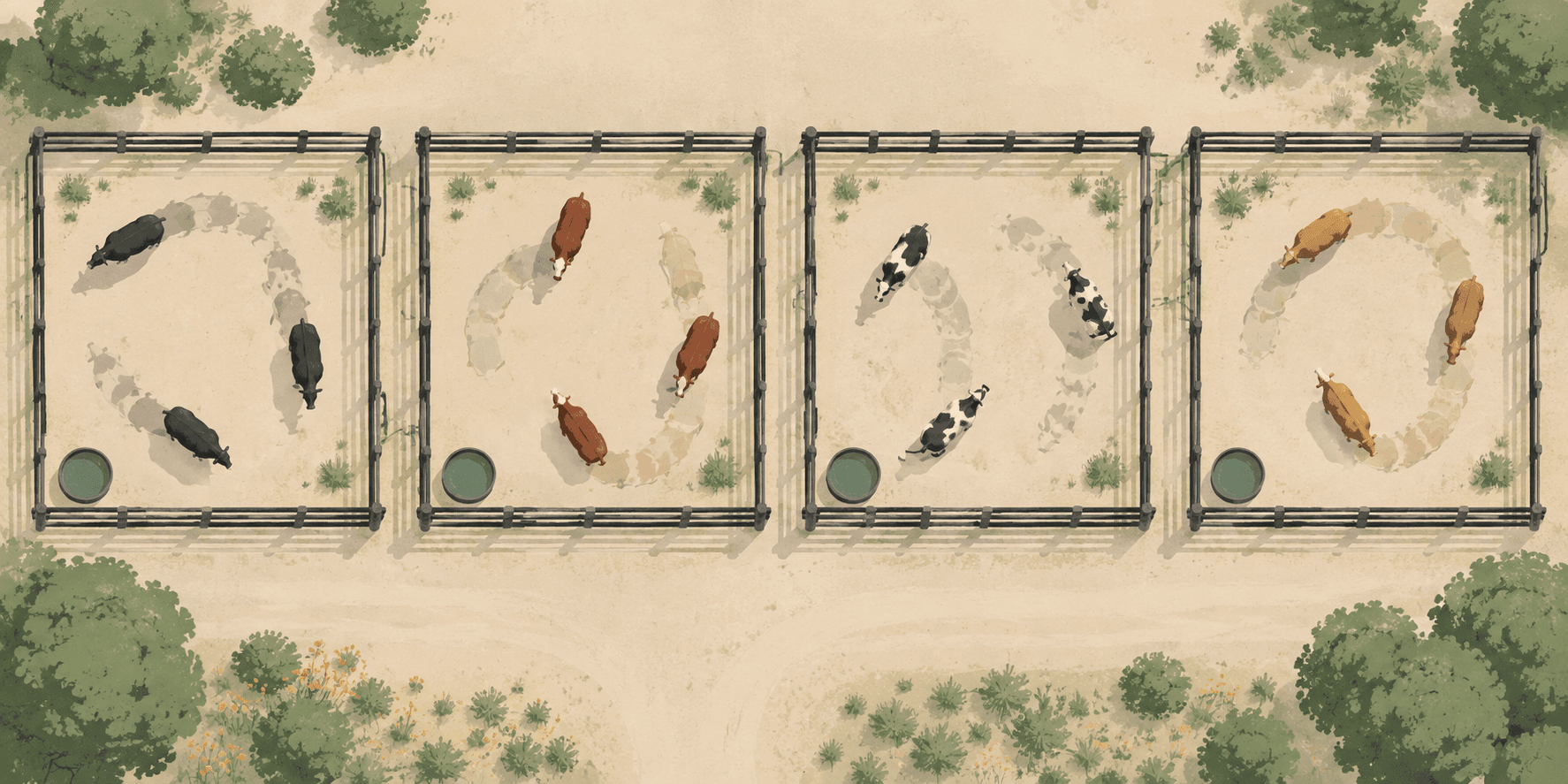
An experimental unit is the entity that can be assigned to an intervention independently of the others. In a feeding trial, if every animal in a pen receives the same ration together, the pen is typically the unit for that treatment. Measuring each steer does not turn one treated pen into many independently treated pens.
The answer can change with the protocol. If researchers can assign and administer treatments separately to individual cattle—even when they share a pen—an animal may be the experimental unit. A crossover study may define an animal during a particular period as the unit. The design, not the camera angle, determines the answer.
The ARRIVE study-design guidance asks researchers to identify the unit and warns that repeated measures or subsamples can inflate sample size when treated as independent replicates. Animal-science statistical guidance makes the same distinction for group-fed pens.
A worked example: four pens, many observations
Imagine a study assigning one ration to each pen, with four pens and 20 cattle per pen. A camera records hundreds of observation windows from every pen. If the question is the ration’s effect, the treatment was assigned four times—not 80 times, and not once for every saved frame.
Those cattle measurements and video windows are still useful. They describe variation among animals and how behavior unfolds over time. The analysis must keep them nested inside the pen and use a model that respects that structure; treating every frame as independent would make the evidence look more certain than the design supports.
| What is assigned independently? | What the study team counts | Where repeat observations belong |
|---|---|---|
| One treatment per whole pen | The pen is generally the treatment unit | Cattle and dates are observations within that pen |
| A treatment separately assigned to each animal | The animal may be the treatment unit | Repeated days remain measurements within that animal |
| Different treatments assigned to the same animal across periods | The animal-period structure is part of the design | Periods and washout rules must be represented in the analysis |
These are design examples, not a substitute for an investigator and statistician agreeing on the experimental unit, assumptions, and model before animals are enrolled.
Estimate sample size from the outcome you care about
Once the unit and primary outcome are explicit, sample-size planning needs a target: the smallest difference worth detecting, or the precision required for an estimate. It also needs a defensible estimate of variability and the planned treatment structure, blocking, repeated measurements, and statistical analysis. Those inputs should be set before collection, with a statistician who knows the study.
A 2026 Colorado State AgNext study shows why a published head count is not a universal rule. Its researchers used six finishing-steer datasets and compared methods for estimating sample needs for gas-flux outcomes; estimates differed by gas and study conditions. Those methane and carbon-dioxide results are not a sample-size answer for camera behavior, a ration trial, or another site.
Texas Tech’s Burnett Center feedlot description lists adequate treatment replication among its facility-design goals. That is a reminder to discuss treatment units when planning the pens and instruments—not to infer how many pens another project requires.
What continuous video adds to a study
Camera footage can preserve repeated views of a defined pen zone so researchers can review when visible behavior occurred, how it varied across observation windows, and whether the source view was blocked. It can add temporal context to animal, pen, treatment, weather, and direct-measurement records.
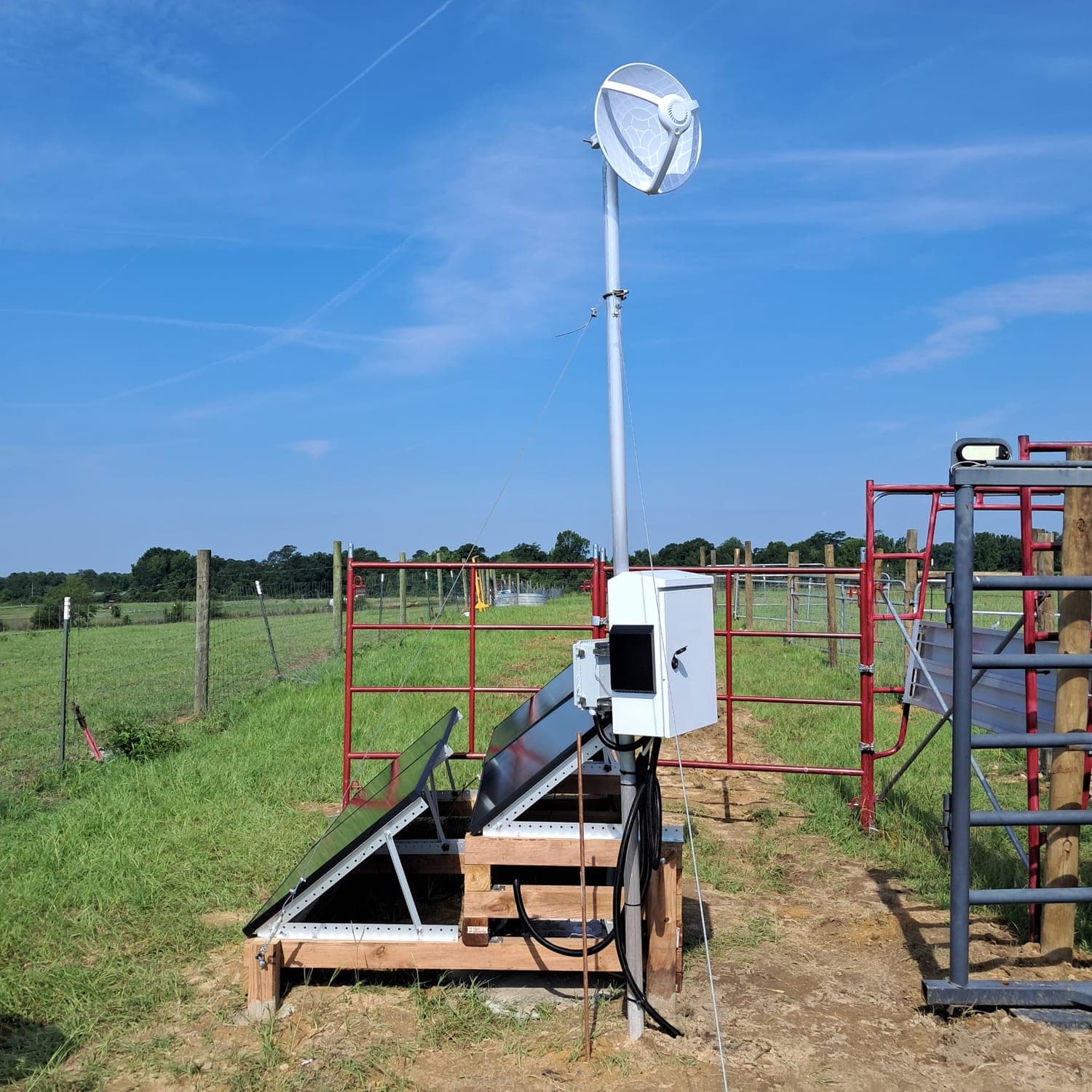
Livestock Technologies has fixed RGB and thermal camera views, field nodes, wireless links, and on-site processing and storage at its four-pen Tuskegee research installation. The camera record can support observation and review; it does not decide the experimental unit, measure every biological outcome, or replace an independent reference measurement.
For a study of shade use, for example, the team could define the pen-level treatment, the shade-use outcome, the camera-visible zone, the observation window, and a separate reference check. A continuous record helps people inspect how observations vary over time; the designed treatment units remain what they were at assignment.
See the documented Tuskegee field report, review Livestock Technologies’ camera and field-data system, or share the ungated research capabilities brief with your project team.
Put these decisions on one page before collection
- Question and outcome: name the primary response and its unit.
- Assignment: record what receives each treatment and what can be randomized independently.
- Replication plan: state the number of experimental units per group and why it can answer the target question.
- Repeated observations: keep animal, pen, date, and source-video windows at the right level of the analysis.
- Field evidence: document camera coverage, reference measurements, missing-view rules, and the person who reviews exceptions.
That gives the investigator, statistician, field crew, and equipment team the same picture: which units carry the treatment, what each source observes, and what conclusion the design can support.
Never lose an animal.
Bring the study design and the field question
Livestock Technologies can walk a university team through the installed Tuskegee camera platform and discuss how field views and source footage could support a separately designed cattle study.
Discuss a university research project →