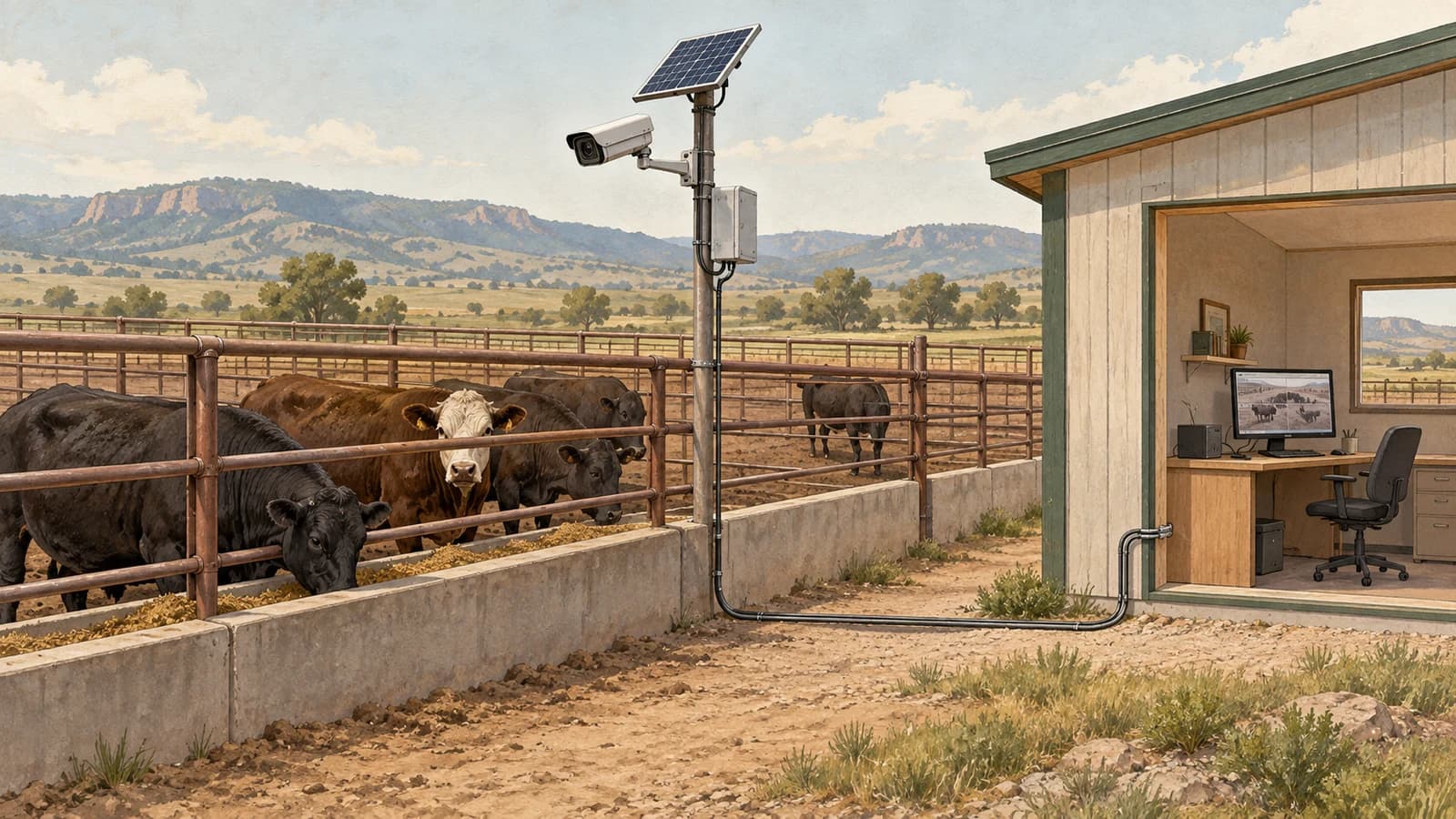
What goes into a working installation
A real field node shows why the camera is only one part
At Tuskegee University, Livestock Technologies installed monitoring across four research pens with 60 cattle. The system combines fixed color and thermal cameras, solar field equipment, wireless connections, and on-site processing and storage.
The photo shows the mast, solar panels, and protected equipment beside the pens. Those supporting parts help get a useful camera view back to the people reviewing it.
See the Tuskegee field installation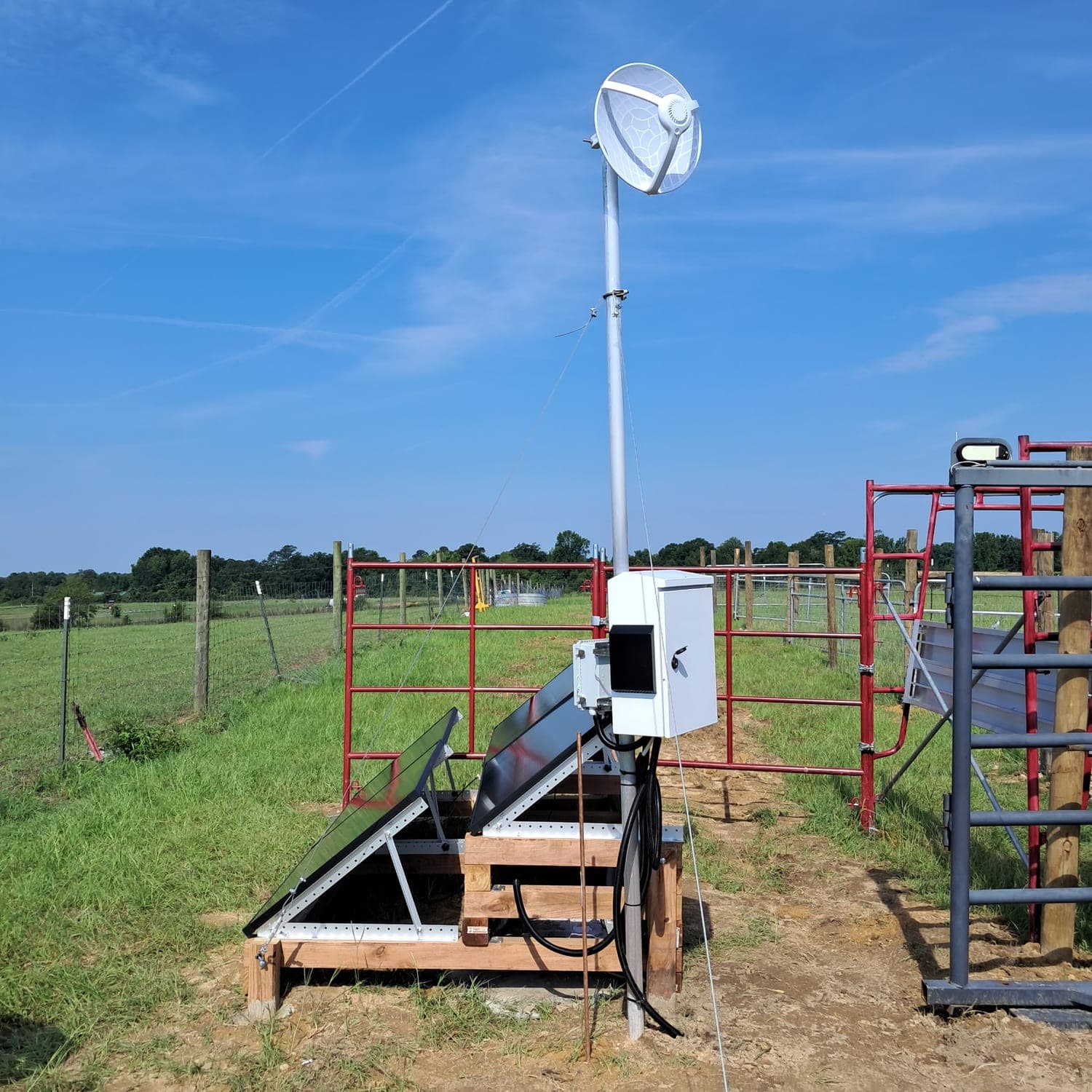
Five parts of the price worth separating
Ask for a written scope that makes these items visible. A lower starting price is not necessarily the lower total cost if essential work is left out.
- Cameras and usable views
- The cattle activity you need to see, distance to the animals, blind spots, and day or night requirements.
- Installation and power
- Existing mounts and electricity versus new poles, protected cabling, solar equipment, and site work.
- Connection and on-site equipment
- The link from each camera to the recording and processing equipment, plus any remote-access connection.
- Software and storage
- The observations you need, number of streams, recording settings, retention period, and agreed data access.
- Setup and ongoing service
- Pen-zone setup, testing with your crew, training, cleaning, maintenance, support, and replacement responsibilities.
Camera placement, lighting, connectivity, and access for cleaning are also central considerations in Iowa State University Extension's guidance on cameras for beef operations. They affect whether the equipment is useful after installation, not just whether it turns on.
A wide picture is not the same as useful coverage
A camera may show a whole pen while leaving cattle too small to answer your question. Watching general activity, reviewing bunk visits, and capturing a clear muzzle image call for different views.
Start with the activity you need to understand. Then check the distance, angle, light, and objects that block the view. That helps determine the number and type of cameras before pricing them.
For example, following activity at a bunk may need a steady view of that zone. Adding overnight thermal context is a different scope. A controlled chute for identity capture is another job again.
See how the monitoring workflow fits togetherOne pen first—or the whole yard?
A smaller first area can make sense when the question is narrow: “Can we review bunk activity between our normal rounds?” It gives the crew a practical way to judge the view and the review process before expanding.
But a small project still needs the basic connection, processing, and setup work. Its cost per pen may not match a larger installation. Simply multiplying a one-pen quote by the number of pens can give a misleading yard-wide estimate.
If the real need is full-yard coverage from day one, say so. A phased installation should follow the operating need, not force the yard into a demonstration that cannot answer it.
What can become an ongoing cost?
Ask which charges recur and what they include. Depending on the agreed system, those may cover software, remote connectivity, storage, support, maintenance visits, or replacement parts.
Recording needs matter, too. Keeping more camera streams for longer requires more storage. Camera-system planning tools such as AXIS Site Designer estimate storage and bandwidth from the recording settings and schedule.
For your quote, put the retention period in plain terms: how long footage stays available, who can retrieve it, and what happens when storage fills. Ask separately about saving selected clips for a longer period.
Also agree who cleans lenses, checks damaged cables, responds when a camera goes offline, and keeps the software current. A support line and an on-site service visit are different commitments.
Can existing cameras lower the cost?
They may help if the view, image quality, stream access, and connection fit the cattle question. Existing power, mounts, and network links can also be useful. Each needs to be checked before counting it as part of the new system.
Bring the camera model and a typical daytime and nighttime image to the discussion. A camera that works well for security may still need a different angle for cattle monitoring.
Our feedlot cameras versus security cameras guide explains that difference. The aim is to keep useful equipment and price the gaps that matter.
You do not need a technical plan to start
A useful first conversation can begin with three things: what you want to know about the cattle, which pen or area matters most, and what equipment is already there.
If you have a yard sketch or a few photos, they can help. If you do not, start with the question. The scope discussion is where we work through coverage, equipment, installation, and the crew's next step.
Livestock Technologies builds camera-based feedlot monitoring around practical work: cattle activity, pen observations, and source imagery your team can review. The goal is a system the crew can use, with an understandable plan for what it costs to install and keep running.
Start with your yard
Let's put a useful scope around your question
Tell us what you need to see between rounds. We can discuss the smallest useful deployment and the details needed for a site-specific quote.
Discuss your camera projectOnly your name and email are required to start the conversation.