Answer first
Follow cattle activity beyond daylight hours
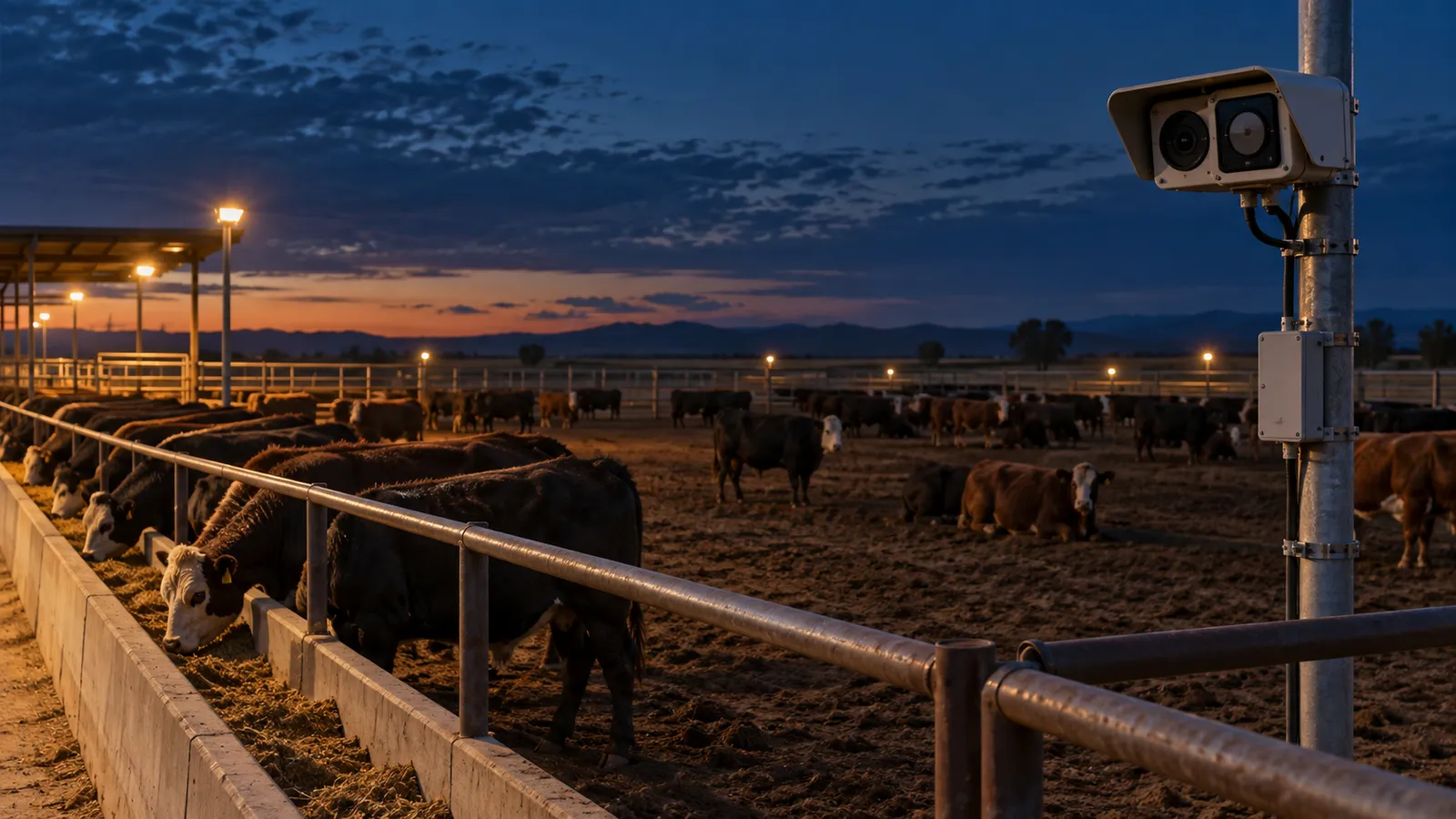
Bunk activity, cattle position, and resting do not stop at sunset. Pairing camera views with on-site recording gives a crew a history to revisit when it needs to understand what happened overnight.
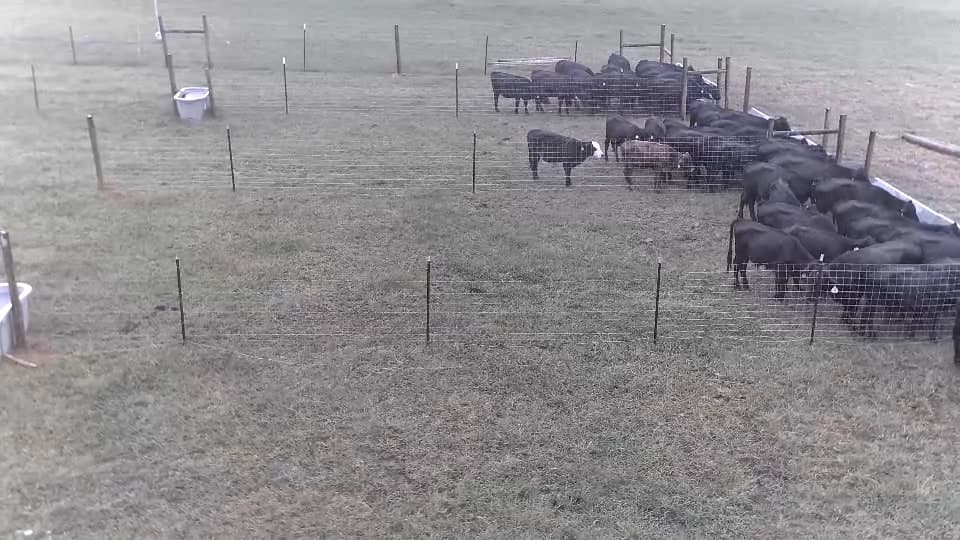
RGB means a standard color camera. It shows fences, gates, cattle markings, people, equipment, and other visible scene details when enough light reaches the sensor.
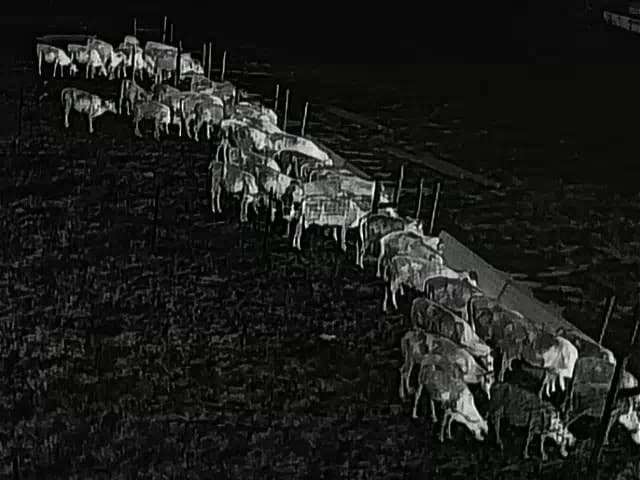
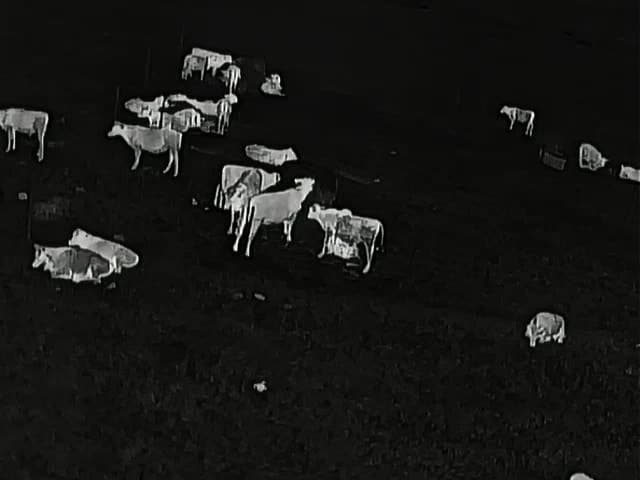
A thermal camera measures infrared energy from surfaces. It can separate cattle shapes from a darker background when visible light is limited.
Together, the views add context for a focused pen check or a closer review of an unusual period.
Real field views
RGB and thermal views answer different questions
These frames come from the installed system at the Tuskegee University research feedlot. The timestamps show two different points in the overnight routine.
What thermal adds
Thermal adds a view when visible light is limited
Thermal images can support presence, position, group distribution, and visible activity review when ordinary light is poor.
They also preserve surface-temperature patterns. Those patterns change with wind, rain, dust, mud, coat, camera angle, distance, recent movement, and the chosen body area.
A warmer or cooler region is a reason to review context. It is not an internal body-temperature reading, a disease label, or a treatment decision.
Peer-reviewed cattle studies emphasize fixed methods and qualified reference measurements. That boundary matters in both research and daily operations.
Night review, step by step
Keep the source image connected to the cattle record
Capture both views
RGB preserves visible scene detail when light is available. Thermal preserves surface-temperature contrast when visible light is limited.
Keep time and place attached
Every frame needs its camera, pen or zone, timestamp, and coverage state before it can support a review.
Compare like with like
Review the same zone, time window, and operating context. Use the source images and field conditions to guide the next check.
Route the exception
A count difference, unexpected position, or activity change goes to a named person with the source images.
Use a direct check when needed
The crew, veterinarian, or researcher makes the decision and records what was confirmed in the pen.
Before a feedlot pilot
Test the night workflow in the yard you operate
| Test | Question to answer |
|---|---|
| Usable night view | Can a reviewer locate cattle and understand the covered area after dark? |
| Coverage limits | Are blocked views, missing periods, animals outside the view, and uncertain observations marked clearly? |
| Clock alignment | Do RGB, thermal, yard records, weather, and direct checks share a verified time reference? |
| Local continuity | What keeps recording during an internet interruption, and how long can the installed storage retain evidence? |
| Review ownership | Who checks an exception, how quickly, and where is the final decision recorded? |
Test representative pens, cattle density, weather, dust, lighting, feeding times, and crew activity. Keep direct animal checks and yard records authoritative.
The Livestock Technologies setup
On-site capture keeps the night record close to the operation
Livestock Technologies pairs fixed RGB and thermal cameras with solar field nodes, wireless backhaul, and on-site processing and storage.
The documented Tuskegee deployment covers four research pens and 60 cattle. It also includes controlled-chute reference capture.
RGB and thermal views, field connectivity, and local computing work together in the installed system. The next step for another yard is to map that approach to its pens and operating questions.
See the camera observation map, technology platform, and Tuskegee field evidence.
Plan the covered decision
See what your yard could monitor after dark
We will map the view, lighting, thermal role, local recording, coverage checks, and crew response around your current yard records.
Discuss nighttime cattle monitoringSources
- 2026 systematic review of infrared thermography for cattle thermal comfort
- 2026 field study of remote thermal sensing in tropical cattle systems
- Thermal and RGB video study for drylot cattle heat review
- Study of cattle position effects in a walk-through thermography system
- Livestock Technologies field evidence from Tuskegee University