Answer first
Mark the identity as unresolved before changing a record
When a tag, visual reference, or camera track is unclear, do not force a match.
Preserve the original image, time, location, pen, and related records. Compare authorized sources and require a named reviewer before correcting the yard file.
Keep the original value and the correction linked. This protects later movement, treatment, shipment, inventory, and traceback review.
Why exceptions happen
A camera may see the animal without seeing enough identity evidence
Another animal may hide the tag. Distance, glare, dust, darkness, head position, or a fence may block the needed view.
A camera track can also break when cattle overlap or leave the covered area.
Recent cattle-identification studies report these same limits in dairy settings. Their results do not establish feedlot performance.
The useful lesson is simple: an unknown or conflicting identity needs its own state. It should not become a confident match without review.
The exception record
Keep six parts connected
| Record | What to preserve |
|---|---|
| Expected identity | EID or RFID number, visible tag, lot, home pen, and the source record that supplied them |
| Observed evidence | Original image or clip, visible marks, time, location, camera, and coverage state |
| Exception state | Unreadable, hidden, missing, conflicting, unknown, or tied to an interrupted camera track |
| Records checked | Receiving, chute, treatment, movement, shipment, manifest, and authorized official records |
| Review decision | Named reviewer, decision time, supporting evidence, remaining uncertainty, and next action |
| Correction history | Original value, corrected value, reason, author, time, and link to the source evidence |
Six steps for an identity exception
Use the source record before changing the yard file
Mark the identity as unresolved
Stop the uncertain value from moving into another pen, treatment, shipment, or closeout record. Do not choose the closest-looking animal.
Preserve the original evidence
Keep the first tag read, image, clip, timestamp, pen, camera, and coverage state. Do not replace the source file with an edited copy.
Check the controlled references
Compare the EID or RFID scan, visible tag, chute images, receiving record, movement history, and authorized yard record.
Collect a safer reference when needed
Use the yard’s approved cattle-handling process to obtain a direct tag read or controlled chute reference. Never delay necessary cattle care.
Close the exception with a person
A named reviewer should record the identity decision, evidence used, unresolved limits, and any follow-up.
Keep the correction trail
Preserve both the original and corrected values. Link the correction to its source evidence and reviewer.
How Livestock Technologies helps
Connect controlled references with visible pen evidence
Livestock Technologies connects controlled chute images with EID or RFID, visible tags, manifests, and yard records.
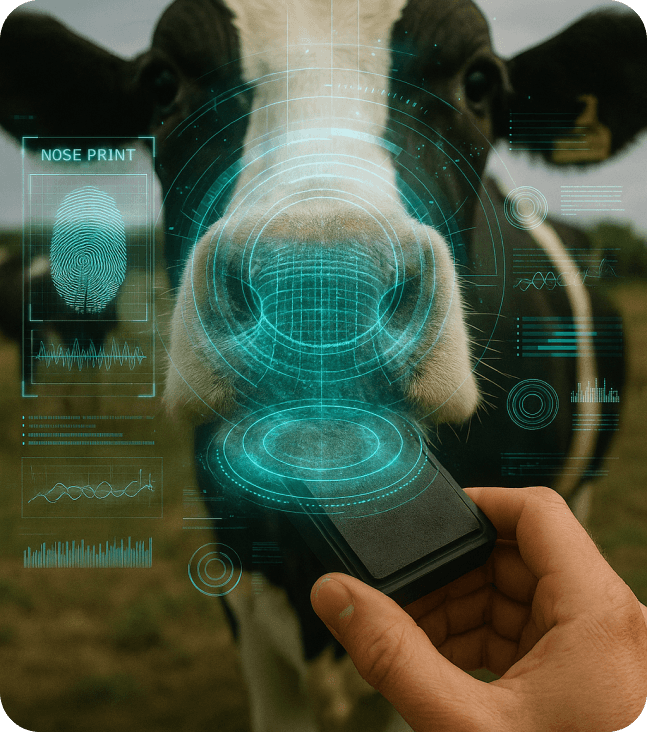
Nose ID capture preserves repeatable face and muzzle references during the yard’s approved chute workflow.
Fixed cameras add time, location, coverage, visible movement, and source imagery between controlled reads.
Expected-versus-observed checks can route count, movement, or identity differences to a reviewer.
See the feedlot platform, camera and Nose ID workflow, and Tuskegee field evidence.
Official record boundary
Visual evidence supports the record; it does not replace official identification
USDA APHIS guidance tells accredited veterinarians to record every identification form when more than one is present.
APHIS describes traceability as knowing where affected or at-risk animals are, where they were, and when they were there.
Camera observations can help explain those time and place questions. They do not create an official ID or change an authorized record by themselves.
Follow current law, the yard’s procedures, and direction from animal-health authorities for any required identification decision.
Sources
Read the identification rules and research limits
Practical next step
Bring one unresolved identity example
We will map the chute reference, camera evidence, yard records, exception states, reviewer handoff, and correction trail around your current workflow.
Review a cattle ID workflow