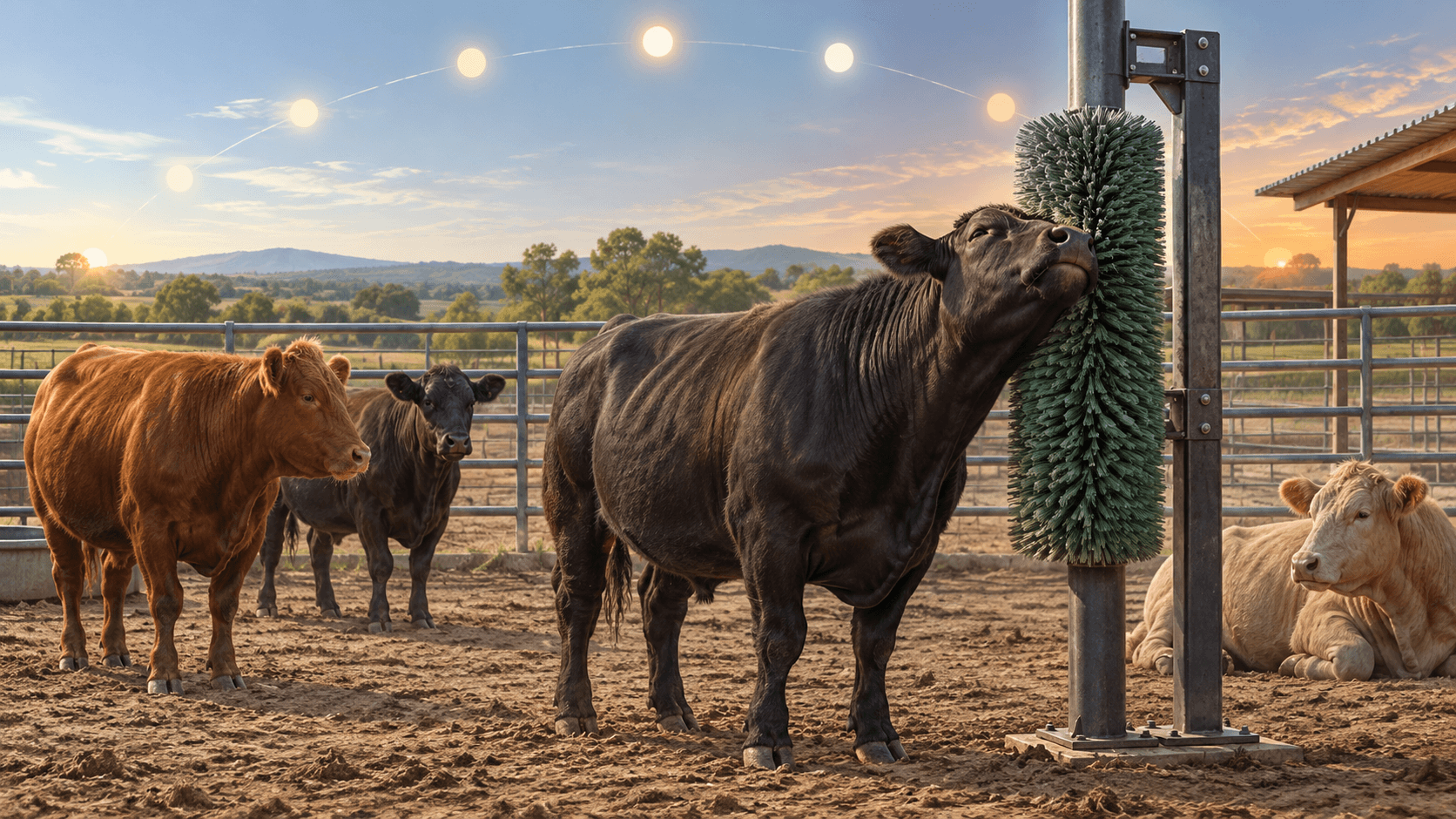
One brush can produce more than one time pattern
A single day answers whether a brush was used during that observation. It cannot show whether cattle return over the following weeks, whether use changes with time of day, or whether one group’s pattern differs from another’s.
A 2025 peer-reviewed study at a commercial feedlot followed 89 cattle with brush access and 80 controls for 107 days. In that study, brush-use frequency and interaction duration did not decline over the assessment period. That is a useful example of sustained use—not a promise that every group will behave the same way.
Other studies ask different questions. A 2020 study validated how observation interval affects estimated brush-use duration and bouts; a Kansas State handling-alley study examined brush exposure during a short reproductive-handling protocol. Neither result substitutes for a repeated pen-use measure in a different setting.
Decide what “use” means before comparing days
Choose one primary outcome and define it in visible terms. A brush contact, a use bout, minutes of contact, and the share of a group seen using the brush are different measures. Set the start and stop rules for a bout before anyone reviews the study footage.
How often
Count defined visits or bouts during a fixed observation period. Keep brief interruptions and animals waiting nearby distinct from contact.
For how long
Measure visible contact duration using the study’s chosen intervals. Record blocked views and time outside the frame as unknown, not as “no use.”
Across which cattle?
A pen-level view can show group activity. Individual-use claims need a separate, validated way to identify each animal across visits.
The 2020 study found that sampling intervals that were too wide could miss detail in brush-use bouts. Its results came from its own animals, camera views, and analysis; treat them as a reason to validate your study’s time resolution, not as a universal camera setting.
Compare the same windows, not one memorable clip
Set the comparison around the biological or management question: for example, the first few days after brush access begins versus later weeks. Keep window lengths, time-of-day coverage, brush placement, group composition, and the rule for a “use” event consistent—or record the changes that make comparisons different.
Repeated windows can reveal a group-level pattern, but they do not by themselves prove that the brush caused it. A control group, planned treatment assignment, direct observation, and an analysis matched to the study design answer different parts of that causal question.
A 2026 review of brush research reports that use can vary with housing, production stage, time and energy constraints, and individual differences. It also says the association between changing brush use and illness is inconclusive across settings. A reduction in use is therefore not a diagnosis or a stand-alone welfare score.
What the camera system contributes
At Tuskegee University, Livestock Technologies has installed fixed RGB and thermal views across four research pens, with field nodes, connectivity, on-site processing, and storage. The actual field frame below shows cattle gathered along a bunk within a pen view. It demonstrates installed observation infrastructure; it does not show brush use or a brush trial.
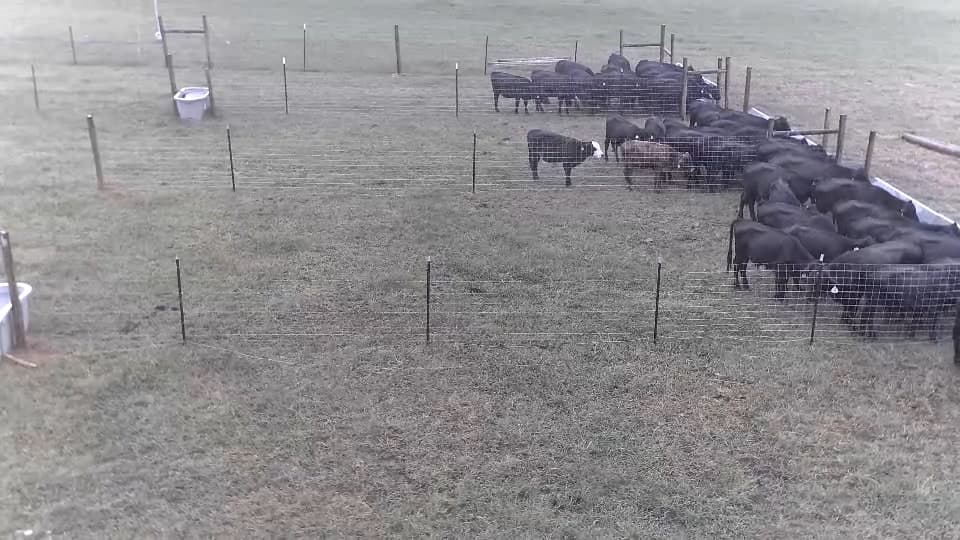
In a separately designed study, a camera view that safely and consistently includes an enrichment area could preserve source footage for repeated review. Before scoping that view, the team would define the measured behavior, the brush’s location, the intended time windows, how occlusion is handled, and whether the analysis is for a group or known individuals.
Explore the camera and field-data system, review the documented Tuskegee deployment, or share the ungated research capabilities brief with a project team.
Never lose an animal.
Bring the behavior question and study window
Livestock Technologies can walk a university team through the Tuskegee installation and discuss whether a camera view belongs in a separately designed cattle study. Researchers retain responsibility for the protocol, animal-care assessment, and interpretation.
Discuss a university research project →