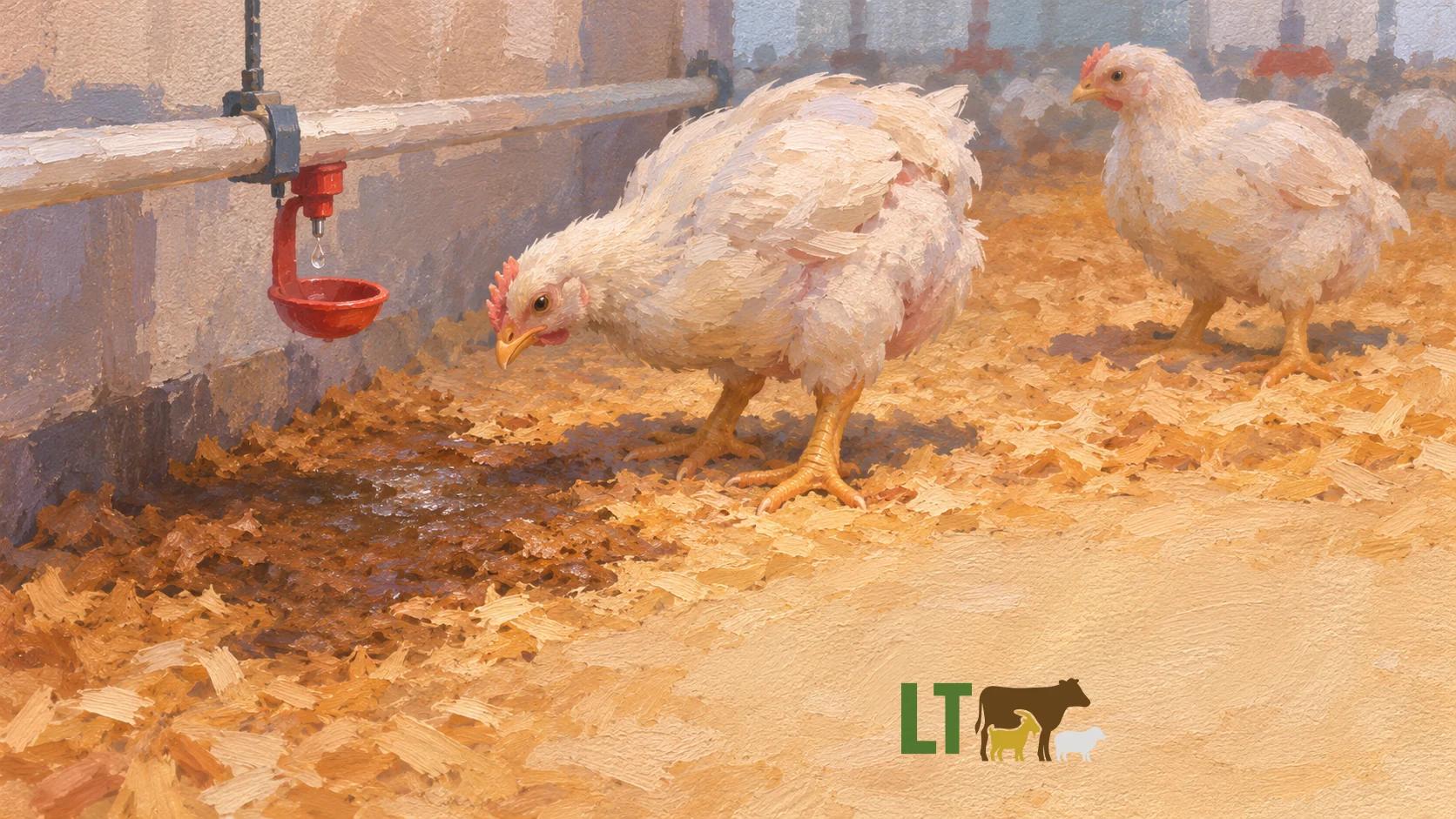
Start where the wet patch begins
Litter is the bedding under the birds. Keeping it dry helps protect their feet.
When one spot cakes into a firm mat while nearby shavings stay loose, start with what is feeding water to that spot. A leaking nipple is one possibility. Birds can also spill more water than usual if a drinker is set at the wrong height or pressure for the flock.
The University of Georgia’s litter bulletin describes both water delivery and poor moisture removal as possible causes. Compare the affected spot with another stretch of the same line. Then check bedding away from that line. A narrow band of dampness puts the drinkers higher on the list, but looking at the nipples and the setup is how you find out if they are involved.
When several areas stay damp
Patches beside a wall or far from a drinker change the question. When outdoor air is cold, the house still needs enough fresh air to carry moisture out. The air coming in also needs to mix with the warmer air inside. If cold air drops straight to the floor, it can chill a small area and make it harder for bedding there to dry.
Air moving across the bedding helps transfer moisture into the air. Air exchange carries that moisture out. Those are two different jobs. In commercial broiler-house work at the University of Georgia, one comparison found that bedding stayed drier during the first three weeks when more air moved across it. That is a reason to look at the air reaching the bedding as well as the humidity reading on the controller.
Follow the pattern before changing the house
Imagine the morning walk finds a dark strip beneath two drinker points in the middle of a house. Shavings just beyond the strip still break apart easily, and the bedding at the far end looks dry. That is a useful reason to check those drinkers first. If the strip returns after a correction, the team can look again while the birds are actively using the line.
Now suppose the line is only one of several damp areas, and the crew sees condensation along a wall. The next useful conversation may be with the person responsible for the house’s fans and inlets. Compare conditions where the birds are, along with the controller’s record. Use the flock’s management guidance to choose any adjustments; the wet pattern alone does not tell you how to set a fan.
Give a stubborn patch its own view
A house average can be useful for comparing flocks. It can also hide a wet patch that birds have to cross. Georgia’s litter sampling guide includes multiple sections and locations, from drinker and feeder lines to the sidewall. If you are investigating a single patch, keep its location separate when you compare it with samples from elsewhere.
Livestock Technologies can help plan fixed views that show the problem stretch and a comparison area. The crew can revisit times between rounds to see when a visible spill recurs or when a patch starts spreading. Direct litter checks and airflow measurements still answer what the camera cannot. Our monitoring approach, documented field work, and research capabilities show how we plan observation around a specific site.
What would help you see between rounds?
Bring your house layout and the location that keeps getting wet. We can talk through a practical view of that area and a dry comparison spot.
Discuss poultry house monitoring →