Find out what the meter counts
A meter counts water that passes through it. If it serves only the drinker line, that includes water the pigs swallow and water they spill. If it serves the whole room, the reading may also include water used for other jobs.
That distinction matters when you compare the days before and after a change. University of Minnesota Extension describes using room or barn meters and reading them at the same time each day. A consistent reading time helps you compare equal stretches of a barn’s routine.
Walk the line with the person who knows the plumbing. If the meter serves more than the drinkers, a shorter washdown can make the total fall even when nothing changes at the cups. Start the comparison with what the meter actually serves.
Two drinkers can leave different numbers on the meter
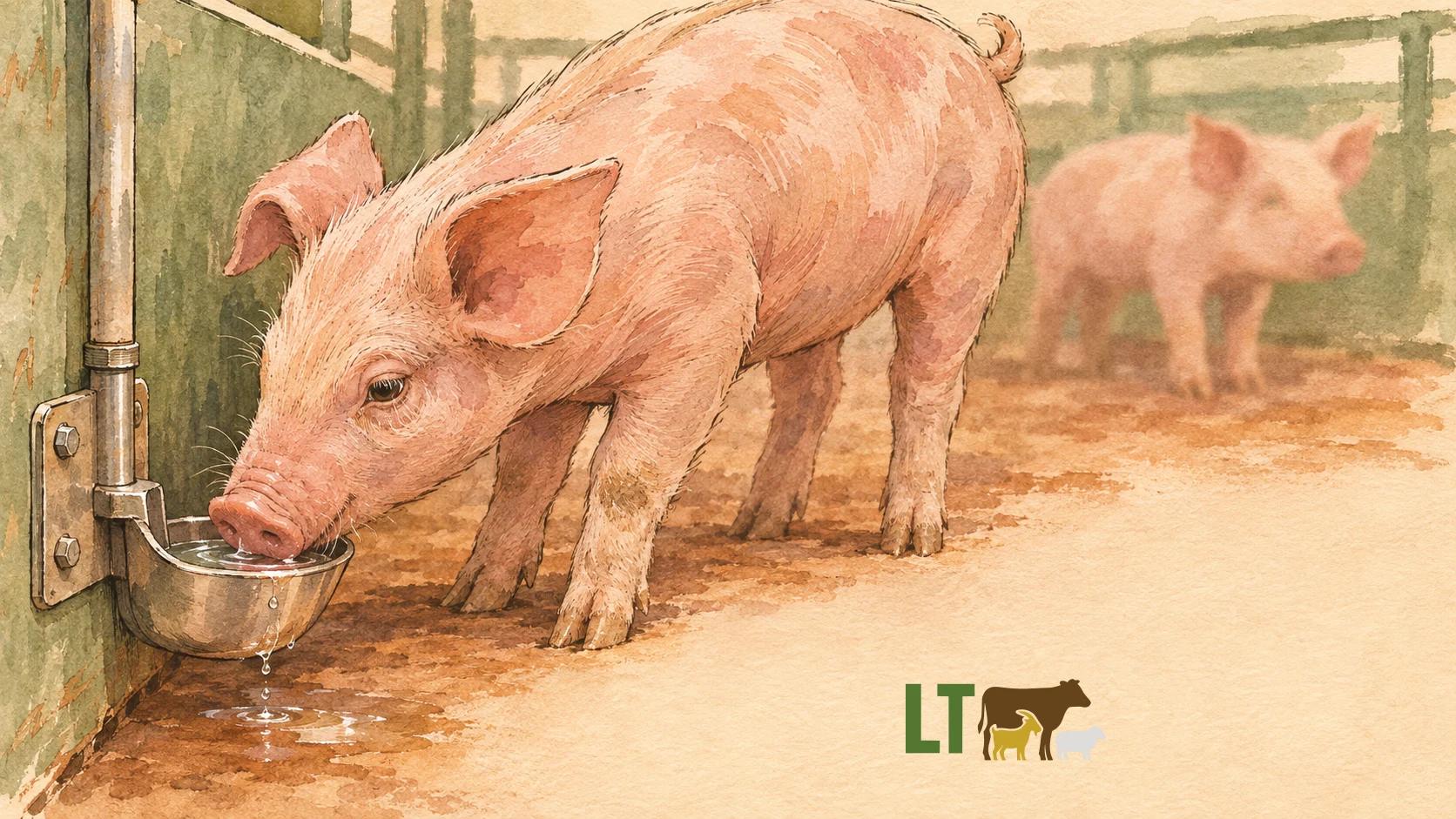
A nipple drinker releases water when the pig presses its valve. A cup catches water below the outlet, where a pig can still reach it. Kansas State University’s swine guide explains why drinker design and flow can change how much water is spilled.
In a 2022 nursery pig study, more water passed through the meters in pens with nipple drinkers than in pens with cups. The researchers found no clear difference in growth between the groups.
They thought the higher reading likely reflected more waste. The meters did not measure individual intake, so the result does not tell us how much each pig swallowed. It shows why a lower total can be consistent with pigs getting the water they need.
Check the pigs’ end of the line first
Imagine a crew replaces nipple drinkers with cups in one nursery room. The next few comparable days show lower use. If water reaches the cups as intended and pigs can use them readily, less spillage is a plausible explanation.
Now picture pigs repeatedly approaching a cup that does not refill as expected. That calls for a direct check of delivery and access, even if the meter looks exactly like the first example. Keep water available while the crew investigates, and bring an animal-care concern to the responsible team promptly.
Iowa State Extension’s November 3 workshop notice makes a useful point about water equipment: settings alone do not confirm what a system delivers. At a drinker, the equivalent is checking what the pigs can actually reach and use. Have the barn team confirm delivery with the equipment guidance for its own pigs and setup.
See what happened between rounds
Some clues are easy to miss on a short walk. A pig might try a cup several times, or water might spill only when the pen gets busy. A fixed camera view can let the crew revisit that part of the day alongside the meter reading and its direct checks.
Livestock Technologies can scope continuous observation around the drinker and the space pigs use to approach it. Our field documentation shows how we preserve footage for review, and the research capabilities brief explains how teams can bring their own measurements to a project.
The footage helps the crew see the difference between an empty corner and a busy drinker. The meter supplies the volume. Together they can help the crew decide what to check before repeating the change in another room.
What happens at your drinkers between rounds?
Bring your pen layout and the change you want to evaluate. We can discuss a focused observation setup for your barn.
Discuss barn monitoring →