Start with what a chicken can do
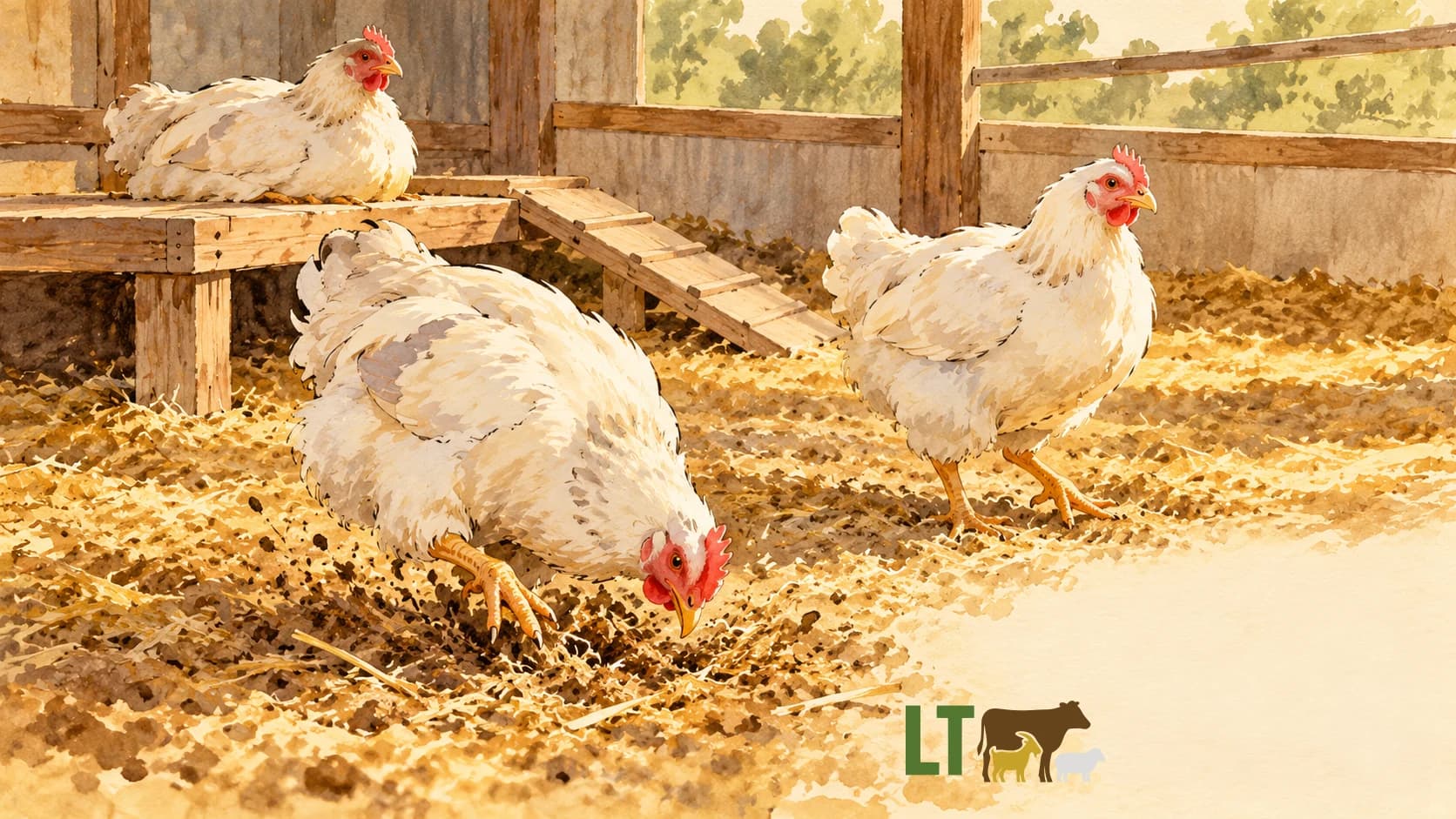
Adding an object makes a pen more complex. The interesting question is what that change makes possible for the birds. A platform offers a place to rest off the floor. Loose material offers something to scratch through. More open space may allow a different pattern of movement.
Researchers call these additions environmental enrichment: changes intended to make an animal's surroundings more useful or engaging. For poultry teams, the term covers several biological questions, rather than one standard piece of equipment.
Livestock Technologies can help scope fixed views, connectivity, processing and access to source footage around those questions. The value is being able to return to how the birds actually use a space, alongside the university's own welfare assessments.
A recent comparison had more than one kind of benefit
A French study published online October 11, 2026 compared three broiler rearing systems. These combined different growth types and surroundings, including a complex indoor setting and access to a covered veranda.
The reported patterns differed. Birds showed more active behaviors in the veranda than indoors. The enriched indoor group showed more dust bathing. The slower-growing group had better walking scores than the other groups.
The study therefore offers no simple winner across every aspect of welfare. Because the systems also differed in bird type and housing, it does not isolate one object as the cause of every difference. Its useful message for U.S. university teams is to name the opportunity they want to investigate.
Scratching, dust bathing and resting have different jobs
Foraging means searching for potential food by actions such as pecking and scratching. University of Kentucky poultry guidance explains that chickens still perform this behavior when a complete feed supplies their nutrients. A scratch in the litter is therefore more than a small feeding event.
Dust bathing involves working loose material through the feathers and shaking it out. Preening is another grooming action, using the beak to care for feathers. Resting on a raised surface gives the bird a different location again.
The Kentucky resource concerns small and backyard flocks. It is useful background for understanding behaviors, rather than a commercial broiler housing specification. A research team still needs to choose suitable additions for its birds, facilities and approved animal-care plan.
Picture two useful places in the same pen
Imagine a proposed study with a low platform beside an open area of loose litter. During one observation, several birds rest on the platform while another scratches below. Calling the platform the most popular enrichment would miss what the litter area is offering.
The example is hypothetical. Its purpose is to show why a single count of birds near an object can be an incomplete description. The team may care about comfortable resting, active exploration or access to both opportunities.
A clear view of the platform and nearby floor can help collaborators follow the transition between those activities. Does a bird move from resting to scratching? Do others gather at the ramp? Those details can help explain why one layout invites a different use of the pen.
Behavior is one part of the answer. The university's direct measures of walking ability, foot condition and other chosen outcomes give the observation its wider meaning. More activity alone should not become a claim that every aspect of welfare improved.
Make room for a better research question
A useful starting conversation might be: which behavior is difficult for birds to perform in the current space, and what change could make it easier? That question connects the animal, the facility and the study before it becomes a camera or software purchase.
Our research observation workflow joins capture, field connectivity, processing and retained source footage. A custom poultry project would define the views and outputs around the behavior of interest. Any automatic recognition of those behaviors would be separate development and testing work.
Explore our documented field work and university capabilities brief to see the infrastructure approach. The goal is a useful view of the birds' choices, connected to the research your team wants to do.
Never lose an animal.
Which opportunity should your poultry study explore?
Bring the behavior, the birds and the proposed space. We can discuss a practical observation and data scope with your university team.
Discuss a poultry research project →