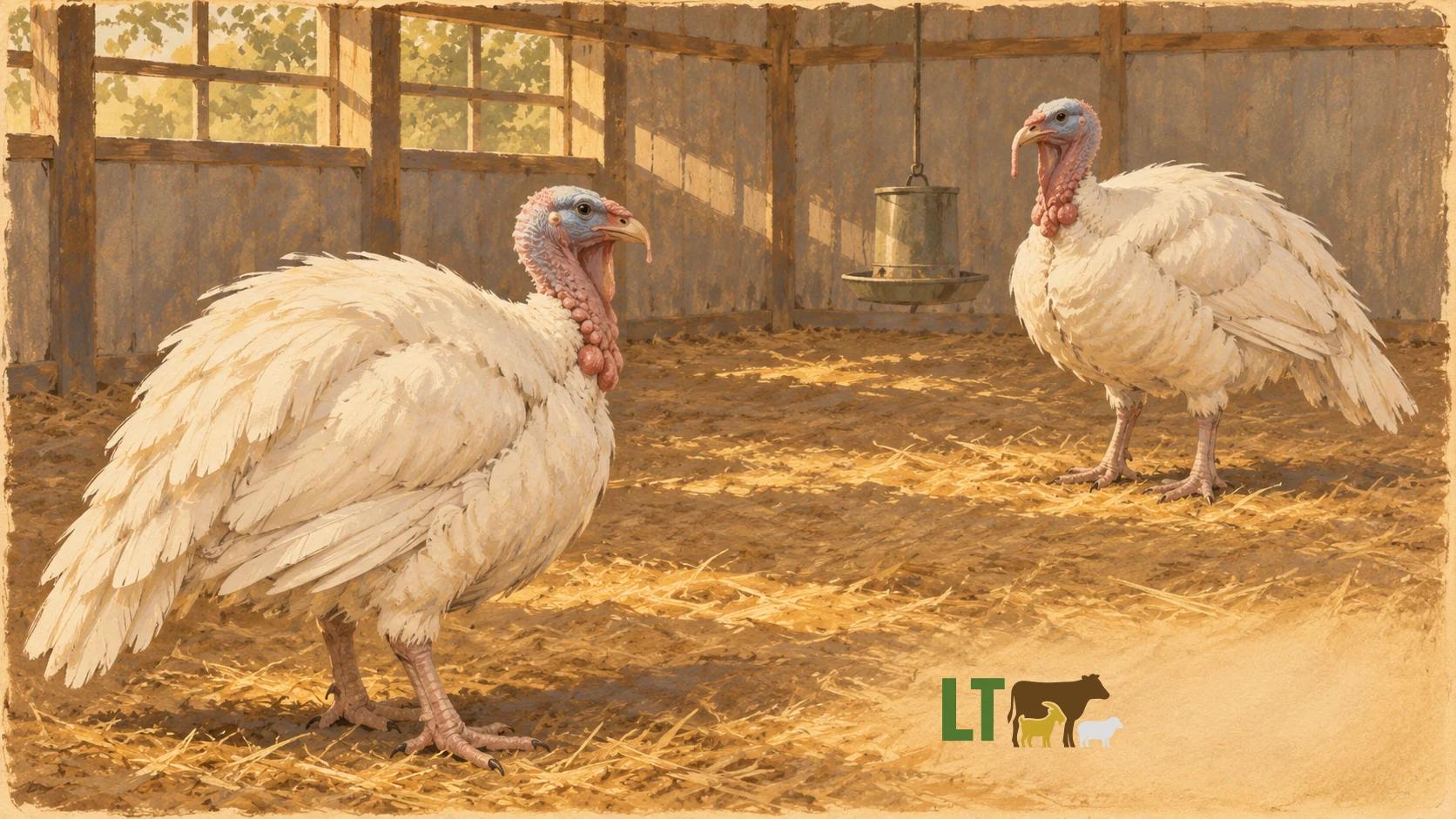
Follow the peck to the other bird
A turkey can peck at bedding while looking for food, tug at a rope or peck another bird. If a study counts all those actions together, it loses track of what the bird was doing. Even when the count is limited to pecks at other turkeys, the part of the body that receives the peck can tell a different story.
The NC State researchers separated pecks at the head and neck from pecks at the back, wings and tail. That gives each observation a clear meaning without asking a reviewer to decide why the peck happened. A peck and an injury are separate observations, too. Direct checks of the birds can show whether feathers or skin were damaged.
The afternoon difference was in one group of pecks
The October 20, 2026 study followed male turkeys from two commercial Large White breeding lines. The team reviewed morning and afternoon footage at four and 18 weeks of age, tracking which body areas received pecks.
At four weeks, the researchers saw more pecks at the back, wings and tail in the afternoon clips than in the morning clips. Head and neck pecking did not show the same time-of-day difference. That is a result from the sampled windows and birds in this trial, rather than an afternoon rule for every flock.
The trial also tested hanging jute ropes. Turkeys pecked the ropes, but the researchers did not find fewer pecks at other birds in pens with ropes. Watching the birds use something tells you it drew their attention. The direct comparison between pens tells you whether the behavior you hoped to change actually changed.
Compare the same hours before judging a change
Imagine a campus team reviewing a morning clip before changing a pen layout and an afternoon clip afterward. The later clip contains more pecks. When the team replays it, most of the increase comes from pecks at backs and wings. A single total would hide that detail.
The team can compare morning clips with morning clips and afternoon clips with afternoon clips. It can also keep the two body areas separate when it adds up the observations. That makes it easier to tell whether the layout deserves more study or whether the team happened to watch a different part of the day.
Even a clean comparison leaves a question about what prompted the pecks. The USDA research project description treats motivation to search for food as a question to investigate. The observed spot on the bird helps describe the action; it does not settle its cause.
Choose a view that shows both birds
A wide view can show where birds gather, but it may leave the point of contact hidden behind another bird. A more useful angle for this study lets a reviewer see both the approaching bird and the part of the other bird it reaches. If the moment is blocked, leave it uncertain rather than forcing it into a category.
Livestock Technologies can help university teams plan fixed views and time-stamped footage that reviewers can revisit. Researchers define the actions and compare them alongside their own feather and skin checks. Our monitoring workflow, documented field work and university research capabilities show how we scope that observation infrastructure.
What does your turkey study need to see?
Bring the pen layout and your behavior question. We can talk through the views and observation periods that would let your team answer it.
Discuss a turkey research project →