The short answer
Start with the legs, then check the whole pen.
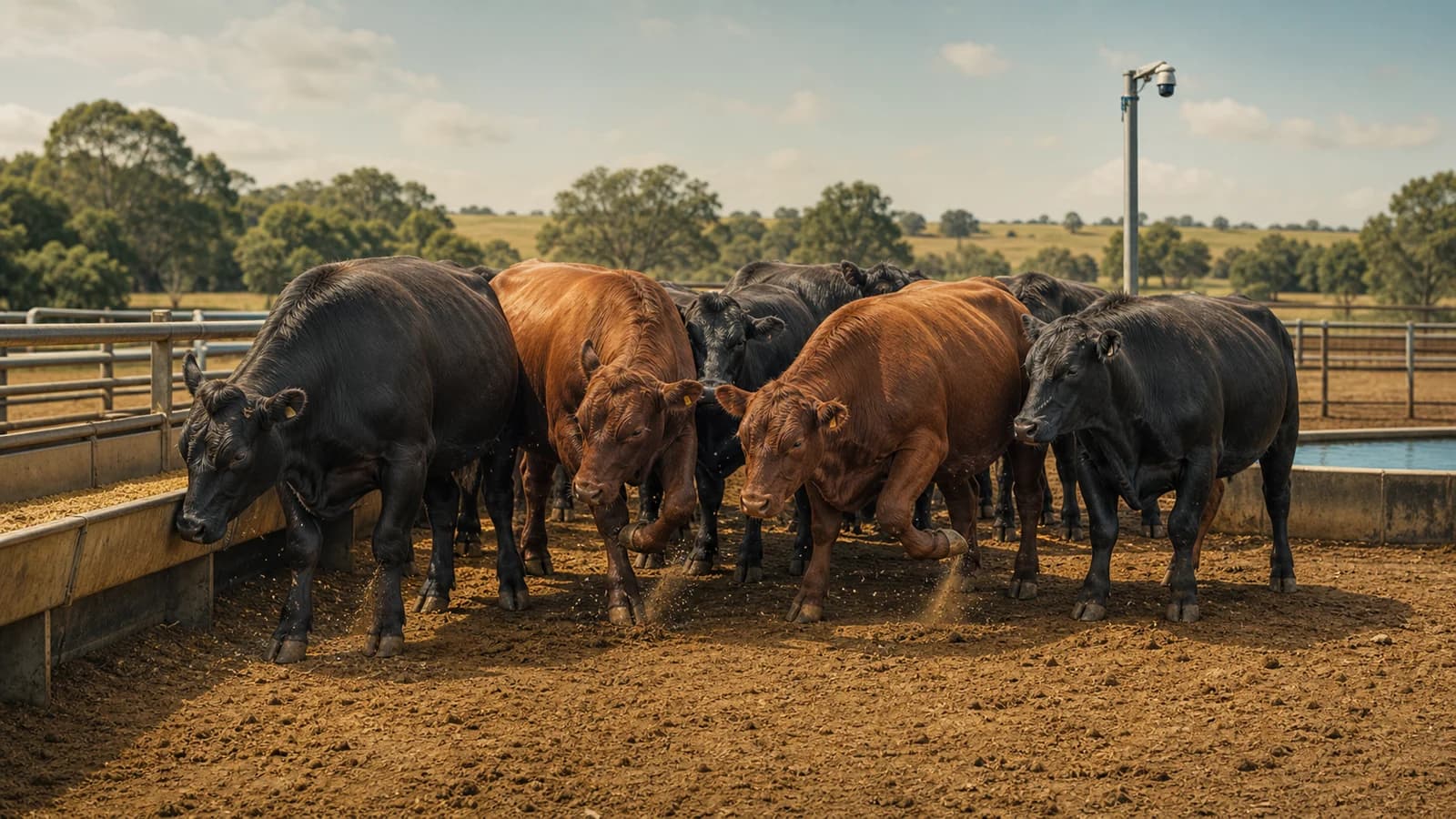
Stable flies often feed on cattle's lower legs. Repeated hoof stomping, kicking, skin twitching, and tight bunching can give the crew a reason to inspect the animals and the pen.
South Dakota State University Extension also links feedlot fly pressure with bunching and greater heat stress. A direct fly check and current pen conditions belong in the same record.
What to check first
Make four checks before naming the cause.
01
Look at the lower front legs
Stable flies commonly feed on the legs. Note visible flies, repeated stomping, kicking, or skin twitching during a direct check.
02
Record the group shape
Note whether cattle are packed tightly, facing inward, standing in water, or shifting away from one part of the pen.
03
Check time and conditions
Record the first change, weather, pen surface, nearby wet organic matter, water access, and recent handling.
04
Compare another pen
A nearby pen gives useful context. Differences in cattle, shade, airflow, moisture, or sanitation may point the crew toward the next check.
A reviewable pen record
Keep the observation, action, and follow-up together.
A fly-control note is hard to review when it contains only a product name. Connect the visible change to the direct check, pen conditions, completed work, and later cattle response.
First change
Time, pen, observer, and the first visible behavior
Direct fly check
Visible flies on lower legs, stomping, kicking, tail movement, and check method
Group pattern
Bunching location, group size, direction, standing in water, and duration
Pen conditions
Temperature, humidity, wind, shade, wet areas, spilled feed, manure, and drainage
Action
Sanitation work, product used under its label, responsible person, and completion time
Follow-up
New fly check, cattle behavior, open concerns, and next review time
Continuous behavior monitoring
Cameras preserve the timeline. People determine the cause and response.
A fixed camera can show when cattle begin to group, where the pattern starts, and how long it lasts. It cannot count flies on a leg, diagnose a health problem, or select a control product.
- Preserve when the group first changed and how long the pattern lasted.
- Show where bunching began in relation to the bunk, water, shade, gate, or wet area.
- Compare the same pen before and after sanitation or another approved control step.
- Keep the source clip connected to the crew member who completed the direct check.
Livestock Technologies organizes visible cattle activity, time, location, and source clips for review. The feedlot team and its advisers remain responsible for direct checks and decisions.
Connect the record to control work
Remove breeding areas and document what changed.
Current SDSU guidance starts feedlot fly control with sanitation. Stable flies can develop where spilled feed, manure, soil, and moisture collect near bunks, aprons, fences, storage areas, and drainage trouble spots.
Record which area was cleaned, when work finished, and who owns the next check. If the plan uses a spray, biological control, or feed additive, follow the product label and qualified local guidance.
Keep similar signs separate.
Heat, water access, handling, pen design, and other cattle or insect problems can also change group behavior. Preserve the original observation and send unresolved concerns through the yard's direct-check process.
Documented field infrastructure
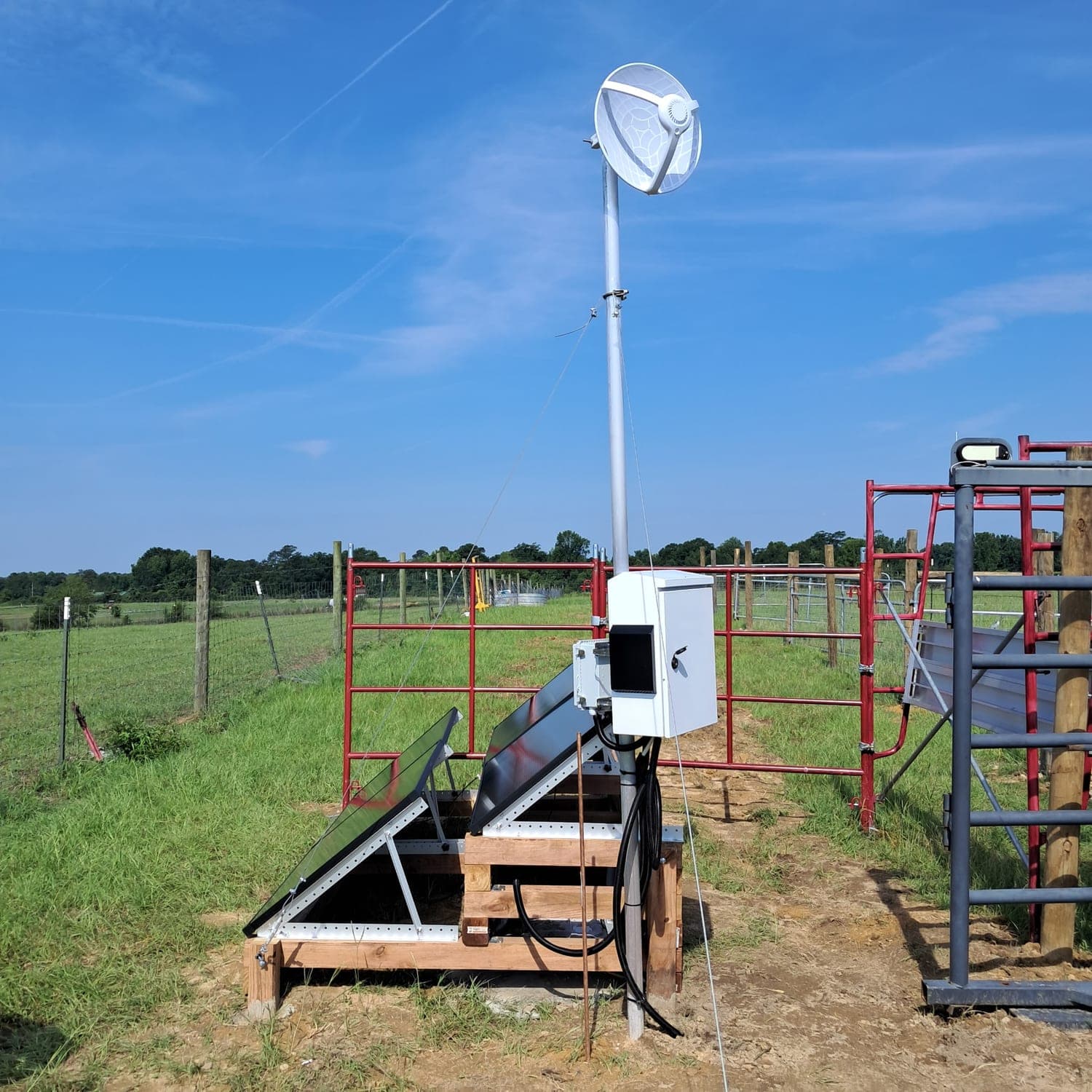
The monitoring mechanism is already in the field.
The Tuskegee University deployment uses fixed RGB and thermal cameras, solar field nodes, wireless backhaul, and on-site processing and storage across four research pens.
That installation documents the capture and review infrastructure. It is not a stable-fly study or proof of a fly-control outcome.
Sources and current guidance
Evidence used for this guide
- South Dakota State University Extension: Summer Fly Control in Feedlots
- University of Georgia Extension: Keep Flies in Check to Improve Beef Cattle Health and Performance
- Montana State University Extension: Stable Flies Are Becoming a Nuisance to Cattle
- Texas A&M Livestock Veterinary Entomology: Stable Fly
- Livestock Technologies: Tuskegee University field deployment
A practical next step
Choose one pen and one behavior-review owner.
We can map the camera views, pen zones, review times, and source clips that support your current fly and cattle-check process. Start with one recurring bunching question and a clear follow-up record.
Review a behavior-monitoring workflow