Before birth, the material has a job
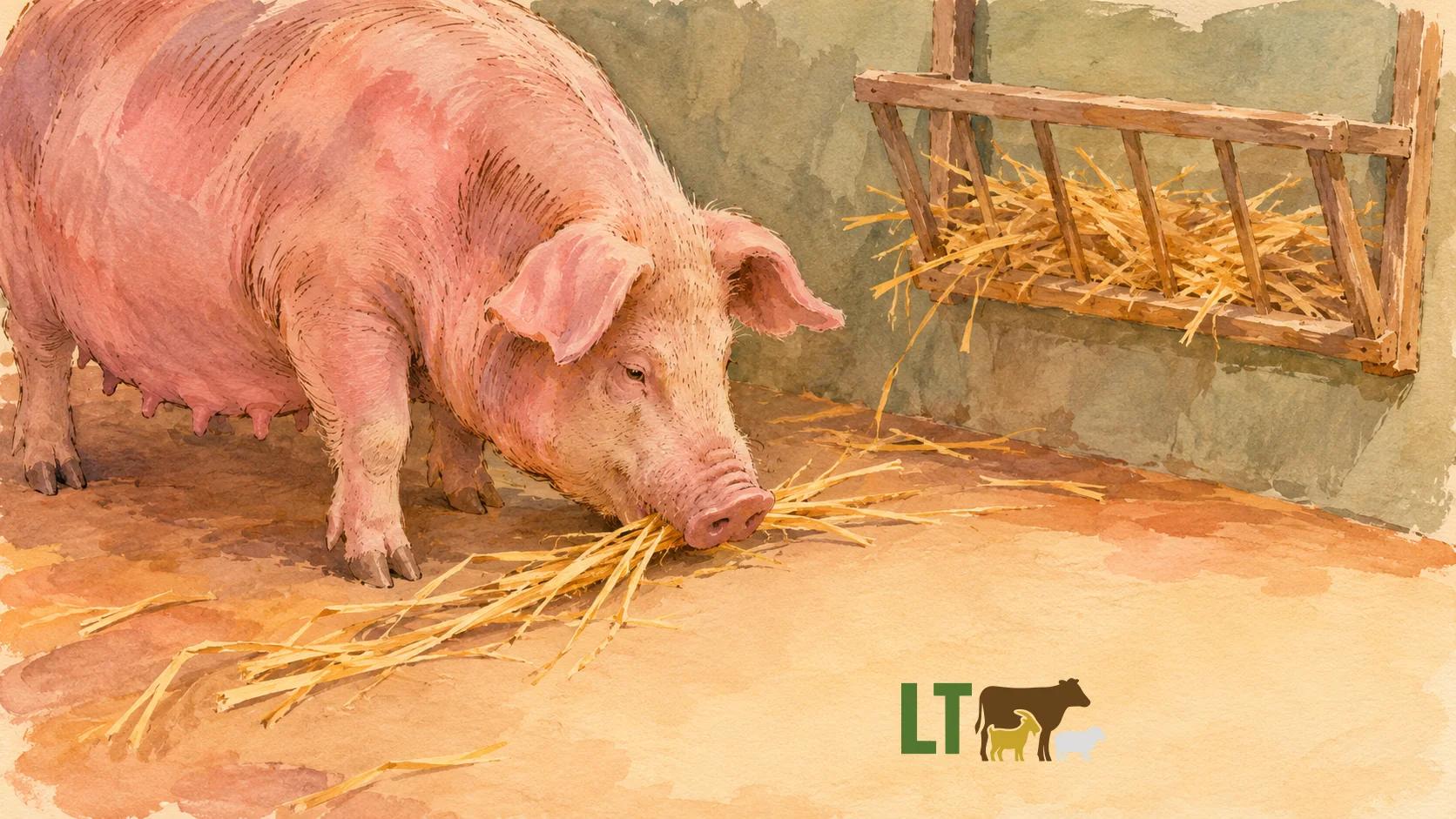
Nesting material gives a sow something to gather and manipulate before farrowing, the term for giving birth. The interesting question is what follows that opportunity. Does she settle differently once the litter arrives, and do the piglets fare differently?
That moves the comparison beyond how much straw disappears from a rack. A busy sow pulling out stems and a mother resting beside newborns are two parts of a longer story.
Straw, hay and a hanging bag were different tests
An October 16 study on a German farm compared long-stemmed straw and hay with a hanging jute bag. Materials were supplied before birth. The farm temporarily confined sows around farrowing, and stopped replenishing material after birth.
The straw group had fewer piglet crushing losses in the first three days than the bag group. Hay did not show the same clear difference. In a smaller video sample, straw sows also changed between active and resting states less often.
Here, active meant standing or sitting; resting meant lying. The count did not include every small movement. More transitions were associated with more early crushing, but that does not prove movement was the cause.
Keep the early benefit in its own window
By the end of lactation, when the sows were nursing their litters, the study found no clear effect of material on total crushing losses. The early finding therefore deserves attention without becoming a promise of more piglets at weaning.
The University of Missouri’s digital agriculture briefing draws that local-testing lesson for U.S. hog producers: one farm and one temporary-confinement system give a reason to test a practice, rather than a guarantee. A university pilot can ask whether the same pattern appears in its own rooms.
A material also has to work with the facility. A rack, the floor beneath it and the manure system are part of that decision. The research and animal-care teams should agree on suitable provision before the first sow enters the comparison.
Watch one mother across the change
Imagine a university pilot comparing two approved material options in otherwise similar pens. Before birth, a sow pulls straw from a rack. After the litter arrives, she gets up, returns to a lying position and stays settled while the piglets gather beside her.
A short visit might catch only the quiet ending. Footage across that period lets the researcher replay the transitions and see where the litter was. The question is not simply whether the sow moved, but what happened around those movements.
Now imagine another sow uses little of the material, yet rests for long stretches afterward. That is a useful animal to include, rather than treating rack use alone as success. Looking at both periods can help the team decide which part of its proposed explanation needs another test.
This is a proposed comparison, not a result from the German farm. The pilot still needs direct litter observations and the care team’s assessment of any loss. A posture tally can help describe the mother’s behavior; it cannot establish why an individual piglet died.
Make the first days easier to revisit
Livestock Technologies can help scope fixed views and retained, time-stamped footage around the sow’s resting space and the litter area. Researchers can return to a particular birth or nursing period alongside their own animal observations.
For a university farrowing project, that starts with the pen layout and the transition the study needs to see. Automatic sow-posture analysis would be separately defined and tested with the university; the published detector is the German team’s method.
Our technology overview, documented field work, and university capabilities brief explain how we plan observation and data access. The useful deliverable is a view the team can revisit when a mother’s behavior raises a more focused question.
Which moments should your farrowing study preserve?
Bring the pen layout and nesting-material question. We can discuss an observation scope for your university’s sow-and-litter study.
Discuss a swine research project →