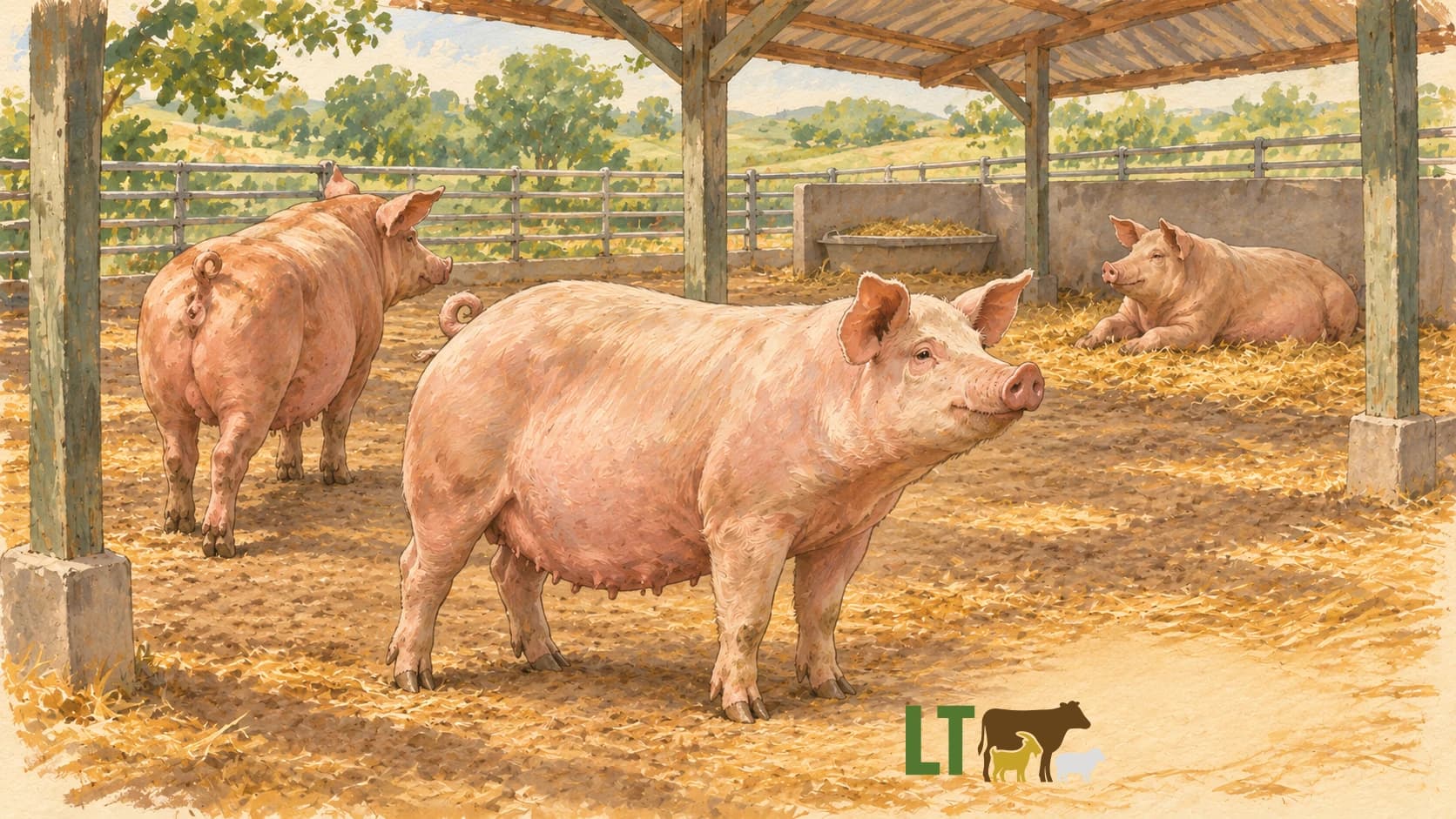
The weeks before birth have their own questions
Gestation means pregnancy; farrowing means giving birth. A K-State Extension news service report dated October 20, 2026 draws attention to aggression during late gestation in group-housed sows.
The report describes concern about body and vulva injuries as farrowing approaches. It also points to changes in the group as animals leave for farrowing facilities. Those observations give researchers a reason to look beyond the period when unfamiliar animals first meet.
A study focused on mixing asks how a group settles together. A study near farrowing asks what happens later in that shared space. The two periods deserve clear descriptions of their own.
One pen can hold several kinds of interaction
The university-authored report describes researchers watching pushing, mounting and biting while also assessing injuries, performance and signs of physiological stress—the body's response to a challenge.
That wider view matters. An interaction near a feeding place may raise a different question from one in an open resting area. The useful description includes the action, its location and what the other animal does next.
For a university team, this can turn a broad question about aggression into a focused biological question. Is a proposed change affecting competition around feeding, interactions elsewhere in the pen, or both?
A behavior change is one part of an outcome
A conference abstract available through K-State's author repository describes a commercial trial involving 960 gestating sows in 18 pens. Half the pens received suspended molasses- and beet-pulp-based enrichment blocks; the other half did not.
The block pens had fewer aggressive interactions. The study did not find differences in the reported sow and litter performance or stress measurements. This is an abstract-level result, rather than a complete paper establishing a general management recommendation.
The researchers also reported differences across observation days and times. That makes the timing of a comparison part of its meaning. A quiet observation later in the day should not automatically stand in for the whole day.
For researchers, the payoff is a fuller interpretation: a change in visible interactions can be useful even when other measured outcomes do not change. Each result answers its own part of the animal-care question.
Follow the interaction past the first movement
Imagine a proposed university study reviewing an early feeding period. One sow pushes toward a feeding place and another steps aside. A second interaction happens later, away from the feeder.
Counting both as aggression may suit the study's definition. Keeping the scenes visible also lets collaborators discuss whether the proposed intervention appears to affect the same kind of encounter in each place.
This example is hypothetical. The value is being able to return to the sequence: the approach, the contact, the response and the space available afterward. That can help animal scientists and facility teams decide what a follow-up study should investigate.
Visible behavior belongs beside direct animal assessments. An injury or an animal needing care should prompt the facility's established care response, rather than waiting for a research interpretation.
Build observation around the sow's shared space
Livestock Technologies works on the infrastructure behind sustained animal observation: capture, field connectivity, processing and access to source footage. For a group-sow project, we can discuss views that include feeding approaches and the surrounding pen.
The university can then revisit interactions at the times its research question needs, alongside its own injury, stress and performance assessments. Automatic recognition of aggression would be separately scoped development and testing work.
Our technology overview, documented field work and university capabilities brief explain that infrastructure approach. The starting point is a clear animal question: what deserves closer observation as the group approaches farrowing?
Never lose an animal.
Which part of group housing does your study need to understand?
Bring the sow group, housing layout and research question. We can discuss a focused observation and data scope with your university team.
Discuss a swine research project →