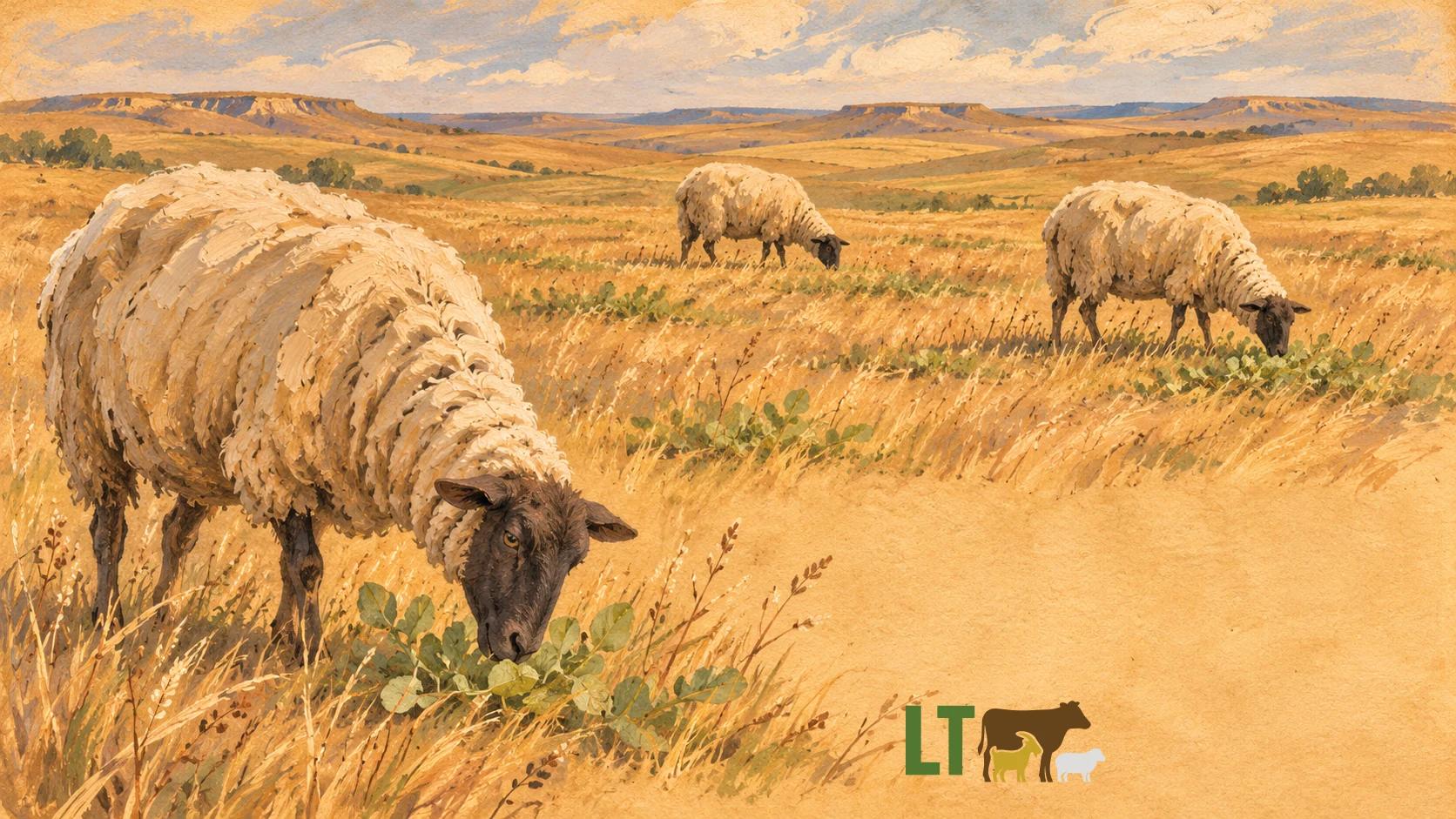
A pasture offers choices, not just acres
From a distance, a paddock can look full of feed. At muzzle height, the picture is more selective: a few tender leaves among older stems, or a preferred patch beside plants the sheep leave behind.
Texas A&M Extension's guide to grazing behavior makes a useful distinction. Available forage means the plants an animal can reach, find and choose to eat. It is more than the total vegetation standing in the field.
That distinction changes the research question. A route across a paddock is a record of location. It does not reveal the mouthfuls available along the way, or how much the sheep swallowed.
South Dakota researchers are putting the layers together
In a report updated November 5, 2026, South Dakota State University describes sheep research on native range in western South Dakota. The team is combining collar movement data with forage samples, drone imagery and animal health information.
The project is in its second year of movement-data collection. Weekly pasture samples before, during and after grazing help describe the forage as sheep move through a rotation. A rotation means moving animals between grazing areas while other areas rest.
The researchers are developing models to help interpret behavior changes. Their report describes an animal-health warning system as a goal, rather than a finished, validated result.
The associated SARE project proposal also names forage production and animal movement as study inputs. For another university, the interesting lesson is the combination: the animal's path and the changing food supply belong in the same biological question.
The same short route can tell different stories
Imagine a sheep staying in one small corner of a research paddock. One explanation worth examining is that the corner contains a desirable patch of leafy plants. Another is that something about the animal has changed.
This is a hypothetical example, not a finding from the South Dakota project. The movement map alone cannot choose between those explanations. A close observation of grazing, a pasture assessment and the care team's animal examination answer different parts of the question.
Now imagine the flock has just entered a fresh grazing area. Comparing that day directly with the final day in the previous area could blend a pasture change with an animal change. A researcher who knows which plants were available has a stronger starting point for interpreting the difference.
The payoff is a more useful explanation than simply calling a route normal or unusual. The team can ask what opportunity the pasture offered and what the sheep did with it.
Look at what is growing, as well as where sheep go
SDSU's sheep pasture guidance, updated March 3, 2025, explains that plant types and maturity affect nutritional value. Its advice includes watching which plants sheep target and using forage samples to examine nutritional content.
For a campus study, a photograph of a grazing patch can help colleagues discuss its appearance. A forage test addresses composition. Neither should be treated as a measurement of the individual animal's intake.
This gives animal scientists and pasture specialists a shared question: when the movement pattern changes, did the animal's edible choices change too? Any immediate animal-health concern still belongs with the facility's care team.
Build an observation that keeps the bite in view
A focused camera view can preserve visible grazing in a selected study area. Researchers can return to the sequence and discuss whether the sheep was moving between patches, lowering its head to graze or standing nearby.
Livestock Technologies can scope capture, field connectivity, processing and access to original footage around that question. A sheep project would define its own observation area and how footage connects with pasture measurements. Automatic sheep-behavior labels or collar connections would be separately developed and tested.
Our technology overview, documented field work and university capabilities brief explain the infrastructure approach. The purpose is to help a research team move from a line on a map to a better account of grazing.
Never lose an animal.
Which grazing choice does your study need to see?
Bring the sheep research question and the pasture setting. We can discuss a focused observation and data scope with your university team.
Discuss a sheep research project →