The water is part of the trial
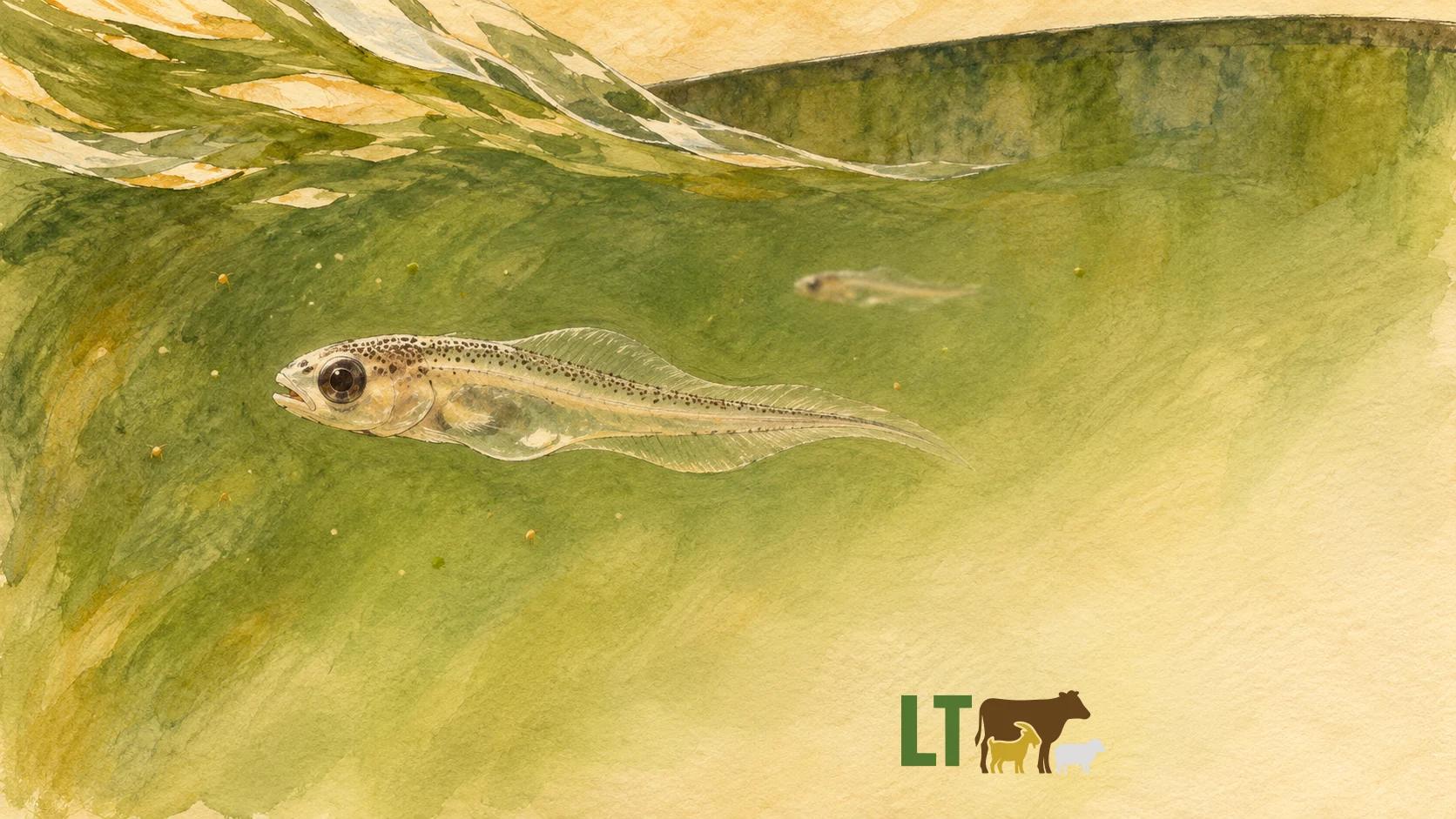
Young marine fish live on yolk reserves until they can start feeding. That shift happens on different timetables for different species, as Virginia Tech Extension explains. In the sablefish experiment, the researchers offered rotifers: tiny live animals that the nearly transparent larvae could swallow.
The team changed the particles in the water while offering the same kind of prey. Hatchery staff call water tinted with suspended algae “greenwater.” A fine mineral clay can also make the water cloudy. In the Washington tanks, algae and clay produced similar cloudiness by the researchers’ measure, but the fish did not start eating equally well.
Count what the larvae actually swallow
In the NOAA-led study, researchers took samples an hour after adding prey. Under a microscope, they counted intact rotifers through the larvae’s clear body walls. The team could ask two questions: how many fish had eaten, and how much prey the sampled fish had swallowed.
On day three, more of the sampled larvae in the algae tanks had eaten. The larvae in those tanks also ate more prey per fish on average. The experiment did not settle why. For another hatchery, the useful point is that two tanks can look similarly cloudy and receive the same prey without producing the same meal.
A later switch is a different decision
Some tanks started with algae and switched to clay on day four. On the day of the switch, those fish still ate more than fish that started in clay. On days five and six, that advantage was no longer clear. Earlier experiments showed that clay could take over after the first week under the conditions tested. Those are different points in the fish’s development.
The researchers also tested a middle ground: half the normal amount of algae plus half the normal amount of clay. In that trial, they did not detect worse early feeding or lower short-term survival than with the full algae treatment. In a separate test, cutting algae in half without adding clay reduced feeding. The comparison gives teams a candidate to test; it isn’t a recipe for every tank or marine species.
Let the tank view explain the sample
Imagine two hatchery tanks get the same dose of rotifers, but the sample from one tank has fewer larvae with a meal. A fixed view might show that feed was added near the inlet in one tank and farther away in the other. That gives the team a clue about where to sample for prey next time. The microscope count tells them what was in the fish.
NOAA Fisheries describes experimental sablefish hatchery work in the Pacific Northwest, where the larval stage remains a rearing challenge. A university team planning a trial can start by asking what it would help to replay: where staff add live prey or what the tank looks like just after a water change. The view can be useful even if the smallest prey is below the camera’s resolution.
Livestock Technologies can help scope fixed views and time-stamped footage that staff can line up with their feeding times and lab samples. Our monitoring approach, field results and university research capabilities show how we plan observation systems. In a hatchery pilot, the tank view would give the team a way to revisit a feeding window alongside its own microscope work.
What would you want to see at feeding time?
Bring the tank layout and the question your team is testing. We can discuss which feeding moments are worth recording and how to match them with your samples.
Discuss a hatchery research project →