What the scale leaves out
When a fish grows well, it is tempting to call the feed a success. Growth matters, but it tells you little about the condition of the tissue that helps the fish digest its food. A study looking for a new protein source has good reason to look at both.
Soybean meal is a familiar source of plant protein. It gives feed makers another option when they want to use less fishmeal. But a trout's response can depend on how much soybean meal is in the mix and what else goes into the feed.
A second look, under the microscope
In an October 2026 study, U.S. researchers fed young rainbow trout five diets for just over two months. They raised two strains, or breeding lines, in tanks that recirculated water. The feeds included a fishmeal comparison diet and soybean meal diets with and without a dried ingredient made from fish processing.
Under the microscope, the researchers saw poorer tissue condition near the rear of the intestine in fish fed soybean meal, especially at the higher level. The changes were more pronounced in the Hagerman line for some measures. Adding the dried fish ingredient eased the adverse changes in the two lines studied.
A separate paper summarized by the USDA Agricultural Research Service describes a trial with the same two lines, feeds and duration. With the higher soybean meal feed, adding the fish ingredient improved growth and increased daily feed intake. The researchers did not find a corresponding improvement in feed conversion, a measure of how much feed it takes to gain weight.
That distinction matters. A fish can gain more because it eats more. A closer look at the intestine answers another question: how did the tissue respond to what the fish ate? These papers describe particular feeds and young fish in tanks. They do not give every farm a recipe.
Keep the trout strain in the story
Imagine two campus teams testing the same soy-rich feed. Both see similar weight gains, but one finds more changes in the gut lining. Before calling the findings a contradiction, ask which trout each team raised. Then look at how the teams sampled and examined the tissue.
The practical decision comes before the first meal. If the study asks whether one feed supports both growth and gut health, plan for both measurements. If more than one line is involved, show how each responded before presenting a combined result. Otherwise, a single average can hide the difference that another hatchery needs to know about.
Return to the meal when a result surprises you
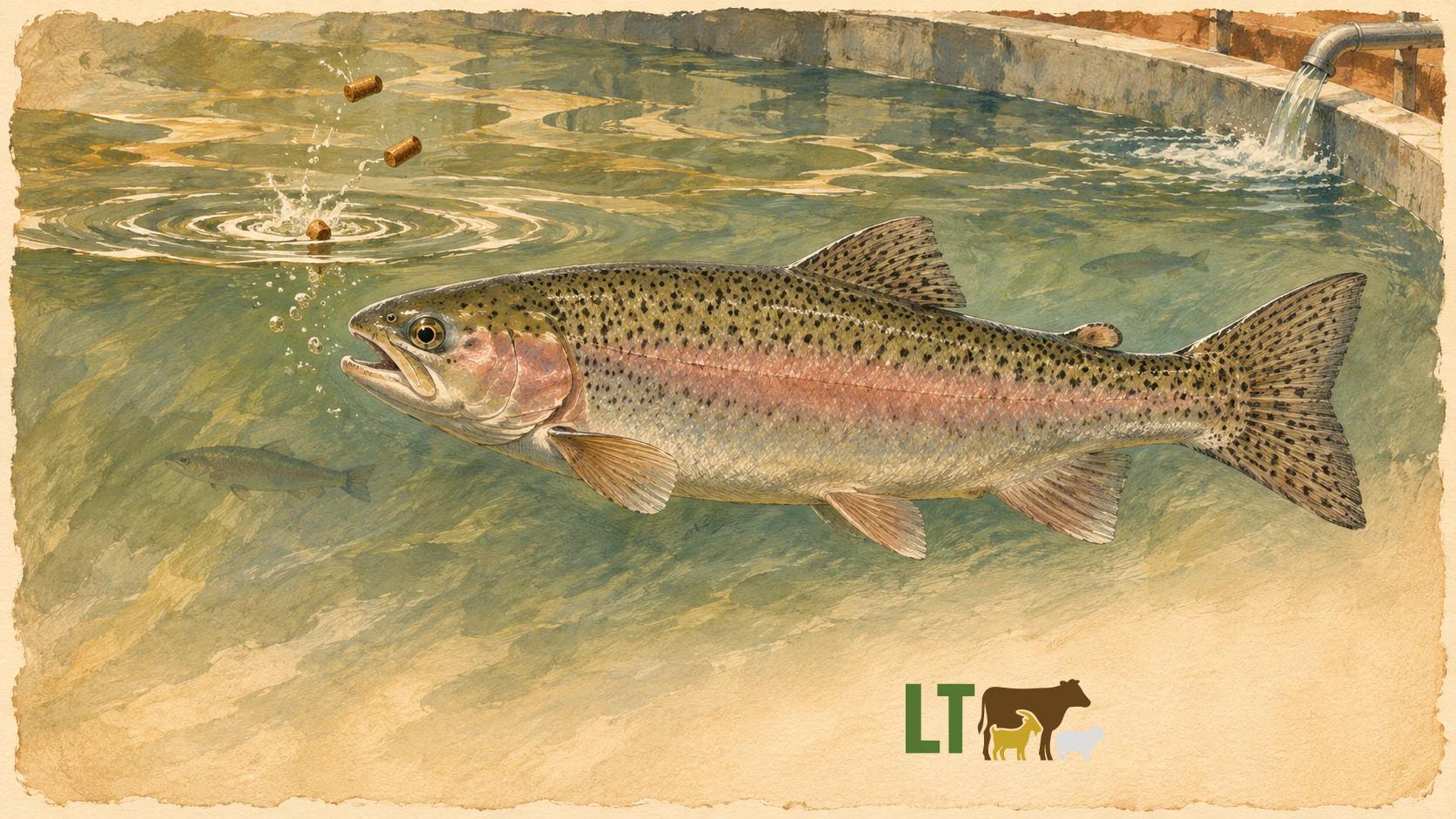
A tank view can add useful context between weigh days. If one group gains less, time-stamped footage can let the team see how the fish approached a feeding or whether pellets drifted away. It can give researchers a place to look for an explanation alongside the feed and tissue measurements.
For a proposed tank study, Livestock Technologies can help choose a view, plan recording around meals and give the team access to the footage. Measuring feed intake or examining the gut remains part of the team's nutrition protocol.
Our observation platform, documented field work and university capabilities brief show how we approach capture and access to the underlying observations.
What would you want to see at feeding time?
Bring the tank layout and the feed comparison. We can talk through which views would help your team interpret the trial.
Discuss an aquaculture research project →