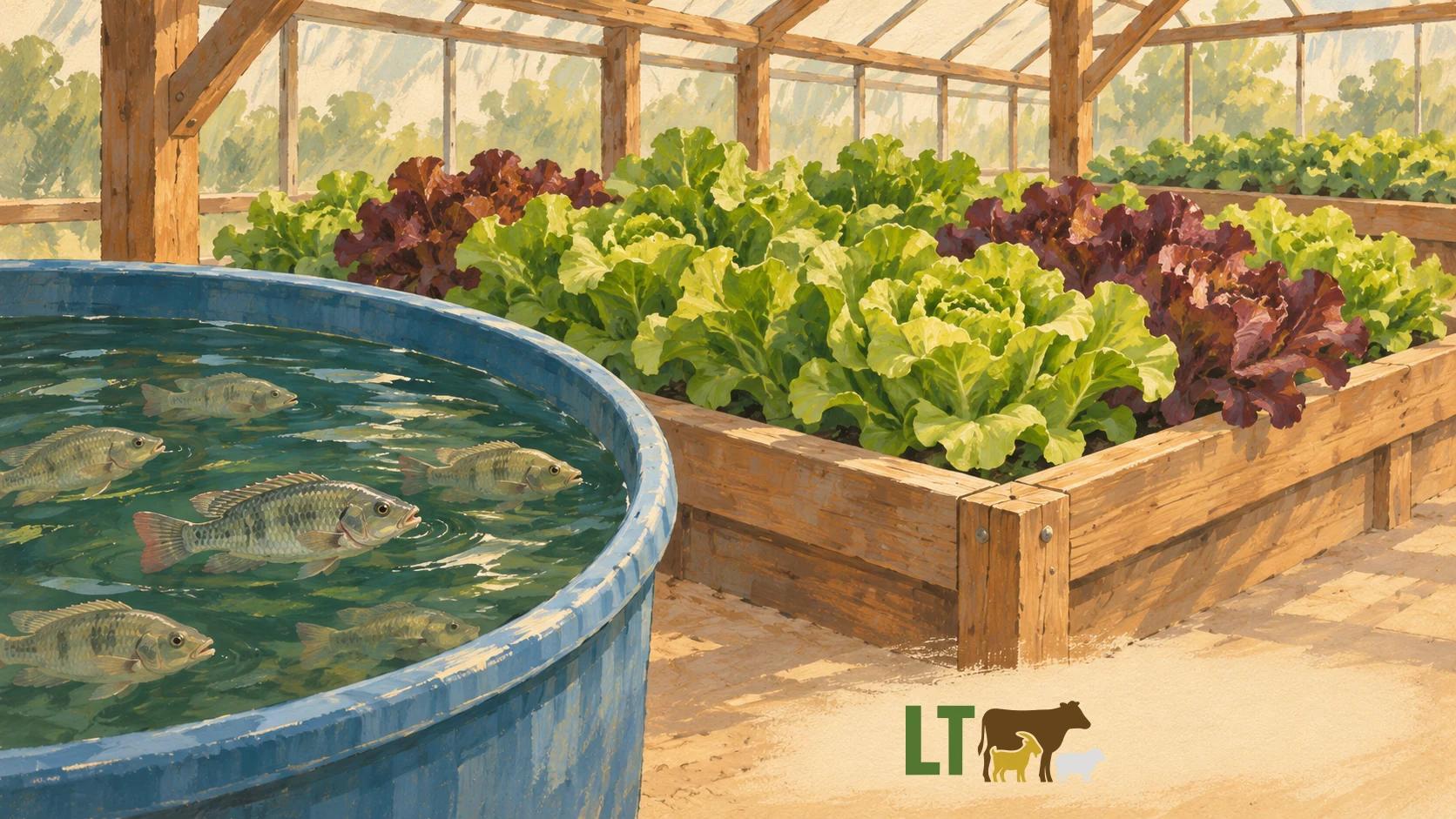
A working greenhouse makes the connection visible
A Cornell field report published November 2, 2026 visits Eugene Won's aquaculture lab in Ithaca. Tilapia live in tanks, while nearby lettuce grows without soil using nutrients in the water from fish production.
Won's team tests potential fish-feed ingredients at a small scale. Feed is made in a separate kitchen lab, then used in growth trials. The report describes work beginning with invasive-carp fishmeal; larger-scale testing remains a future step.
The lettuce adds another use for the nutrients. Cornell describes a collaboration with horticulture professor Neil Mattson, and says some harvested lettuce is donated to a food pantry.
This is a documented campus example of aquaponics: fish farming joined with growing plants in water. It is not a measured claim that every input is reused or every waste stream disappears.
The small organisms between fish and plants matter
There is a third living part of the system alongside fish and lettuce. Beneficial microbes help turn fish waste into forms that plants can use.
The University of Arizona's July 2026 aquaponics guide explains the process. Fish release ammonia, which can harm them when it accumulates. Bacteria convert it through another form, nitrite, into nitrate, a nutrient plants can take up.
A biofilter provides surfaces where those bacteria can live. Filtration, oxygen supplied to the water and suitable water conditions support the system. A bed of lettuce does not take over all those jobs.
That makes the facility interesting for researchers from different fields. An animal scientist may focus on fish growth, while a plant scientist studies crop performance. A colleague studying the microbes asks how the nutrient conversion works between them.
One feeding question can reach beyond the tank
Consider a proposed campus comparison of two fish feeds. The first question might be how fish grow on each diet. In a connected fish-and-plant system, the team could also ask what reaches the plant-growing area.
This is a hypothetical research example, not a Cornell trial result. A feed comparison might give the animal scientist one answer and raise a new question for the crop team. The useful discussion would connect those findings without assuming one automatically explains the other.
For instance, a photograph of larger lettuce leaves would not establish that a feed improved fish nutrition. Nor would active fish at feeding time show how much nitrogen reached the plants. Each collaborator needs a measure suited to the question.
The opportunity is a broader account of what happens to a resource. The team can follow the feed into animal production and examine the next use of its nutrients, rather than ending the discussion at the tank wall.
Reuse calls for a shared biological plan
Oklahoma State Extension's aquaponics overview emphasizes understanding both fish culture and plant production. Joining them creates a small ecosystem, rather than simply placing two independent enterprises beside each other.
The Arizona guide adds a useful qualification: aquaponics does not always remove the need for extra plant nutrients. Fish health, crop growth and microbial activity must all be considered. Reliable power, aeration and water-quality management remain important.
For a university facility, that points toward collaboration early in the project. The fish team and crop team can decide which outcomes matter and which shared water conditions each needs to understand.
Make the working system easier to revisit
Continuous observation can help collaborators return to a feeding period or compare visible changes in a growing area. It gives them a shared scene to discuss alongside their own fish, plant and water measurements.
Livestock Technologies can scope capture, connectivity, processing and access to original footage around those research needs. A campus project could define views of a tank feeding area and a crop area, with outputs chosen by the investigators.
Specialist water-sensor connections or automatic fish and plant measurements would be separately developed and tested. Our technology overview, documented field work and university capabilities brief explain the infrastructure approach available to discuss.
The practical aim is a clearer view of a connected system, so colleagues can ask better questions about the animals and the resources supporting them.
Never lose an animal.
What connection does your campus study need to follow?
Bring the aquaculture question and the facility layout. We can discuss a focused observation and data scope with your research team.
Discuss an aquaculture research project →