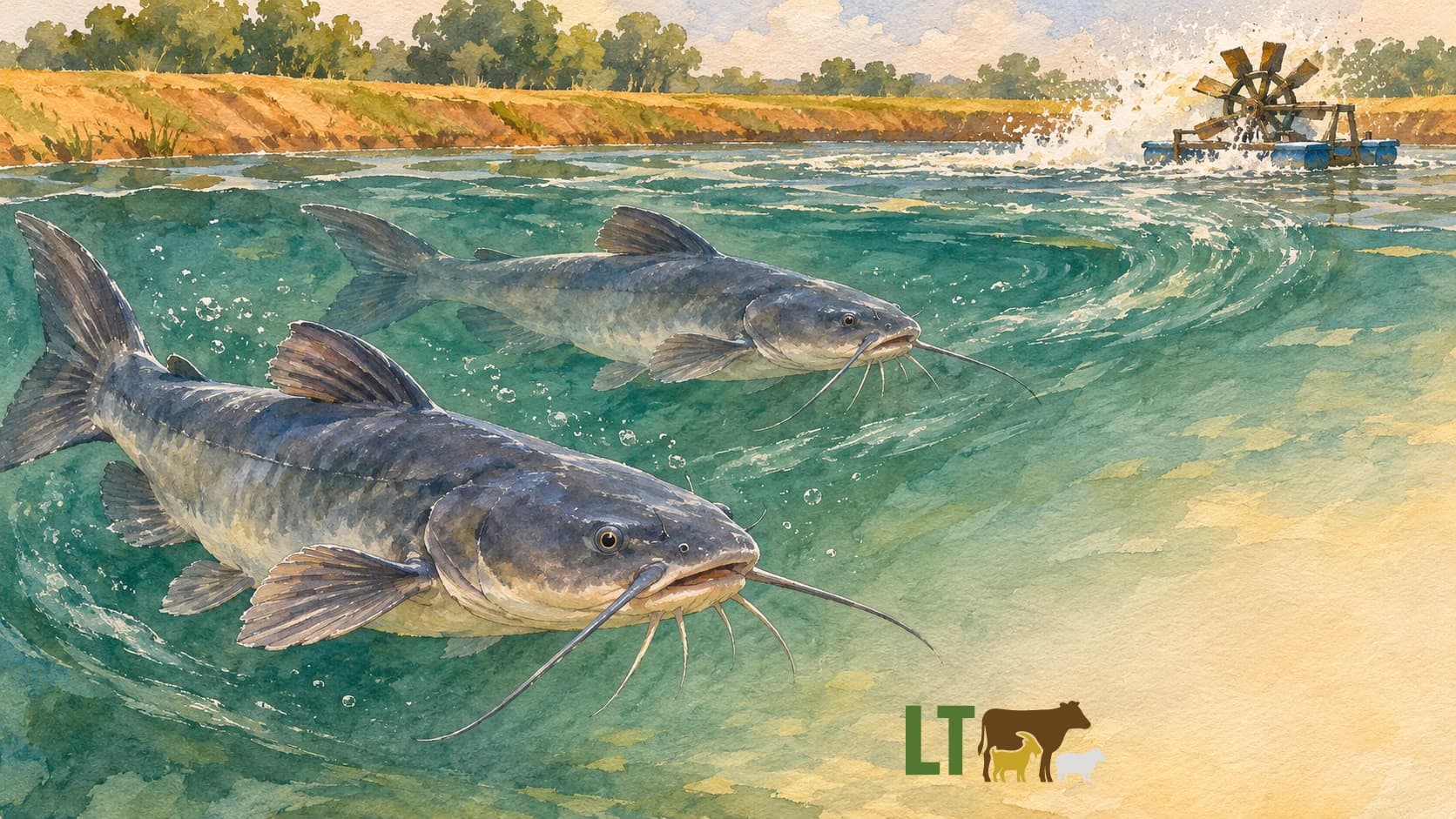
One pond, two connected spaces
A split pond gives fish a smaller living area connected to a larger water-treatment area. An earthen divider separates the two. Water moves between them through openings, carrying oxygen toward the fish and waste away.
Mississippi State University Extension describes this arrangement and the different roles of circulation and aeration. In its description, daytime exchange connects the two areas; mechanical aerators supply oxygen at night.
That distinction matters when a research team talks about equipment. Moving water between sections and adding oxygen are related jobs, but a circulation comparison alone cannot settle every oxygen-management question.
What faster turnover changed in the trial
A study published October 5, 2026, in the North American Journal of Aquaculture compared hybrid catfish in six split ponds over six months. Three ponds used a two-hour fish-basin retention time; three used four hours.
Retention time describes how long it takes to exchange an amount of water equal to the fish basin's volume. A shorter time means faster turnover.
The researchers reported comparable production and water-quality outcomes. Their interpretation was that both circulation rates were adequate for the fish and feeding load tested.
There were only three ponds per treatment, and the estimates had wide ranges of uncertainty. The accessible abstract and plain-language summary support that limited comparison; they do not establish one best rate for every pond.
Give the flow rate a biological meaning
The study also related circulation capacity to daily feed use. In plain terms, it asked how much water movement the system provided for the amount being fed.
For a university team, that shifts the discussion from which machine moves more water to which comparison answers the animal question. The useful result connects equipment, the demands placed on the pond and what happened to the fish.
Oxygen deserves its own attention. The USDA Agricultural Research Service's current catfish research project, running from 2024 to 2029, includes improving oxygen delivery and studying automated oxygen control. Those are research objectives, rather than results from the split-pond trial.
A promising equipment comparison therefore has more than a flow-rate headline. It explains what need the change was meant to address and which measured outcome would make it useful.
Imagine two ponds with the same equipment
Consider a proposed campus project using the same circulation equipment in two ponds. One group of fish is receiving more feed. Matching the machines would not, by itself, make the biological demands identical.
The researchers might ask whether a change in circulation helps during that higher feeding load. Water measurements and growth results would answer key parts of the question. Footage around the feeding area could add a visible account of activity during the periods being compared.
This is a hypothetical study example. A video can show a feeding scene, while an oxygen probe measures oxygen and a flow measurement describes water movement. Together, the different observations can help the team explain an outcome without asking one instrument to answer every question.
Build the observation around the pond question
Livestock Technologies can scope the infrastructure behind sustained research observation: image capture, field connectivity, processing and access to source footage. For a university pond project, the conversation starts with the feeding area, the observations needed and how collaborators will reach them.
Water-sensor connections, underwater imaging and any automatic fish-behavior analysis would need their own development and testing scope. The university's water and animal measurements remain central to interpreting circulation.
Our technology overview, documented field work and research capabilities brief explain the infrastructure approach. The goal is a project that can show what changed for the fish, alongside what changed in the water.
Never lose an animal.
What does your pond study need to see?
Bring the pond layout, feeding question and planned measurements. We can discuss an observation and data scope with your university team.
Discuss an aquaculture research project →