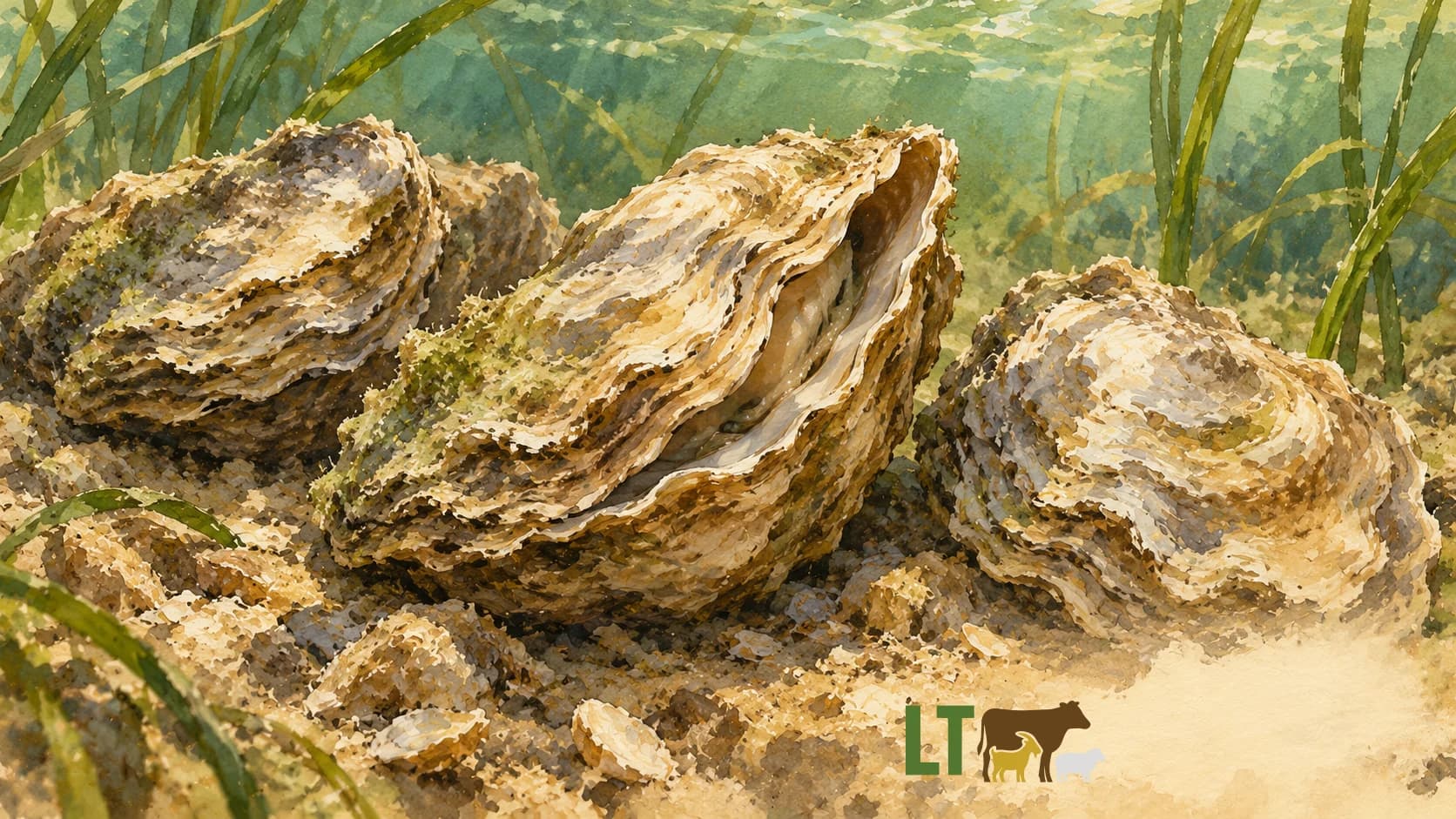
A field view from the oyster itself
A University of New Hampshire report published in Fall 2024 describes attached sensors developed in 2023–24. They followed gaping—the degree to which an oyster opens its shell.
The team deployed sensors at Little Bay oyster farms, connecting shell movement with water conditions. This biosensor approach uses an animal response as part of the observation.
For researchers, the appeal is a view of both place and animal. Those are related questions, but they are not the same measurement.
The water still has its own story
Oyster farms already offer useful examples of local environmental measurement. UF/IFAS describes loggers placed inside oyster bags in its Florida monitoring network. These collect temperature and salinity, or how salty the water is. Its 2026 expansion also brought dissolved-oxygen sensors to selected farms.
Dissolved oxygen means oxygen available in the water. These readings describe the conditions near the crop. An animal-response measure adds another question: what was happening to the oyster while those conditions changed?
Neither observation makes the other unnecessary. The useful research opportunity is to put them beside each other, while being clear about which part of the story each one tells.
A shell opening needs a biological explanation
The New Hampshire report also describes increased gaping during laboratory exposure to European green crab cues, especially at night. That controlled result does not explain every movement at a farm.
A shell-opening change is therefore something to investigate. It is not a ready-made label for health or food safety.
Picture a question a team could follow together
Imagine a proposed university project following oysters through a changing afternoon. One collaborator studies the water measurements. Another examines shell-opening observations from the same period. Their first useful conversation is about how those two descriptions fit together.
Did a change in the animal observation accompany the change in water conditions? Did it appear later? Or did the two patterns differ? These are proposed questions, not findings from the Little Bay deployment.
The payoff is a more focused discussion between animal scientists and engineers. Instead of asking for every possible sensor, the team can explain which relationship it wants to investigate and which observations would help.
It also gives collaborators a shared way to revisit an unexpected result. They can return to the underlying observations, compare their interpretations and decide what a follow-up study should ask. That is more useful than treating a single summary as the whole story.
From a field idea to a research collaboration
An October 14, 2026 university notice describes a NOAA-funded effort at UNH to develop and deploy an oyster biosensor network in the Gulf of Maine. Improving yield and food safety are project goals, rather than completed benefits demonstrated by that notice.
Livestock Technologies works on the infrastructure that makes animal observations accessible to research teams: capture, connectivity, processing and access to source data. Our documented field work and technology overview explain the approach available to discuss.
For an aquaculture collaboration, the first step is to define the animal question and the information the university needs. A connection to shell sensors or other specialist instruments would be separately scoped work. The New Hampshire deployment remains the university team's independent project.
Our university capabilities brief can help a team start that conversation. Bring the observation that matters, then build a practical route from the field to the people studying it.
Never lose an animal.
What animal response does your field study need to follow?
Bring the species, site and biological question. We can discuss a custom observation and data scope with your university team.
Discuss an aquaculture research project →