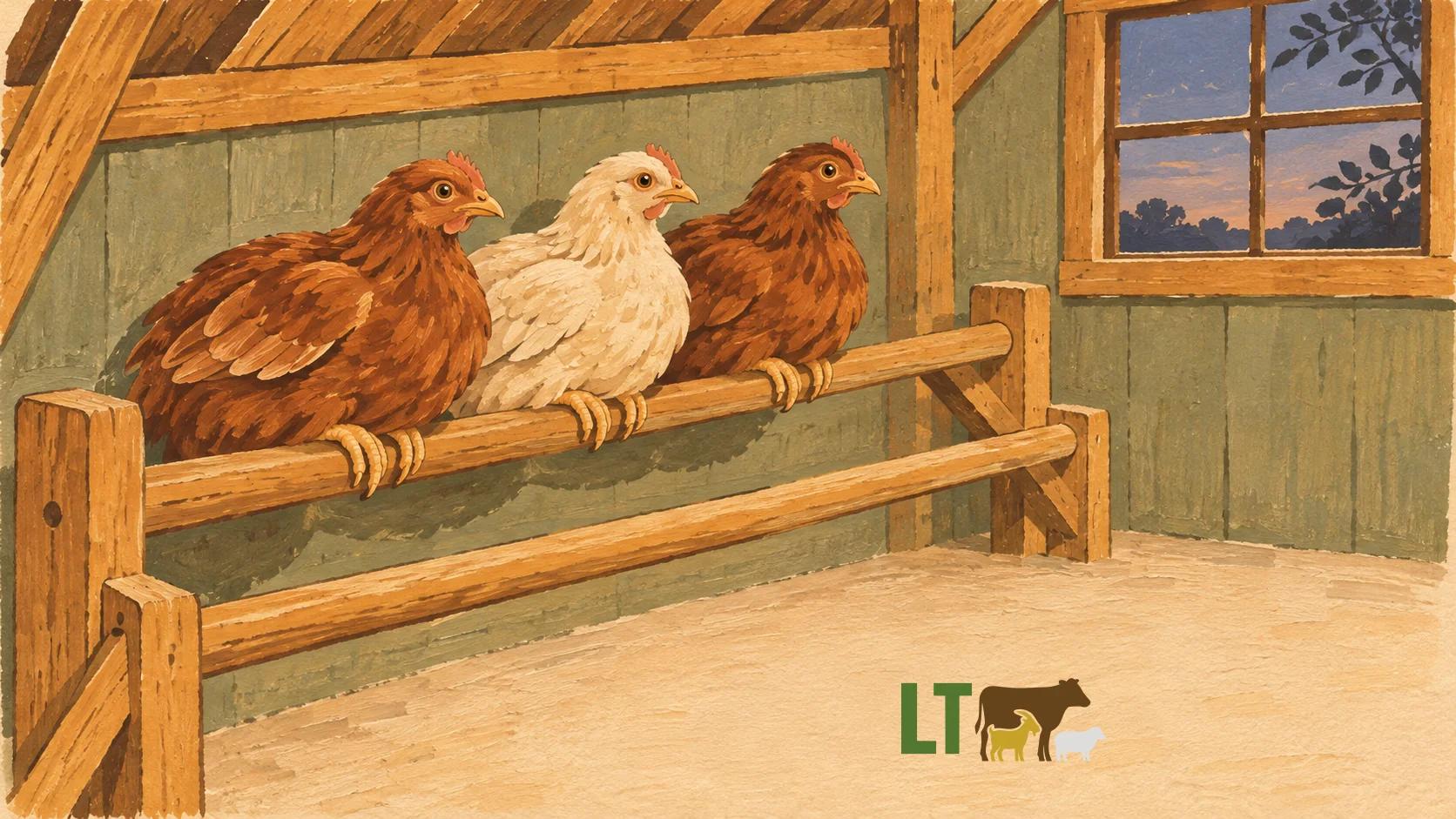
A place to settle after dark
A pullet is a young hen being raised toward laying age. A roost is the perch she uses to rest at night. Those simple words hide an interesting housing question: what makes one resting place more inviting than another?
The University of Minnesota’s pullet-rearing guide includes roosts as part of housing. It discusses the material, spacing and room birds need. For a university study, the next question is how the birds use the choices provided.
An empty bar beside a busy one is therefore worth understanding. Replacing the empty bar with a different size may miss the feature the birds are choosing.
The nighttime favorite was a location
A paper in the November 2026 issue of Applied Animal Behaviour Science compared round-perch diameters and positions for growing layer pullets. Its authors include a Michigan State University researcher.
The published abstract reports no detected preference for diameter at night. Instead, birds favored one position, facing the inside of the pen. Daytime use followed a different pattern, with differences between the brown and white strains.
The same work appears in Steeley Ellis’s University of Guelph thesis summary. It points to the view from a resting place as a possible explanation. That is an interpretation of the choice, not a direct measurement of how safe a bird felt.
The result does not name a universally best corner or rule out diameter effects in other settings. It suggests that a nighttime perch comparison should pay attention to place.
Daytime perching tells a different story
A bird stepping onto a bar during the day and one settling there for the night are using the same object at different moments. Combining those visits into one total can blur the question.
The November paper found that use of elevated structures increased as the pullets grew. It also reported strain-related daytime patterns. A single midday visit would not have described the nighttime choice.
For a U.S. university housing team, this makes the observation period part of the question. Is the project about moving around the rearing pen, choosing an overnight resting place, or both? Each deserves a clear description.
Imagine swapping the bars, not the room
Suppose a proposed university pilot offers two suitable round bars in different positions. Most birds settle at the rear position after lights-out. It is tempting to call that bar the favorite.
Now imagine the team exchanging the bars while leaving the positions available. If the birds keep choosing the same place, the bar’s identity becomes a less convincing explanation. If they follow the bar, its features deserve another look.
This is a hypothetical comparison, not a procedure or result reported from the November study. Any rearrangement would need to fit the university’s animal-care plan and allow the birds to settle before comparison.
The useful idea is simple: change the feature you want to test without quietly changing the alternative explanation. Keep track of the room’s layout and the birds’ age so collaborators can picture the choice.
Keep the view without changing the night
A housing team may visit before dusk, while the birds choose a place later. Retained footage can bridge that gap. It lets collaborators revisit the settling period and compare which positions remain occupied.
The observation plan should work within the flock’s approved light-dark program. Adding visible light just to brighten a recording would change the environment being studied. A proposed nighttime view needs to be assessed under the conditions the birds actually experience.
Livestock Technologies can help scope fixed capture, connectivity, storage and access to time-stamped footage for that project. The first useful view would show the available resting places together, rather than only the busiest bar.
Our technology overview, documented field work and university capabilities brief explain this infrastructure approach. Automatic pullet counts or perch-choice analysis would be separately scoped and tested.
The practical payoff is a shared view of the choice: the birds, the available places and the time they settle. That can help a team ask whether a new perch design is answering the housing question it intended.
Which resting place does your study need to understand?
Bring the pullet-house layout and the choice you want to compare. We can discuss a focused observation scope with your university team.
Discuss a poultry research project →