A hop, a chase and a tug are different stories
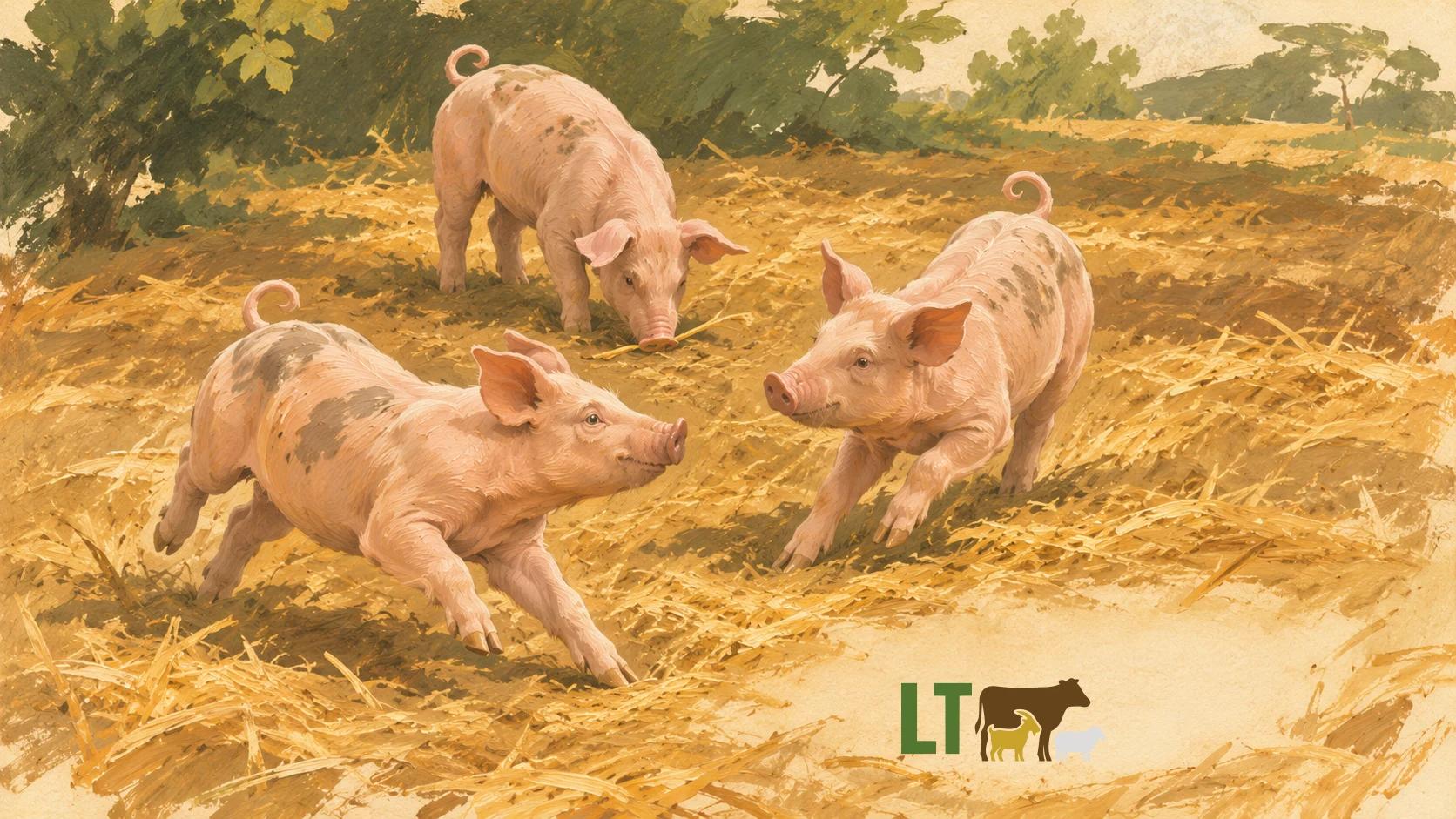
A young pig can sprint across bedding, turn sharply toward a pen mate or investigate a movable object. Those moments may all look like “being active,” yet they describe different experiences.
In her review of pig play, University of Pennsylvania researcher Kristina Horback describes movement play, play with objects and social play. Movement play includes springing and scampering. Social play can include relaxed wrestling, with animals taking turns.
That distinction helps a student watching a group. Running alone is different from joining a partner. Contact between two pigs also needs context: a brief tussle should not automatically be labeled either friendly play or aggression.
A recent study followed the playful phase
A November 13 study in Scientific Reports followed 128 young pigs in Scotland. Researchers compared a standard diet with a diluted diet and watched play during four visits to a bedded arena.
Some forms of play declined earlier among pigs receiving the diluted diet. But the pattern varied by behavior and visit. One total for “play” would have hidden part of that story.
The diets also differed in protein and fibre, so the study cannot isolate energy as the cause. Repeated visits may have made the arena less exciting, too. The findings invite a better research question rather than a feeding recommendation: does a diet change the course of particular kinds of play?
Picture two groups growing up
Imagine a campus nutrition trial where two groups look equally lively during an early observation. A week later, one group still scampers alone but joins fewer playful chases. In the other, both kinds of play remain common.
This is a hypothetical example. It shows why “How active were they?” may be too broad a question. The useful comparison could be which behavior changed, and at what stage of development.
That gives the nutrition researcher and behavior researcher a shared starting point. They can ask whether their planned observations capture the same experience at different ages. Facilities staff can explain what else changes as pigs grow, including the space available around them.
Leave room for pigs to express the behavior
Diet is only part of a pig’s surroundings. Purdue’s swine enrichment guide, written with USDA researchers, explains that enrichment should fit the animals’ age, size and living conditions. Enrichment means giving animals meaningful chances to explore, root, chew and interact.
An object placed in a pen is not automatically useful enrichment. What pigs can reach and do with it matters. That is relevant to a U.S. campus study: an apparent difference between diets would be hard to interpret if the groups had different opportunities to play.
The aim is not to turn every lively moment into a welfare score. It is to understand what pigs are doing within the setting the research team has provided.
Keep the moments the team wants to discuss
A playful turn can be over before a colleague reaches the pen. Recording a suitable view gives the team a way to return to that moment together. The nutrition researcher can bring the feeding comparison; the behavior researcher can explain what the movement shows.
Livestock Technologies helps universities scope fixed views, recording, connectivity and access to original footage. For a young-pig study, that conversation can start with the play area and the ages the team wants to compare. Researchers would define and assess play themselves; footage alone does not identify a pig’s feelings.
Explore our observation workflow, documented field work and university capabilities brief. The practical goal is a view that supports the animal question your team is asking.
What changes as your pigs grow?
Bring the behavior question and the nursery layout. We can discuss views and recording that help your team follow the playful phase.
Discuss a swine research project →