A bigger shell can hide a smaller crop
Two cages can hold oysters of much the same size at harvest and still deliver very different crops. A shell measurement tells you how large a sampled oyster grew. A survival count tells you how much of the group made it that far.
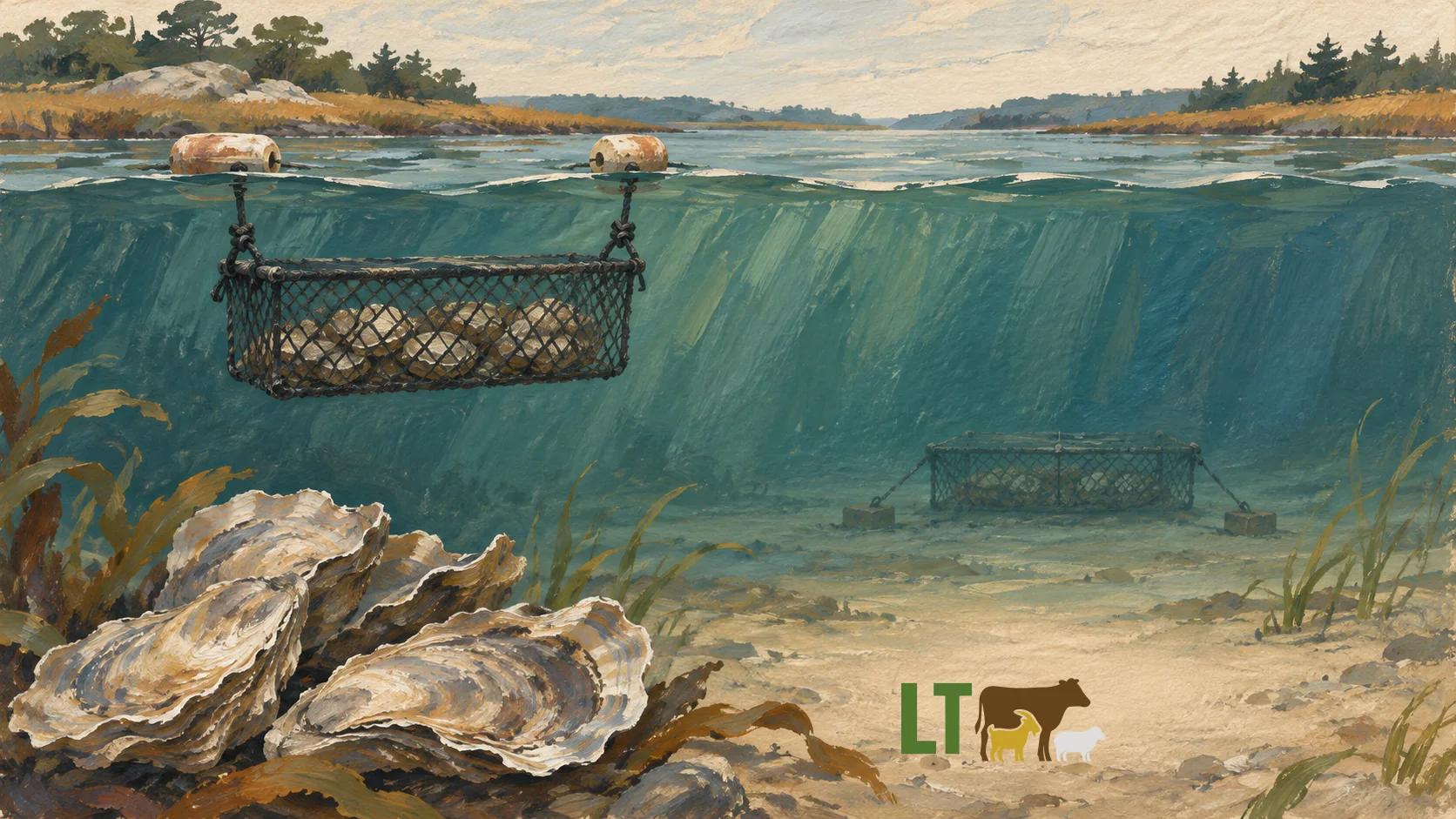
In the November 6 study from USDA researchers and the University of Rhode Island, the team followed young eastern oysters in Narragansett Bay from summer into December 2025. The two floating designs had similar growth and survival in this trial. About three-quarters of the oysters in the bottom group died, a much larger loss than the team saw in either floating group. The growth comparisons did not show a clear difference among the three groups.
What changed below the floats?
The bottom cage put oysters close to the seabed, where the crew found drill snails. These predators bore through shells. The researchers attributed most bottom losses to predation. The team also recorded episodes of very low dissolved oxygen, the oxygen available to animals in the water, near the bottom at that site.
The trial could not tell how much of the loss came from oxygen versus predators, or isolate cage depth on its own. The bottom oysters were held at the dock longer and were larger when they went into the bay. One of the floating designs was also at a different site. The University of Rhode Island thesis from the same project gives more background on the bay’s water measurements.
Start the next trial with the same batch
Imagine a university team wants to know whether moving its young oysters higher in the water would help. The team could divide one batch of similar-sized seed oysters, the name growers use for young stock, among several cages at each depth. Start the groups on the same day. Put both depths in each area being compared, so one treatment does not get all the sheltered water.
Measure oxygen near both sets of cages through the season. A reading at the surface cannot tell you what a bottom cage experienced overnight. At the next visit, the crew can count live oysters and look for drill holes or snails while taking the usual shell measurements. If survival falls but the remaining oysters grow well, the next experiment can test a likely cause instead of treating shell size as the whole result.
If the decision is whether a new floating basket saves time, measure the crew’s work separately. The Rhode Island study measured how the oysters fared; similar animal outcomes do not establish a labor saving.
Let the team revisit the same cage
On a busy sampling day, one person may count oysters while another checks the probes. A shared timeline can bring a crew’s time-stamped cage photos and observations alongside its own oxygen readings. It gives the team a way to revisit the right cage and sampling window when an unexpected count turns up.
Livestock Technologies can help scope that capture and data access for a research collaboration, with marine equipment and sensor connections defined for the site. Our technology overview, documented field work, and university research capabilities show how we build field observation around a study question.
Planning a shellfish gear trial?
Bring your site layout and the comparison you want to make. We can discuss how your team would capture the visits and find them again beside the water measurements.
Discuss a shellfish research project →