The first trip offshore was a team effort
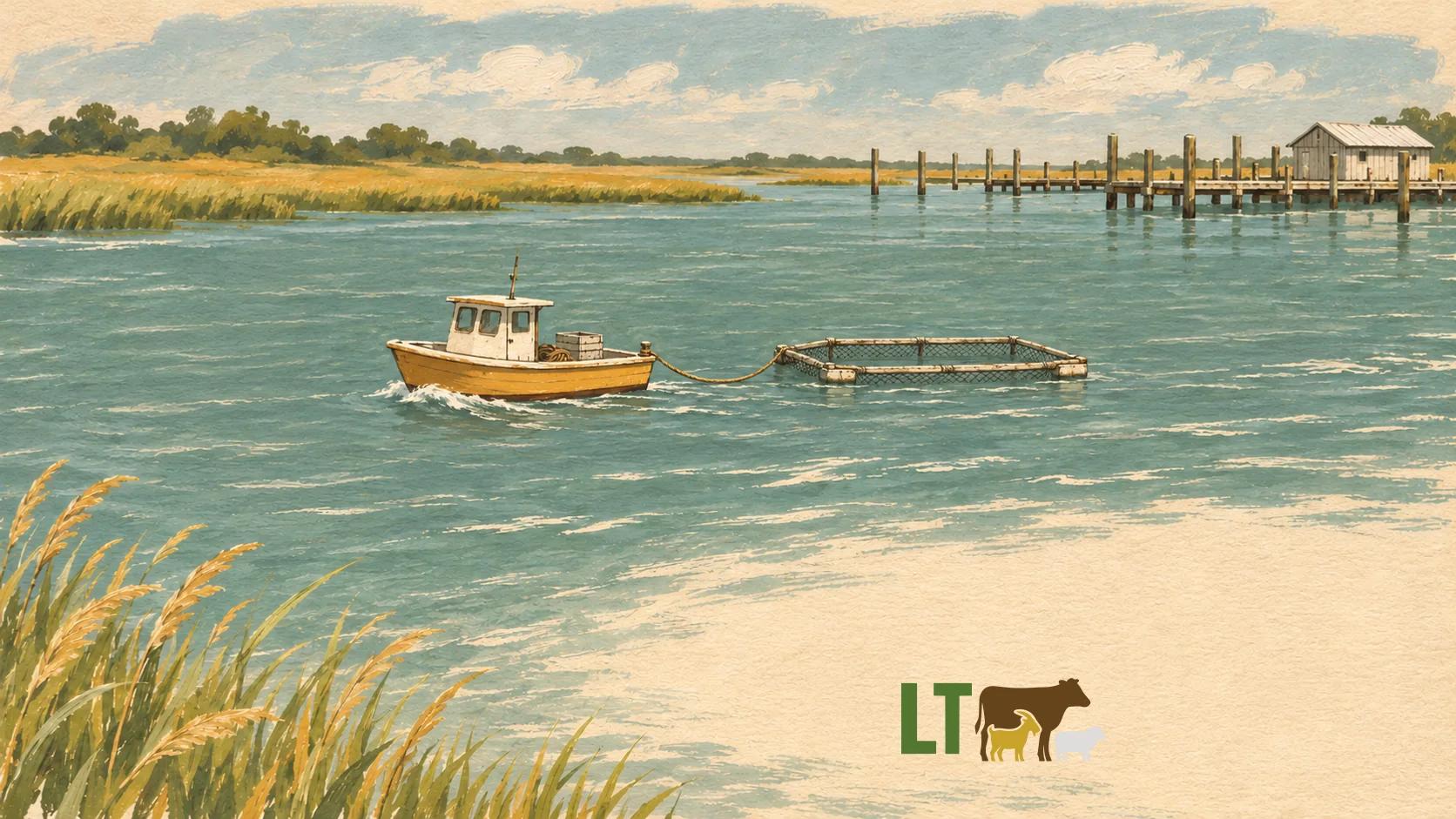
The University of Southern Mississippi’s January 22, 2026 report describes the AquaFort’s deployment near Dauphin Island, Alabama. Scientists and technicians assembled the floating platform. A vessel installed a four-point mooring, the lines and anchors that hold the structure in place.
A commercial fishing boat then towed the platform to the mooring for winter and spring growing. The story brings biology and engineering together: a fish farm needs animals and feed, but it also needs a workable way to reach and occupy its site.
The report documents an initial deployment. It does not confirm a new November 2026 launch or provide a harvest result. That distinction matters when using a real project to plan the next one.
Three living parts share the growing space
The Dauphin Island Sea Lab’s project overview describes red drum in mesh pens, with eastern oysters and Gracilaria seaweed around the platform. Red drum receive feed. Oysters filter particles, while seaweed takes up dissolved nutrients.
This approach is called integrated multi-trophic aquaculture: growing organisms that obtain food in different ways within a shared system. Here, it gives the team several related production and environmental questions to study.
The overview describes the intended roles of the species. It does not establish how much nutrient removal or saleable production the demonstration has achieved. For a university team, those remain outcomes to measure.
The growing season has an ending
The project’s 2025 operations plan makes recovery part of the design. It proposes growing during the cooler part of the year, followed by harvest and a return to shore. The current operator overview likewise describes seasonal operation and an inshore tow during hurricane season.
That makes the return journey a facility question from the beginning. The team needs a place for the recovered structure, a way to move it and time to prepare for another season. Those needs belong alongside the offshore site in a project scope.
A seasonal calendar also gives a study a defined period in the water. The work can follow a growing cycle from stocking to harvest, then examine what to change before the next deployment.
These are the project’s planned procedures, rather than evidence that each annual move has occurred. A seasonal plan also leaves room for the separate storm decisions described in the operations document.
Shore space is part of the research facility
It is tempting to picture the farm as the floating structure alone. A university facility director also has to picture where that structure goes when the growing season ends.
Consider a proposed campus coastal pilot. Its team might have a suitable growing site but limited shore space. A larger platform could offer more study space offshore while creating a harder recovery job. A smaller pilot might fit both places better.
That is a planning example, not a measured AquaFort comparison. Its practical point is simple: choose a study scale the team can operate through the whole cycle. A launch-day plan leaves too much of the working year unresolved.
Give colleagues a view of the working cycle
Observation can help colleagues revisit how a seasonal facility was used. Source footage of feeding at the growing site serves a different discussion from footage of equipment handling at a shore work area. Each view should have a clear purpose.
Livestock Technologies can help scope capture, connectivity, processing, storage and access to original footage around a university project. For coastal work, that conversation must include the proposed locations and marine exposure before selecting equipment.
Our technology overview, documented field work and university capabilities brief show the infrastructure approach. Any marine installation would need its own engineering scope; the AquaFort demonstration belongs to its university and agency partners.
The useful starting point is the research team’s full working year: what it needs to observe offshore, what happens ashore and how colleagues will return to the footage.
What does your team need to see through the season?
Bring the research question, the growing-site layout and the shore-work plan. We can discuss a focused observation scope with your university team.
Discuss an aquaculture research project →